Supreme Court rules care companies do not have to pay sleep-shifts

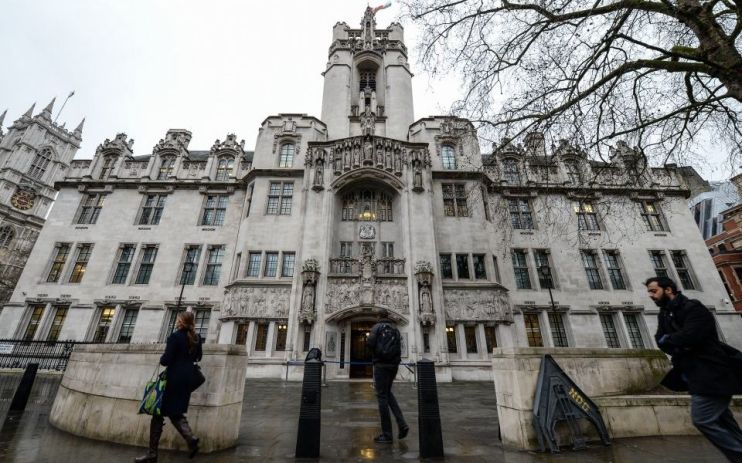
The Supreme Court has dismissed appeals this morning to pay hourly for sleep-in shifts, a sigh of relief for care companies and investors but a setback for carers and healthcare staff.
The ruling in the Mencap v Tomlinson-Blake case means the time a worker is required to sleep on site does not count towards minimum wage calculations.
If the court had ruled in favour, it may have resulted in swaths of backdated claims for national minimum wage underpayment and fines for breaching regulations.
Reactions
“This ruling will be disappointing for any care worker who believes they should be paid minimum wage for the entirety of the time spent on ‘sleep-in’ shifts,” employment partner at law firm Shakespeare Martineau, Matt McDonald, said.
“The case has been in the pipeline for some time and if the Supreme Court had sided with Mrs Tomlinson-Blake, the shockwaves would have been felt throughout the care sector.”
Care providers will be “mightily relieved” McDonald added, as it may have been the final push into bankruptcy for some.
“If the Supreme Court’s decision had gone the other way, the bills facing care providers for historic underpayments would have been substantial and, in some cases, devastating,” McDonald continued.
“Many simply couldn’t have afforded to pay and we would therefore seen a large number of providers teetering on the brink of financial ruin, putting further pressure on UK care standards.”
The ruling has provided some welcomed clarity for the Voluntary Organisations Disability Group (VODG) but highlights the need for a fair rate of pay for overnight work supporting disabled people.
“Clearly, there are no winners or losers in this case,” chief executive of VODG, Dr Rhidian Hughes, said.
“We are concerned of potential knee jerk reactions of local authority commissioners up and down the country which could see funding reduced, and therefore the pay of staff affected.”
Hughes warned of a decline in quality of care if “ad hoc” pay arrangements continue.
“We cannot have a postcode lottery in pay for social care workers doing such important work. Anything that worsens retention will only impact on disabled people who rely on social care services and lower the quality of care.”
Timeline – the path to the Supreme Court
Pre-2016: Most sleep in shifts were paid at a flat rate – typically £35-£45 per shift. This was in line with government guidance.
2016: An employment tribunal found a former Royal Mencap Society care worker (Mencap v Tomlinson-Blake) was entitled to receive the NMW for each hour of sleep in shifts completed, plus six years of back payments.
2017: An employment appeal tribunal (EAT) made a distinction between cases where night workers were held to be “working” throughout their shift even if they were entitled to sleep, and those cases where the worker was simply “on call”.
2018: The Court of Appeal, overturning the EAT decision in the Royal Mencap Society case, ruled that employees are only entitled to the national minimum wage when carrying out their duties, not for the full duration of their overnight shift.
Today: The Supreme Court upholds the 2018 Court of Appeal ruling.
First appeal
The first appeal in 2018 saw care support worker Mrs Tomlinson-Blake, employed by The Royal Mencap Society since 2004, be denied sleep-in shift pay for the first hour she had to awake to meet care duties.
Tomlinson-Blake, who cared for two men with autism and learning difficulties, was paid a flat rate of £22.35 plus one hour’s pay of £6.70 for a sleep-in shift from 10pm to 7am.
However, as part of her duties, she was required to keep a ‘listening ear’ during the night in case her support was needed.
The carer’s claim to the Employment Tribunal found she was entitled to have all hours spent sleeping-in count as working time for minimum wage purposes.
The case has since climbed its way to the Supreme Court.