Skip to content
Sunday 23 August 2026London --:--Frankfurt --:--Zurich --:--
NewslettersSearchEN · DE · FR
MorningWire

European business, markets and politics

FTSE 100
10,816.56
+0.64%
DAX
26,136.56
+0.59%
CAC 40
8,484.43
+0.37%
STOXX 50
6,462.22
+0.63%
  • Europe
  • Markets
  • Business
  • Economy
  • Regulation
  • Politics
  • Opinion
More
GermanyFranceEU InstitutionsCompetitionPublic AffairsBankingTechnologyEnergy
  • Germany
  • France
  • Europe
  • Markets
  • Business
  • Economy
  • Regulation
  • Politics
  • Opinion
  • DE
Tuesday 15 February 2022 6:15 am  |  Updated:  Monday 14 February 2022 5:40 pm

If London is the heart of our economy, more TfL fare rises will cut off the blood supply

By: Andrew Carter

Add as a preferred source on Google
COVID-19 Deaths Among TFL Workers Raises Concern For Staff Welfare
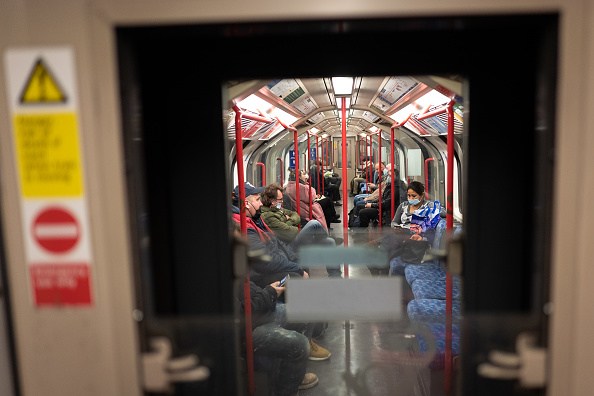
The number of people reported for intrusive staring on the tube has increased. (Photo by Leon Neal/Getty Images)

From March, every bus or train journey within Zone 1 will go up 10p, after Sadiq Khan announced yesterday that Transport for London fares would rise by almost 5 per cent.

For Londoners, this means the average 3-day-a-week commute will go up by £30 a year, on top of rising food and energy prices. It will hit lower-paid Londoners, who are least likely to be working from home, even harder and will cost them as much as £50 extra a year.

It also goes deeper than this. The capital’s economy, despite the relaxation of Covid-19 restrictions, is still struggling to address long-term questions about how and where we spend our time and money. Weekday worker footfall in central London was still less than half of pre-pandemic levels last month, and weekend footfall was just three quarters of what it was, according to data by Centre for Cities. These are the lowest footfall figures of any UK city.

Making it more expensive to travel into Zone 1 will only encourage people to spend more time at home; another blow to the shops, bars and restaurants in Central London. But the truth is TfL has been left with few alternatives in the short term. The pandemic has opened up a huge chasm in its finances and it needs to balance the books somehow.

Public transport in the UK is unusual in that, in normal times, it receives less public subsidy than in many other European countries. It is mostly privately-operated and funded directly through fares. While some have suggested easing the pressure on travellers by funding public transport through taxation, in reality this is a political non-starter: expecting people in Northern England to subsidise London’s transport system – particularly when their public transport systems are so poor in comparison – is not a vote winner, especially as both parties try and keep so-called Red Wall voters on side.

Alternatively, TfL could cover some of the costs by further expanding the Congestion Charge and ULEZ, or introducing a comprehensive road pricing system.  This would raise some money and may encourage some drivers out of their cars but, again, introducing any of these is politically difficult – particularly in outer London boroughs where the political battlegrounds are being drawn ahead of May’s council elections.

As they try to find a solution, the Mayor of London and the government will need to be creative in trying to secure London’s transport system for the long-term. It may be that the solution won’t be found in tracks and trains, but instead in the hectares and hectares of land that TfL owns.

By developing the TfL land around its tube, rail and tram stops, the transport system could bolster its long-term income stream through ground rents and service charges. TfL is already a significant landlord in the capital and all of its assets should be used to try and ensure there is a stronger backbone behind a transport system which fuels such a significant part of the nation’s economy. To do so will also require flexibility from Westminster, to ensure TfL has control over those funds and it can be put back into the transport routes.

If a plan was developed to prioritise development around London’s commuter stations, it could raise £80bn and deliver a million new homes. If a fraction of this money was made available to TfL it would ease its reliance on fare revenues and government bail-outs. But it will require real political leadership.

Read more

London Sports Festival Extends Padel at Hay’s Galleria Following Continued Demand

Overhead view of a blue padel court and people playing inside Londons Hays Galleria, under a glass and steel roof.

Share this article

  • Facebook
  • X
  • LinkedIn
  • WhatsApp
  • Email

Similarly tagged content:

Sections

  • Opinion

Categories

  • Opinion

Trending Articles

  • Can debt-ridden Morrisons become a Big Four supermarket again?

  • Ratcliffe’s Ineos saves Runcorn plant

  • Mike Ashley’s Frasers offers to pay personal shoppers in Harvey Nichols takeover

  • Amazon says it buys books in bulk to ‘improve products’

  • Burnham predicted to raise taxes for ‘fundamental’ cost of living support

More from Morning Wire

  • London Sports Festival Extends Padel at Hay’s Galleria Following Continued Demand

    Sponsored
    Overhead view of a blue padel court and people playing inside Londons Hays Galleria, under a glass and steel roof.
  • Industry chief warns ‘resilience not enough’ for growth

    Economics
    Shevaun Haviland, British Chambers of Commerce boss, speaking at a business event, emphasizing economic growth strategies
  • TfL greenlights Wayve’s autonomous vehicles in the City

    Tech
    Wayve autonomous vehicle navigating a busy London street with iconic cityscape in the background
  • Beyond your 9-5: things to explore in the Square Mile 

    Partner
    Three friends enjoying drinks on a rooftop bar with St Pauls Cathedral dome in the background.
  • Exclusive: Former Formula 1 figure invests £100k into new Pacer app dubbed ‘Sports Tinder’

    Sport
    White Martini Racing Formula 1 car on a grey track with green grass borders, in motion during a race.
  • The BBC shouldn’t push Londoners to accept antisocial phone behaviour 

    Opinion
    Passengers inside a graffiti-covered London Underground train car, some looking at phones, others observing the interior.
  • Hammersmith Bridge is a test for Burnham’s place-based growth

    Opinion
    Hammersmith Bridge closed in 2021 with fencing, banners, and traffic cones blocking access to the walkway.
  • House prices suffer biggest August slump in eight years 

    Property
    Aerial view of colorful residential houses built on a hillside, nestled among green trees, representing housing markets
MorningWire

Independent European business, markets and political news for decision-makers.

Morning Briefing

Europe

  • Germany
  • France
  • EU Institutions
  • Europe

Business

  • Markets
  • Business
  • Economy
  • Regulation
  • Competition
  • Public Affairs

Editorial

  • Opinion
  • Editorial Policy
  • Corrections
  • Contact

Company

  • About Morning Wire
  • Privacy Policy
  • Terms of Use
  • Cookie Policy
© 2026 Morning Wire Ltd · Published by Morning Wire Media, Bahnhofstrasse 65, 8001 Zürich, Switzerland
Privacy · Terms · Cookies · Facebook