Skip to content
Friday 7 August 2026London --:--Frankfurt --:--Zurich --:--
NewslettersSearchEN · DE
MorningWire

European business, markets and politics

FTSE 100
10,945.06
+0.71%
DAX
26,367.61
+0.87%
CAC 40
8,736.11
+0.42%
STOXX 50
6,546.71
+0.68%
  • Europe
  • Markets
  • Business
  • Economy
  • Technology
  • Politics
  • Opinion
More
GermanyFranceBankingAIEnergyFintechPropertyCapital Markets
  • Germany
  • France
  • Europe
  • Markets
  • Business
  • Economy
  • Technology
  • Politics
  • Opinion
  • DE
Tuesday 10 June 2025 4:52 pm  |  Updated:  Tuesday 10 June 2025 4:53 pm

London Tech Week: Astrazeneca’s AI push could take humans out of the loop

By: Saskia Koopman

Tech Reporter

Add as a preferred source on Google
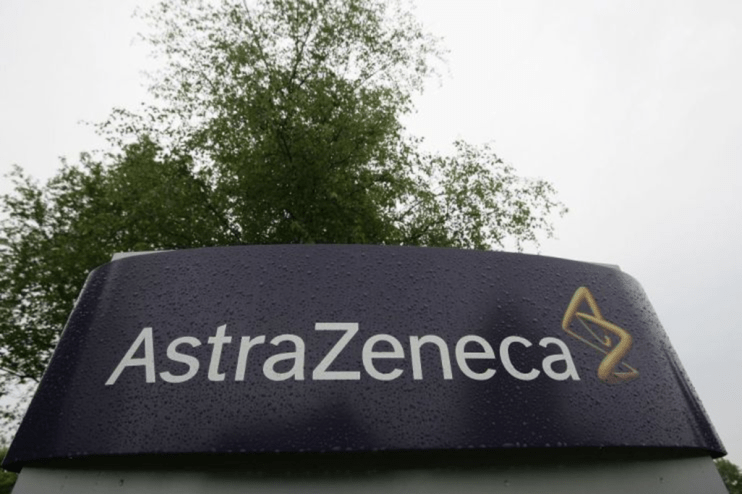
Astrazeneca headquarters with logo, reflecting commitment to reduce US medicine prices after Trump administration pressure
Astrazeneca shareholders have questioned the possible merger

Astrazeneca unveiled an ambitious overhaul of its manufacturing and supply operations driven by deep tech, AI, and what it called a “self-healing” supply chain at London Tech Week.

The firm claimed it’s laying the groundwork to become one of the top 10 most innovative and sustainable supply chains globally by 2030.

But while the vision is ambitious, questions remain on feasibility and the human cost of automation.

“We’ve set our sights really high”, said David Baxter, head of global operations strategy and transformation. “Our ambition is to revolutionise manufacturing and supply using AI”.

Aztrazeneca, a pharmaceutical giant with $54bn (£40bn) in revenue in 2023 and operations covering 117 countries, aims to launch 20 new medicines globally in the next few years.

To support this pledge, it’s betting heavily on advanced tech like digital twins, low-latency computing, and generative AI.

“We want to ensure our innovative science reaches patients as fast as possible”, Baxter announced at the event. But, the complexity of that mission raises concerns.

Astrazeneca’s ‘self healing’ supply chain

The health titan’s concept of a “self-healing supply chain” relies on predictive analytics, large scale automation, and generative AI agents working independently – potentially even without human oversight.

“AI senses issues, demands changes, disruptions, and simulates scenarios to mitigate risk”, the firm announced. “Eventualy, we could take the human out of the loop when it comes to suggesting actions, making resolutions…”

“As we build our trust model, we can take away the human and allow our real time to mention, resolve, monitor and progress”.

That notion of AI driven decision-making without human input, triggers concerns in both ethical and operational circles.

While Astrazeneca’s team emphasised that trust and model reliability would come first, some may ask whether regulators or patients are ready for such an approach.

Read more

AI reduces founders’ need for capital, says Revolut Business

Canada skyline featuring iconic skyscrapers and modern architecture against a clear blue sky

Digital twins and data infrastructure

The firm is already using digital simulations, otherwise known as digital twins, to model production processes, and simulate factory workflows, amongst other things.

Astrazeneca claims that this reduces the number of chemical reaction steps, lowering solvent use whilst speeding up manufacturing.

It is also applying AI to automate documentation for regulatory filings across countries using large language models.

Yet, data is a repeatedly mentioned issue, as building AI into data, the team recognised, “means a lot more AI hacking”.

That’s also a tall order in global pharma, where data silos and fragmented infrastructure remain persistent obstacles.

The AI payoff – cost cuts and faster medicine

The company’s deeper tech agenda hinges on building AI agents that can mimic human thought and collaborate – an advanced concept that researchers across the industry are still grappling with.

“We’re truing to learn about agentic architectures – how to mimic human decision-making with AI agents”, said Baxter. “This is not one agent, but a system of multiple agents synchronising with one another”.

The firm is also working on edge computing solutions to reduce latency and energy use in its production facilities.

If its strategy works, the potential rewards are large. Faster drug development timelines and reduced environmental impact could reshape how modern pharma operates.

“By 2030, this will reduce our manufacturing costs significantly”, the team explained. “That also means more money for science – and faster medicine to patients.

The firm also pointed to sustainability goals, saying it’s committed to becoming carbon neutral and reducing water storage.

Read more

AI data centres and defence tech lead investment wave

Business professionals in a modern office discussing a strategic plan with charts and graphs displayed on a large screen

Share this article

  • Facebook
  • X
  • LinkedIn
  • WhatsApp
  • Email

Similarly tagged content:

Sections

  • News

Categories

  • Tech
  • Business

People & Organisations

  • artificial intelligence
  • Astrazenaca
  • Healthtech
  • London Tech Week
  • pharmaceuticals

Trending Articles

  • Revolut founder’s wealth set to balloon amid talks of share award at $500bn valuation

  • Rupert Lowe axes pensions triple lock and pledges tax cuts in economic plan

  • Liverpool owners tipped to sell – but not to Amazon boss Bezos – by former CEO

  • As it happened: Stocks rise as oil fluctuates after Red Sea attack; US-Iran deal ‘being circulated’

  • WPP slashes jobs as revenue continues to fall

More from Morning Wire

  • AI reduces founders’ need for capital, says Revolut Business

    Tech
    Canada skyline featuring iconic skyscrapers and modern architecture against a clear blue sky
  • AI data centres and defence tech lead investment wave

    Tech
    Business professionals in a modern office discussing a strategic plan with charts and graphs displayed on a large screen
  • As it happened: Stocks slide despite tech and data boost; Oil falls after OPEC+ ups output

    Markets
    Samsung has missed earnings expectations
  • AI minister: UK sets sights on global AI leadership, not Silicon Valley emulation

    Tech
    Kanishka Narayan, prominent figure in the news, engaging in a public event or discussion, showcasing leadership and influe...
  • Fulham sign up $15bn Silicon Valley tech and AI firm ClickHouse as front-of-shirt sponsor

    Sport Business
    No article content provided. Please provide the article content to generate relevant alt text.
  • AI, drones and data: Defence giants splash record $4.1bn on tech start-ups

    Tech
    Defence
  • ‘Ugly moment’ for software stocks as IBM suffers biggest one-day slump in decades

    Tech
    All eyes on IBM v Lzlabs as the tech giant kicks off legal battle
  • AI spending overshadows Alphabet and Tesla earnings

    Tech
    The Competition and Markets Authority said they've heard complaints Google's search advertising costs are higher than expected
MorningWire

Independent European business, markets and political news for decision-makers.

Morning Briefing

Europe

  • Germany
  • France
  • Europe
  • UK & Ireland

Business

  • Markets
  • Banking
  • Technology
  • Energy
  • Property
  • Fintech

Editorial

  • Opinion
  • Editorial Policy
  • Corrections
  • Contact

Company

  • About Morning Wire
  • Privacy Policy
  • Terms of Use
  • Cookie Policy
© 2026 Morning Wire Ltd · Published by Morning Wire Media, Bahnhofstrasse 65, 8001 Zürich, Switzerland
Privacy · Terms · Cookies · Facebook