London transport freedom passes for all – but at what cost?

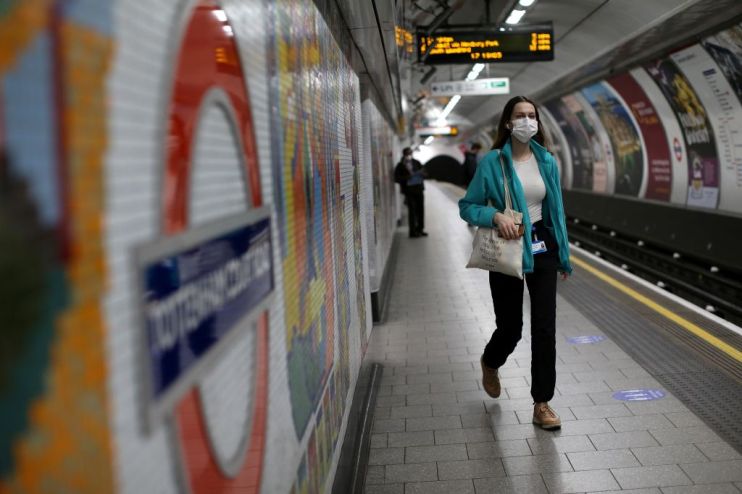
Earlier this week it was reported that senior London business figures were pressing the mayor and Transport for London (TfL) to offer free travel on public transport to encourage the public, in their guise as potential consumers, to venture into the city and make free with their hard-earned pounds.
Ewan Venters, CEO of Fortnum and Mason, and Simon Thomas, boss of the Hippodrome Casino, were among the big names to lend their support, which was compared to the chancellor’s popular “Eat Out to Help Out” scheme in terms of deploying government money to stimulate growth.
The success of “Rishi’s Dishes” suggests that freedom passes would, indeed, encourage more people into town, though it is clear to anyone currently using public transport that fear of infection is still a strong disincentive.
According to TfL, Tube figures continue to hover around one-third of pre-lockdown rates, while the use of buses is around half what it was. It is implausible that all of this decline is due to monetary issues, but making journeys free would probably overcome some people’s fears.
However, like the scheme for restaurants, it could never be a permanent investment – TfL has to make money somehow – and there is not yet enough information to judge whether Rishi’s Dishes have left a legacy of eating out or were simply a temporary blip while the cash was available. A free travel scheme would be a shot in the dark, and one fired at considerable cost.
There is also a question of how far a temporary spike in Tube and bus usage fits into a wider transport strategy for the city. While public transport is to be encouraged in preference to car journeys, the figures from TfL also show a dramatic increase in cycling, which would be at best unaffected (and at worst discouraged) by suspending fares. Promoting cycling and integrating it into London’s habits and infrastructure is a key part of any strategic plan, since it delivers personal wellbeing, a reduction in congestion and progress in meeting the UK’s 2050 emissions goals.
Sadiq Khan’s administration already has a detailed Cycling Action Plan, and Covid has given it new impetus. Private sector partners have also stepped up to the plate: Brompton Bicycles backed the Wheels for Heroes campaign which made bikes available to front-line workers for free, while an extension of cycle lanes was supported by high-profile, blue-chip firms like RBS, Deloitte and Knight Frank. There is a danger that a quick-fix, ready-cash concept like freedom passes would ignore and perhaps delay the addressing of structural issues which need to be part of an overall strategy.
One more caveat. The thinking behind Rishi’s Dishes and a free travel period is clear: they are short-term investments intended to inject life into the pandemic-battered economy. But they carry with them presentational and psychological risks. We have seen calls for the government-funded furlough scheme to be extended beyond its original deadline to keep supporting certain sectors, like the arts. There is a danger that the government, with the best of intentions, fosters a dependency culture which effectively cries: “Everything’s free!”
The commercial sector must understand that, while the government is there to help, it cannot be there to support indefinitely. Bluntly, some enterprises will not make it through Covid: and the government must not be expected to keep them alive indefinitely.
We are in changing times. Many businesses will have to pivot, and re-examine the whole basis of their existence. The London Futures project is aiming to pull together this kind of thinking and create a vision for where we will be in 2050. The government is rightly expected to help, and to act as a safety net, but long-term investment has to be better than short-term solutions, and the taps will eventually be turned off.
We should all think very carefully, then, about how the public’s money can most wisely and most effectively be deployed, for the good of our capital city.
Eliot Wilson is co-founder of Pivot Point and a former House of Commons official.