London’s graveyards are nearly full. What happens next?

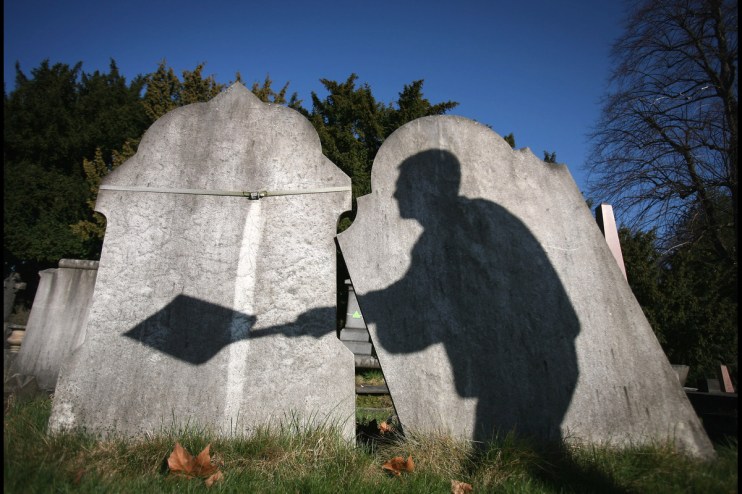
Something to spook you this Halloween? London is running out of grave space. Anna Moloney looks at the history of the city’s cemeteries – and their modern reckoning
For the hard-to-spook Victorians, a trip to a graveyard was akin to a stroll in a sculpture park: cameras were at the ready and picnics were the norm. Families would go for a day out, setting up camp by their deceased loved ones and chatting to them through their tombstones. At Highgate Cemetery in north London, one of the City’s first commercial cemeteries, Londoners could go window shopping for an eternal resting place, and would be encouraged to buy a plot of land on their way out.
Today, things may be a little different, but the healthy attendance at Highgate Cemetery’s regular tours shows Londoners (and leftwing politicians in need of a cheap date) still have an appetite for the morbid – and past legends of a Highgate Vampire will undoubtedly draw in even more visitors today. (That’s despite the wishes of the chief executive of the cemetery’s Trust, Ian Dungavell, who batted away my questions due to his preference that the site keeps a low profile during Halloween.)
The graves of Karl Marx and Christina Rossetti are among the traditional attractions for ghoulish visitors, though more recent additions (George Michael, a £7m modernist house and even a mausoleum for the former boss of Dunkin’ Donuts) now also feature on the map.
But morbid curiosity hasn’t been the only constant for the city’s cemeteries over the last two centuries. Indeed, it’s a rather more pressing matter that’s persisted: London running out of grave space.
Opened in 1839, Highgate is just one of London’s ‘Magnificent Seven’ – a group of seven large private cemeteries that were opened during the Victorian era as a way to relieve overcrowding at parish burial grounds, which were struggling under London’s exploding population. The endeavour was initially a success, not just in managing the disposal of the dead but also in offering new open spaces for the public. Fast forward almost 200 years, however, and you could say we are in need of an update.
And in fact, the alarm bells have been ringing for rather a long time. A government study in 2007 first estimated we’d run out of space to bury the dead within 30 years. A BBC investigation in 2013 reported that a quarter of local authorities in England would be at capacity within a decade. For those who struggle with maths, that puts the point at which we should really be panicking right about now. “As you would expect, a lot of what is in the 1832 Act of Parliament isn’t really fit for purpose in today’s world,” Peter Humphries, head of planning and projects at General Cemetery Company, which owns Kensal Green Cemetery, tells me.
The re-use of graves is one prominent – and naturally touchy – issue. Current legislation means, outside of Church of England graveyards, it is illegal to disturb a grave but many are now pressing for changes. In 2022, Highgate successfully lobbied Parliament for the right to reuse graves after 75 years. Relatives can object (and extend this by 25 years) and the Cemetery has also been clear it will be protecting “elegant graves” with the space now also viewed as a heritage site.
Kensal Green are considering similar reforms. “Clearly, we haven’t got much space left, and that’s sort of an issue that needs to be addressed in the next 10 years,” Humphries said.
The issue has also garnered the attention of the Law Commission, which this month released its consultation paper into burial and cremation in the UK, noting the “urgency for reform and the pressures facing the death care sector”.
“Much of the legislation governing cemeteries in general still dates from the second half of the nineteenth century. Private burial grounds are broadly unregulated. Elements of cremation law are over a century old,” reads the opening of the paper, which also teases future ‘sub-projects’ concerning new exciting funerary methods such as alkaline hydrolysis and human composting. Outdated laws have led to absurd realities: funeral directors reportedly hold a quarter of a million sets of uncollected ashes along with large numbers of pacemakers due to their lack of legal authority to dispose of them, for example.
Meanwhile, a review into the funeral sector has also called for wide scale overhaul, with the David Fuller Inquiry revealing an astonishing wild west of undertakers, with funeral parlours currently subject to no government regulation. “The fact is that anyone can set themselves up as a funeral director. They could do it from their home and keep the bodies of the deceased in their garage without anybody being able to stop them,” Inquiry chair Sir Jonathan said, adding that bringing in a regulator for the sector was a “matter of urgency”.
So why has it taken so long? When I ask Humphries, he simply laughs. “It’s got to a stage,” he says.
Establishing the Cemetery as a trust in order to access grants is one key motive. It seems things haven’t changed much at all – as the local tour guide at Highgate told me about the cemetery’s Victorian managers: “They had shareholders and they needed to sell!”. You can even still exit via the gift shop.