Long read: Advertisers look to esports as gamers flock to virtual stadia

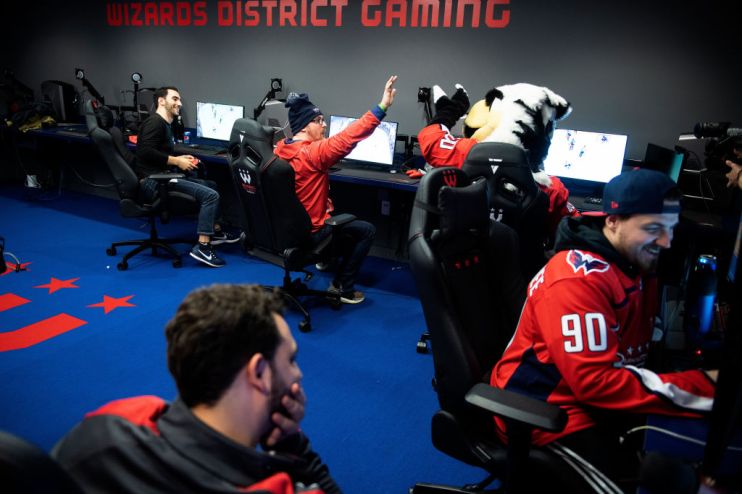
Advertisers might find rich pickings in the world of esports, writes James Warrington
Over the last few days, a meme purporting to show a model of a stadium that would seat 1 million people has circulated on social media. The image is probably fabricated and certainly ludicrous — even North Korea has only managed to squeeze about 114,000 people into its Pyongyang arena.
And yet attracting audiences running into the tens of millions is becoming commonplace in the modern world. Not in stadiums, or even via TV broadcasts. Instead, online viewers are flocking to esports.
Esports — or competitive video gaming — are not a new concept. In short, it involves highly rated gamers facing off against each other, whilst spectators watch on from the comfort of their own sofas.
Last year’s final of battle arena game League of Legends racked up more than 100 million online viewers — a larger audience than the Super Bowl. But the coronavirus crisis has sparked a fresh surge in interest, as people around the globe are forced to stay at home.
Viewer numbers on Twitch, one of the largest streaming platforms for gaming, were up 22 per cent year on year in March, according to data from Twitch Tracker. Rival site Stream hit its all-time record last week, when 24.5m people were using the platform at once.
The cancellation of major sports fixtures has also created new opportunities. Formula One launched virtual Grand Prix races after the 2020 season was postponed, while earlier this month Potters Corner emerged victorious in the first ever Virtual Grand National.
The benefit for gaming companies, streaming sites and gamers — the rock stars of the modern world — are plain to see. But the trend also offers a huge new opportunity for advertising, and brands are starting to tune in.
Going native
It is a fundamental principle of advertising that where eyeballs go, brands will follow. The UK’s gaming industry is now worth £3.8bn — almost as much as music and video combined. With gaming and esports audiences surging, the sector is ripe for exploitation by brands.
And yet native in-game advertising — where ads are inserted into a video game’s environment — has failed to take off. Massive, an earlier pioneer of the concept that was bought by Microsoft for roughly $280m, struggled to gain traction and collapsed in 2010.
Now Bidstack has picked up the mantle. Founded five years ago with a focus on real-world digital billboards, the Aim-listed firm has since turned its attention to in-game ads.
Its technology allows brands to advertise on the billboards around the side of the pitch in football games, on hoardings at virtual race tracks and in so-called open world settings, such as on a billboard within a first-person shooter game.
“Our proposition is to enable game publishers big or small to monetise assets that sit naturally within a video game environment,” says chief executive James Draper, who describes his company as “The Trade Desk for video games”.

Bidstack has already secured a multi-year deal with Sega to place adverts in Football Manager. On the demand side, it has a partnership with Dentsu Aegis and an agreement in place for up to £10m annual media spend from another unnamed ad agency.
Now, the coronavirus has spurred on a fresh wave of interest. As millions of people are sequestered at home, gaming hours have soared. And as brands pull back on advertising spend — especially in the so-called out-of-home market of billboards and bus stops — in-game ads are a new attraction.
“The advertising world is moving towards it in this current climate because there’s no-one on the streets justifying the reach metrics for out-of-home,” says Draper.
“Virtual out-of-home is a logical step… it’s not too far removed, it’s still brand awareness rather than performance.”
Unilever, McDonalds and Uber Eats are among the big-name brands to have made use of the technology so far.
Even the government has got involved, using Bidstack to place its Stay At Home public health campaign within car racing game Dirt Rally 2.0.
“Digital [advertising] more broadly can be our antidote to social distancing, but gaming especially has been doing this for years — bringing people together virtually,” says Jon Mew, UK chief executive of the Interactive Advertising Bureau.
“As media consumption takes a massive — if temporary — shift from outside to stay at home, gaming will likely go through the biggest period of growth in its history.”
Tech troubles
It is not, however, all plain sailing. Despite the clear attraction of gaming as an advertising market, it is yet to establish itself as a major player alongside more traditional media formats.
A lack of understanding has undoubtedly played some role in this. Despite its move into the mainstream, gaming, with its younger, male-dominated demographic, has struggled to shake off negative stereotypes. For Soho media types, it may have seemed more cottage industry than corporate opportunity.
More fundamental, though, are the technical challenges. Native in-game ads can only work if they do not interrupt user experience — either by distracting the gamer or, worse, by creating lag. Navigating these problems has proved difficult.
Moreover, the advertising format is yet to establish a standardised format for measurement. Without a framework to define what counts as an impression in a stadium or racetrack, and a third-party system to verify these impressions, it is hard to convince advertisers of its merits.
Even aside from measurement, some in the industry question how much of an impact in-game ads can have due to their lack of prominence.
These challenges are reflected in Bidstack’s share price, which has plunged more than 60 per cent in the last six months (though this has begun to reverse since the coronavirus outbreak).
Boss Draper seems unconcerned about the turbulent trading, which he blames on “a bunch of interesting shorters and pain in the arse people on Aim”.
Bidstack is yet to generate significant revenue, but Draper says there is no immediate need to raise more cash. The firm has tapped former Playstation chief Andrew House in an advisory role, and is pinning its hopes on a future breakthrough for the ad format.
Ultimately, the goal is to capitalise on the esports market. If advertisers can target the people watching gamers — rather than just the gamers themselves — they can expand their reach exponentially.
“To get to the point where we can interchange the adverts based on the secondary [audience] without causing any latency whatsoever to the stream, that is an absolute goldmine,” says Draper.
Full stream ahead
The technology needed to reach this secondary audience with in-game ads remains, for the time being, a distant hope. But the bells and whistles of native in-game advertising may also be overshadowing a simpler, more reliable opportunity for brands.
As millions of fans tune in to esports streams, more traditional sponsorship deals and content marketing strategies remain relatively untapped.
Newly emerging virtual sports formats also offer a way for companies to beam their brand into the homes of millions of viewers during the pandemic and beyond.
Jonny Shaw, chief strategy officer at VCCP New York, says brands should be “wary” of in-game advertising and should think more broadly about how to use gaming to boost their profile.
“[Esports is] finally a viable way to implement sponsorship and content marketing strategies,” he says.
“The space is exploding in value and is far bigger than just esports — streamers on Youtube and Twitch deliver bigger audiences than primetime TV and are not yet being effectively utilised by brands.”
The opportunity, therefore, is twofold. While the ultimate success of the in-game format remains to be seen, sponsorship deals appear to provide a gateway to the burgeoning audiences of the gaming world.
The esports phenomenon is by no means limited to the pandemic, and virtual gaming will far outlive the virus. But as brands scale back their spend in the face of the crisis, gaming as an advertising medium may finally be coming of age.