The Long View: Antibiotics are in critical condition: An open culture will help us find alternatives

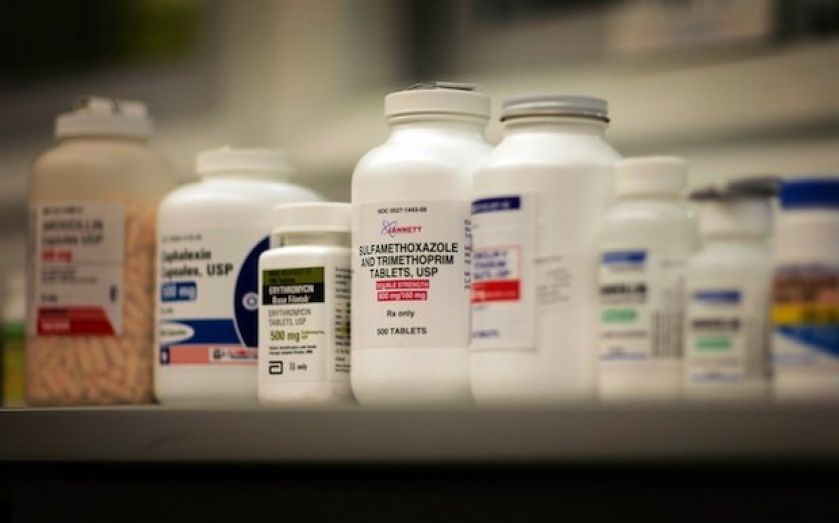
HERE’S a Halloween horror story for you. One of America’s top experts on disease control has just announced that we are now in the post-antibiotic era.
It is a moment that has been feared for some time, and its arrival is not a widespread problem – yet. But amid the relentless churn of daily events, here is a bleak turning point in human history.
It is easy to forget how short the era of fully-effective antibiotics was – less than a century. We had bacterial infections under control for perhaps 70 years, with the earliest practical medicinal forms being developed in the 1940s. In those few decades, millions of human lives have been saved, from scourges like tuberculosis and the everyday dangers of out-of-control infections. As recently as 1924, the son of an American President could die from an infected blister on his heel. Calvin Coolidge Junior was just 16.
Penicillin was, famously, an accidental discovery: in September 1928, at St Mary’s hospital in Paddington, Alexander Fleming’s bacterial cultures became contaminated by fungal spores that he realised were somehow killing the bacteria. What’s less well-known is that it was accidentally discovered at least twice. Thirty years earlier, Ernest Duchesne noticed some stable boys deliberately letting the saddles in their care get mouldy. They told him this helped heal up the horses’ saddle sores. Tragically, his young age meant his work was ignored, meaning decades more of human misery.
As the decline of antibiotics continues, there will be questions about overuse. There is no question that we did not treasure enough the extraordinary gift to human wellbeing that these wonder drugs represented. We took them for granted, and let resistance build up far quicker than was necessary.
But recriminations are cheap. What we need to understand, watching the miracle of penicillin and its cousins fade, is what this shows us about innovation. In their accidental discovery, we can see the unpredictable origins of great breakthroughs, and the ease with which such opportunities can be missed. We cannot plan for such transformative leaps forward, rather, we need to remain open to unexpected answers and voices outside the professional clerisy.
In our search for antibiotic replacements, we can also see the dangers of inflexible regulation. One of the best contenders we have is another discovery of the 1920s: phage therapy. Tragically, the ability of phage viruses to evolve to outpace bacterial resistance makes them incompatible with current drug approval regimes that are based around testing fixed compounds.
But the most important lesson is that technological progress is not inevitable. Unless we take care to keep the pathways that make breakthroughs possible free, life-saving innovation itself sickens. In recent years we have grounded the space shuttle and supersonic passenger planes. Now antibiotics are failing – with no equivalent to take their place. They showed us how a chance discovery can change the world, but they also remind us of the open culture we need to keep making great leaps forward.
Marc Sidwell is managing editor at Morning Wire