Lord Hill should not fear ambition in pursuing capital markets union

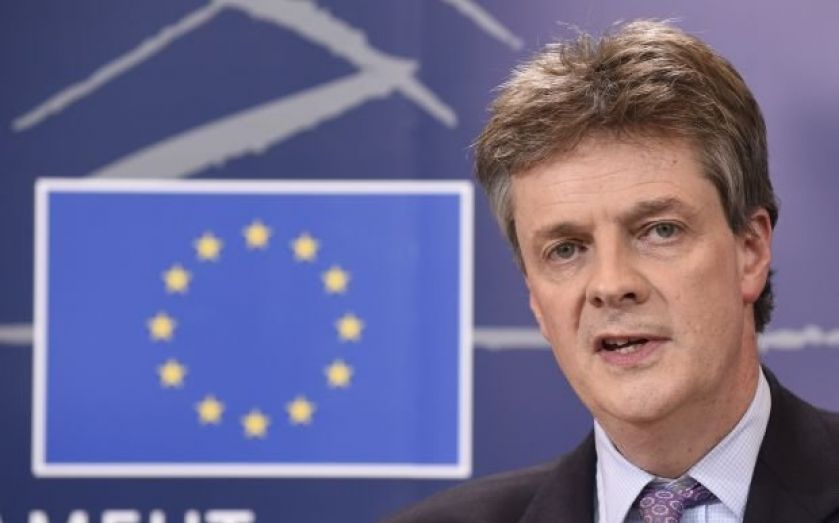
Today is Jonathan Hill’s first day as European commissioner for financial stability, financial services and capital markets union. He takes on the role at an inflection point: there is broad recognition that Europe needs deep, healthy, and diverse financial markets if it is to unlock economic growth. Banks still provide the major proportion of Europe’s finance, while markets deliver much less: a mirror image of the position in the US. Things have to change, and the vehicle for that change is capital markets union (CMU), at the heart of the new commissioner’s mandate.
It has been said, somewhat unfairly, that CMU is a slogan waiting for a policy programme. Arguably, it has been an implicit goal of EU policy since the Single European Act in 1986. Now it is an explicit aim, with strong support from the commission president. AFME and our members, Europe’s cross-border banks, support the goal of an efficient CMU, covering all 28 Member States and offering competition and choice to savers, investors and firms across Europe. We propose three objectives for the CMU initiative which, taken together, should provide a framework for action. These are the three “I’s”: instruments, investment and market infrastructure.
The first I is developing broader, stable and more liquid markets for financial instruments, particularly equity and debt. Funding markets for sovereigns and large companies are generally well-integrated and effective, whereas market funding for SMEs and intermediate companies across much of Europe remains patchy and expensive. The focus should be on removing barriers, of whatever kind, which prevent the formation of a broader, more efficient and more liquid pan-European market for these products.
The second is harnessing long-term savings across Europe to promote productive investment. Policy and regulation must provide the right framework for institutional investors to make sound long-term investments in Europe’s capital markets.
The third is promoting open and integrated capital markets infrastructure. Notwithstanding the reforms underway through MiFID (the Markets in Financial Instruments Directive) and EMIR (the European Market Infrastructure Regulation), aspects of Europe’s capital markets infrastructure remain fragmented in ways which increase costs for end-users and mean that capital is not allocated where it is most needed. The focus should be on steps to reduce costs and widen access.
It is also essential to remember that capital markets need to be not just more European, but more global. A European capital markets union that is not closely integrated into the wider global capital markets will not achieve its aims.
An early exercise at AFME suggested that there are more than 30 separate issues that need to be addressed under these three headings, more than enough to occupy commissioner Hill during his five year term.
But to encourage some early progress, we urge that near-term priorities should include:
Developing standards for high quality securitisation (HQS).
Working towards common and reliable standards for cross-border credit information on SMEs.
Facilitating the development of a European market for private placements.
Removing the remaining barriers to an integrated EU market for clearing and settlement services.
Eliminating divergences in listing requirements for exchanges.
Streamlining reporting regimes and the operation of trade repositories in Europe.
Pursuing a securities law which would provide the basis for a single market in financial instruments.
Considering harmonisation of insolvency law across Europe. As we have seen in resolution, what happens at the end of the life of a corporation has a major impact on what happens during its life.
Reviewing tax incentives for SMEs to start and grow businesses.
This is undoubtedly an ambitious policy agenda: but we should not fear ambition. Since the crisis, we have learned that many things that nobody thought could be achieved are in fact achievable. Just five years ago a system of European Supervisory Authorities was thought to be a generation away – now they are part of the landscape. Building a European resolution framework was considered impossible because it would impact countries’ insolvency laws. Now we have one. And the idea of a banking union in Europe, with a single supervisor and single resolution mechanism could quite simply not be imagined. And yet later this week, the ECB starts to supervise banks in the Eurozone.
Finally, the discussion should not be sidetracked by wrangling about new institutions. What Europe needs is a single rulebook so that there is a clear and level playing field, not a single supervisor. The work should be driven by reform and focus on practical measures to promote growth and integration of capital markets among the EU28.
Simon Lewis is chief exec of AFME (Association for Financial Markets in Europe).