| Updated:
Magicians and mathematicians: Rocket Network’s Mark Girling on media agency challenges

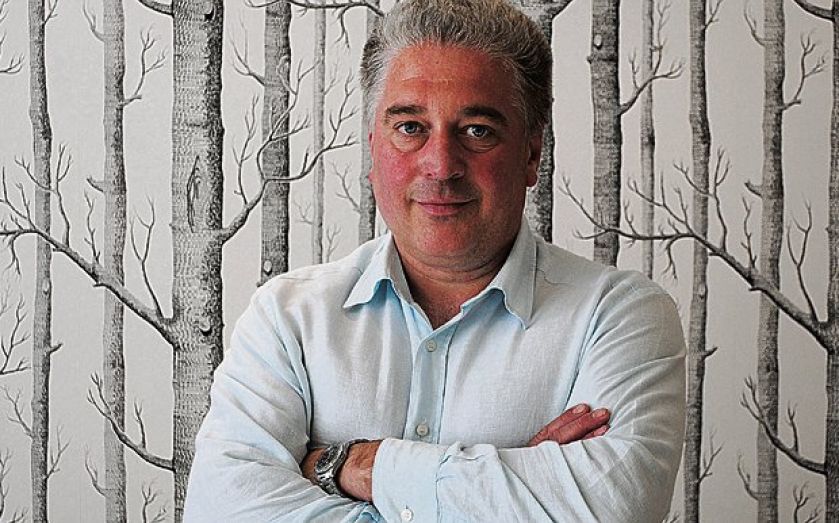
Established in 1997, Omnicom-owned Rocket Network has grown its business to include media planning and buying accounts with brands such as the Co-operative Group, Harvey Nicholls and Porsche. Mark Girling, its managing director, has now worked at a senior level in London media agencies for over 20 years. He talks to Morning Wire about the data deluge facing large agencies like Rocket, and why the spread of programmatic buying doesn’t have to mean the end of creativity for media planners.
You’ve worked mainly in London. What do you think explains the capital’s appeal to media agencies?
Firstly, it’s increasingly where the media owners are located. Ownership has been consolidated over the last 20 to 30 years (ITV has gone from being a string of regional franchises to one commercial television operator), and we’ve seen the arrival of Channel 4 and Channel 5 as London-based operations. By the same token, media has always attracted young, talented people who tend to prefer vibrant cities.
What’s the biggest challenge media agencies currently face?
There’s a huge challenge around how we manage data in the years to come. We all talk about the importance of data in improving the granularity of our targeting and personalisation, but there’s a danger that we get obsessed by the technology.
The job of the media planner is to engage an audience with a commercial message, and data is no doubt an important part of this. But it is just a tool. Agencies are increasingly composed of people that we jokingly call magicians and mathematicians. Some of the disciplines we’re growing, like search, do tend to attract people with more analytical qualifications, but we’re still going to need the magicians – people who can interpret the information and use it to engage audiences. The biggest challenge facing media agencies is to not lose sight of this.
We’re seeing huge amounts of consolidation among agencies at the moment. Is this set to continue?
I’m not sure how much more consolidation there can be in terms of big agencies buying smaller ones in the UK – there just aren’t that many smaller ones left! But as the economy continues to pick up, we should see the spawning of more startups, and holding companies could be interested in buying these younger firms. That’s probably a few years in the future for now, but it’s certainly a characteristic we’ve seen after past recessions have ended.
We’re probably going to see networks continuing to acquire more specialist businesses. We’ve recently acquired a mobile specialist in the group, and increasing numbers of technology firms will get bought up by the big networks. I certainly don’t think we’re going to see any de-consolidation.
What’s your take on programmatic buying? Is it taking away the human touch?
As the technology develops, we’re going to see it used in the more conventional media channels, as well as online. It’s not hard to envisage a day when at least a degree of outdoor advertising is bought programmatically, as well as TV.
But I think it’s a means to an end, and there will always be a huge demand for the human touch in media buying. The human side will become more focused on “pillar” and landmark media. You wouldn’t expect all media to be bought programmatically, because there is a deftness and a skill to creative media buying. You’d lose this if everything was bought by algorithms. A big chunk of what we buy will still be bought on a bespoke basis.
So media agencies aren’t going to lose their creative streak?
I’ve always thought of media as the frame, and the creative stuff as the work that goes in the frame. The more remote you are from the creative work (i.e. sitting on a trading desk), the less opportunity there is to really understand how it engages audiences. You’ll always need planners and buyers who can take the work and augment its impact by placing it cleverly. Some of the landmark programming of recent years, like Britain’s Got Talent, has attracted great creative advertising. People have started creating work specifically to sit alongside these programmes.
How will the spread of programmatic affect the industry’s margins?
We work in a world where premium is pretty well understood – programmes like Downton Abbey attract a completely different demand to the main bulk of media. We’ll see a growing price divide between what’s bought programmatically and the big pieces that are bought on a bespoke basis, but the average will be the same.
Media owners are concerned that programmatic just means their inventory will cheapen. But it’s about how we determine the premium against more “pillar” media opportunities. I genuinely think the two will even out.