Skip to content
Friday 7 August 2026London --:--Frankfurt --:--Zurich --:--
NewslettersSearchEN · DE
MorningWire

European business, markets and politics

FTSE 100
10,901.09
+0.31%
DAX
26,319.45
+0.69%
CAC 40
8,714.93
+0.17%
STOXX 50
6,523.86
+0.33%
  • Europe
  • Markets
  • Business
  • Economy
  • Technology
  • Politics
  • Opinion
More
GermanyFranceBankingAIEnergyFintechPropertyCapital Markets
  • Germany
  • France
  • Europe
  • Markets
  • Business
  • Economy
  • Technology
  • Politics
  • Opinion
  • DE
Tuesday 24 February 2026 11:47 am  |  Updated:  Tuesday 24 February 2026 11:48 am

There’s a new Magnificent 7, and it’s called the Fusty 5

By: Ali Lyon

Add as a preferred source on Google
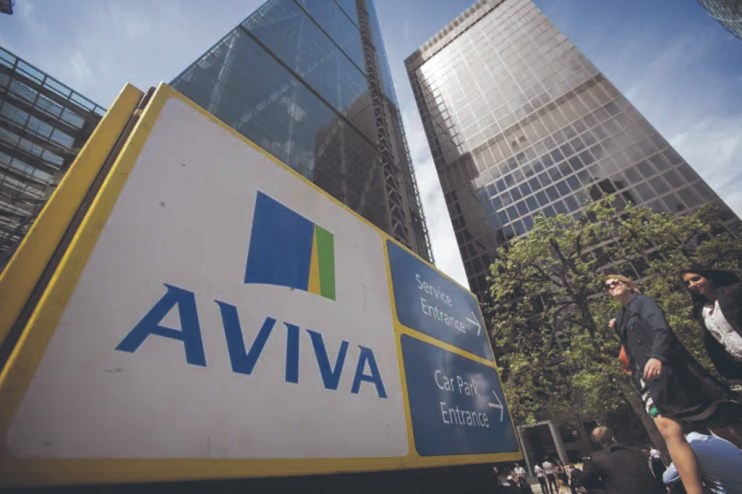
Aviva's deal to buy Direct Line was agreed in March
Aviva's Direct line acquisition has boosted General Insurance premiums

The success of the ‘Magnificent 7’, a group of technology companies so called for their historic stock market performance and gargantuan scale, has to many been the defining market story of the past half-decade.

The seven hyperscalers – which include Alphabet, Amazon and Nvidia – have carried the American stock market to a years-long streak of all-time highs thanks to their position at the vanguard of the artificial intelligence roll-out likely to usher in the fourth industrial revolution.

But according to a new analysis, last year, investors would have been better served allocating their money into an altogether more orthodox – and British – group of companies.

Dubbed ‘the Fusty 5′, the cohort of “dull, ex-growth” London-listed firms considerably outperformed their AI-native counterparts, as a succession of geopolitical and macroeconomic headwinds ate away at investors’ risk appetite.

“The market narrative has been that quality growth is the only game in town,” said Alan Dobbie, a fund manager at Rathbone Income Fund, who conducted the analysis. “But in 2025, we saw something very different. UK value stocks, long dismissed as dull or ex-growth, are outperforming the Magnificent Seven. That could lead to a profound shift in leadership.” 

The relative performance of Aviva, Natwest, Marks and Spencer, Centrica and nicotine giant Imperial far outstripped that of their shinier – and faster growing – American counterparts, thanks to their affordability and reliability, Dobbie argued.

All five churn out consistent dividends, which, combined with their low valuation relative to multitrillion-dollar tech firms, have lured investors wanting to balance out some of the frothier, riskier

“Income investing naturally leans towards value, but value does not mean low quality,” he added. “We focus on businesses allocating capital sensibly to drive sustainable earnings and dividend growth.”

Read more

Why even gilts are outperforming the once unstoppable Magnificent 7 this year

Depiction of the Magnificent 7 tech companies experiencing financial decline, with stock charts showing negative trends

Of the companies singled out by wealth management giant Rathbones, Natwest’s share price rose the most, rallying nearly 70 per cent over the year the government sold down the last of its post-financial crisis stake in the lender. Aviva and British Gas-owner Centrica also enjoyed near-50 per cent gains, while Imperial added nearly a third onto its valuation.

Not so Magnificent 7

Meanwhile several of the symbolic Magnificent 7 companies either lost ground, or ended 2025 almost exactly where they started. The market capitalisations of Microsoft, Apple and Tesla all fell by single digit percentages, while Meta nudged up just 12 per cent.

Only Nvidia and Alphabet, the latter of which enjoyed a rebound from a stuttering 2024 when it lost ground in the AI arms race, grew by more than 15 per cent.

The same pattern played out in the two markets’ flagship indexes. London’s FTSE 100 climbed the most of any major basket of blue-chip stocks. Total return from the index broke past 25 per cent for the first time since the recovery from the financial crisis, beating Paris’s Cac, Frankfurt’s Dax and both the Nasdaq and S&P 500 in New York.

Analysts widely pointed to the Footsie’s naturally defensive make-up, with its embarrassment of banks, defence firms and miners all enjoying sector-wide structural tailwinds that carried their valuation higher.

The trend was amplified by the price of dollar, which, like the wider cohort of American assets, had enjoyed a run stretching back beyond the pandemic before erasing much of those gains in the wake of Donald Trump’s election to the White House. Over 2025, the dollar experienced its steepest annual decline in three decades, shedding 10.1 per cent of its value against a basket of major currencies.

“If you’ve doubled down on growth at any price, that has increasingly become an anchor on performance,” said Dobbie of investors. “Markets are once again scrutinising what’s priced in and we think that changes the environment fundamentally.”

Read more

Milestone Alphabet century bond already under pressure

Googles modern Kings Cross headquarters showcasing innovative architecture in Londons dynamic tech district

Share this article

  • Facebook
  • X
  • LinkedIn
  • WhatsApp
  • Email

Similarly tagged content:

Sections

  • News

Categories

  • Business

People & Organisations

  • Alphabet
  • amazon
  • Aviva
  • Centrica
  • dollar
  • ftse 100
  • magnificent 7
  • Marks & Spencer
  • NatWest
  • Rathbones
  • rathbones group
  • tesla
  • trump

Trending Articles

  • Revolut founder’s wealth set to balloon amid talks of share award at $500bn valuation

  • Rupert Lowe axes pensions triple lock and pledges tax cuts in economic plan

  • WPP slashes jobs as revenue continues to fall

  • Liverpool owners tipped to sell – but not to Amazon boss Bezos – by former CEO

  • As it happened: Stocks rise as oil fluctuates after Red Sea attack; US-Iran deal ‘being circulated’

More from Morning Wire

  • Why even gilts are outperforming the once unstoppable Magnificent 7 this year

    Markets
    Depiction of the Magnificent 7 tech companies experiencing financial decline, with stock charts showing negative trends
  • Milestone Alphabet century bond already under pressure

    Markets
    Googles modern Kings Cross headquarters showcasing innovative architecture in Londons dynamic tech district
  • The physical capital paradox: why the best performing asset class is the least owned

    Opinion
    Diversified Energy Company said it would pay for the sale with a $35m share issuance.
  • London Stock Exchange overhaul will ‘damage trust’, top investors warn

    Markets
    London's AIM stock exchange has struggled to attract IPOs in recent years.
  • City trading ‘higher than thought’, FCA believes

    Markets
    GettyImages 2211256637 showing a significant event or figure relevant to recent news updates in the business sector
  • Private equity firms eye valuation gap as City falls to takeovers

    Markets
    The FTSE 100 could face trouble as banks suffer from bond market turmoil.
  • ‘We are going to run out’: Mitie marks eleventh mega takeover of 2026

    Markets
    The FTSE 100 enjoyed a 3-year record rally in the third quarter.
  • London’s IPO lull expected to last into 2027

    Markets
    The London Stock Exchange has had a challenging 2024 so far, although bankers are eying a rebound for IPOs
MorningWire

Independent European business, markets and political news for decision-makers.

Morning Briefing

Europe

  • Germany
  • France
  • Europe
  • UK & Ireland

Business

  • Markets
  • Banking
  • Technology
  • Energy
  • Property
  • Fintech

Editorial

  • Opinion
  • Editorial Policy
  • Corrections
  • Contact

Company

  • About Morning Wire
  • Privacy Policy
  • Terms of Use
  • Cookie Policy
© 2026 Morning Wire Ltd · Published by Morning Wire Media, Bahnhofstrasse 65, 8001 Zürich, Switzerland
Privacy · Terms · Cookies · Facebook