Make foreign tourists pay to keep museums free for Londoners

Free museum entry isn’t the feel-good policy you think it is. Time to charge foreigners and keep our precious collections free for Londoners, says James Ford
Is the idea of charging foreign tourists for access to major museums and art galleries really that radical a proposal? Judging by the reaction from some corners of the UK’s cultural elite, apparently so. The interim director of The Tate, writing in the Guardian, certainly thinks that “charging for entry would be a big mistake”. Even here in Morning Wire, an unapologetic bastion of capitalism, the devotees of free museums have stated their case.
The museum mafia seem very anxious about the idea that they might have to compete for tourist numbers based on the appeal of their collections rather than the mere fact that visitors can enter for free. And that should probably concern all of us, especially taxpayers. Afterall, currently free entry to significant museums and galleries is not really ‘free’ to UK citizens; we fund the scheme through our taxes, effectively subsidising foreign tourists to gawp at our national treasures. Making foreign tourists pay an entry fee in order to fund free visits by UK taxpayers would be a more sensible, pragmatic solution – and certainly much fairer.
Sadly, free museum access is the epitome of vibes-based policymaking. Why scrutinise the real evidence when you can just bask in the fuzzy logic or feel-good self-congratulation that comes from publicly signalling your seemingly civilised virtue?
Unfortunately, many of the stated benefits of free admission are presumed, notional or merely anecdotal. While the policy has reduced the economic barriers that prevented low-income families from accessing major museums and galleries in theory, there is scant evidence that the demographics of those actually visiting have changed all that much. Yes, visitor numbers increased by an average of 151 per cent in the wake of the introduction of free admission, this was largely fuelled by existing visitors choosing to visit more often rather than by a sudden influx of new converts to the joys of museums or galleries. A study for the National Museum Directors Conference (NMDC) found that by 2004 – a few years after the introduction of free entry – visitors from social groups C2DE typically represented just 13 to 17 per cent of overall visitor numbers, despite making up around 45 per cent of the UK population.
Rather than making museums immune from market pressure, the free entry policy has actually made them even more reliant on crass commercialisation
Although conceived with good intentions, the free museums policy has had unintended negative consequences. Because those museums in the scheme have forfeited control over their biggest money-making asset (admission costs for their main collections), they are left with only four means of raising extra income: special exhibitions, retail income, revenue as events spaces and corporate sponsorship. Rather than making museums immune from market pressure, the free entry policy has actually made them even more reliant on crass commercialisation.
So, if you have baulked at the premium cost of visiting a time-limited exhibit, blame the free museums policy.
Why does the British Museum have four gift shops?
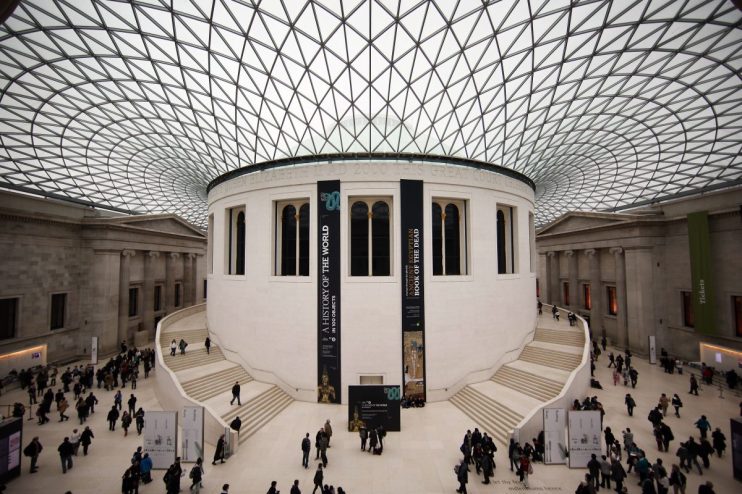
If you have ever wondered why the British Museum has four gift shops (not counting the two further pop-up gift shops related to special exhibitions), several ground floor cafes, a restaurant, a pizzeria and a coffee lounge, blame the free museums policy.
Perhaps you were horrified by the Natural History Museum’s 2017 decision to remove Dippy, the iconic 26m long cast of a Diplodocus that greeted visitors in the Hintze Hall and replace it with Hope, a Blue Whale skeleton suspended from the ceiling? A suspended whale skeleton left more room for additional dining capacity at private functions and Dippy could not just be moved outside at the time because that is where the museum’s ice rink went every winter (until 2021). Again, blame the free museums policy.
Have you been outraged by some museums’ choice of corporate sponsor? Well, I think, by now, you know where I am going with this…
Of course, you might think Japanese tobacco firms should be able to launder their cash and reputation through our cultural institutions. Perhaps you are ok ‘exiting via the giftshop’ with a Rosetta Stone tea towel (£9.99) having gorged yourself on a £17 quattro formaggi pizza (you can add a beer to that for just £4 more). But I suspect that many of the most fervent defenders of free entry consider such things a bit tacky. Personally, I’d rather we just charged some obnoxious American tourists £20 a head. That is a more elegant policy solution to the funding squeeze that faces both museums and the Treasury. It is certainly preferable to scrapping free entry altogether, and that must surely be the alternative. Charging overseas tourists would allow us to retain the real principle and benefit of free entry – unlimited access for UK citizens to important UK cultural assets – whilst demonstrating that we know not just the value but also the true cost of maintaining those assets.
James Ford was a political adviser to former Mayor of London Boris Johnson