Skip to content
Sunday 6 September 2026London --:--Frankfurt --:--Zurich --:--
NewslettersSearchEN · DE · FR
MorningWire

European business, markets and politics

FTSE 100
10,831.09
0.00%
DAX
26,046.40
+0.17%
CAC 40
8,278.77
-0.09%
STOXX 50
6,392.93
+0.16%
  • Europe
  • Markets
  • Business
  • Economy
  • Regulation
  • Politics
  • Opinion
More
GermanyFranceEU InstitutionsCompetitionPublic AffairsBankingTechnologyEnergy
  • Germany
  • France
  • Europe
  • Markets
  • Business
  • Economy
  • Regulation
  • Politics
  • Opinion
  • DE
Tuesday 29 July 2014 3:23 pm  |  Updated:  Friday 07 June 2019 1:48 am

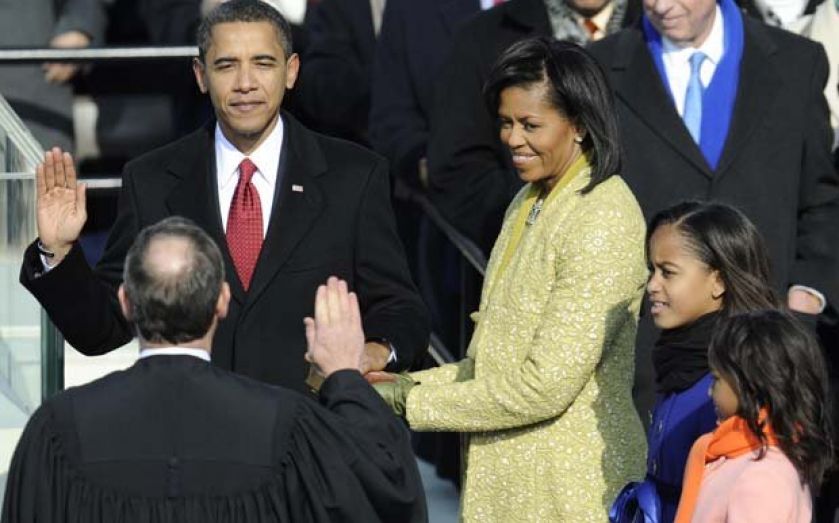
Is making bankers take an oath the best way to restore trust in the financial system?

By: Phillip Blond

Add as a preferred source on Google

Phillip Blond, director of ResPublica, says Yes.

Rules-based approaches have dominated the regulatory response to the banking crisis. But more law does not produce better behaviour, and more regulation produces more complexity that’ll be gamed by people determined to get round any limits on their conduct.

The real cause of bad behaviour is a culture that permits it.

Banking has to escape from the empty platitudes of standards and the rules they engender, to one where banks help form good character in their staff and produce and promote people who do not want to rip off their customers or engage in criminal conduct.

An oath would play an important part in re-establishing boundaries and personal ethical responsibility.

By itself it is insufficient, but if an oath were part of forming the whole industry as a profession, where it was linked to a licence to practice that was run by a new overarching body, then an oath would have the power to change the culture of modern banking.

Mikko Arevuo, senior lecturer in strategic management at Regent’s University London and an Adam Smith Institute fellow, says No.

The idea that we can restore consumer trust and confidence, or prevent the next crisis, by requiring bankers to swear an oath is excessively naive.

Such a pledge trivialises the ethical issues that banks and their employees face in the real world. It gives a false sense of confidence that implies that expressing a few lines of moral platitudes will equip bankers to resist the temptations of short-term gain that can exist in financial services.

Moreover, changing organisational culture is a long and ambiguous process.

Bankers operate within tight regulatory frameworks; the quickest way to drive behavioural change is through regulatory interventions.

Alternatively, banks should change compensation policies to focus on sustainable shareholder value creation rather than short-term gain, as well as enforce bonus claw-back clauses to limit reckless risk taking.
 

Share this article

  • Facebook
  • X
  • LinkedIn
  • WhatsApp
  • Email

Similarly tagged content:

Sections

  • Opinion

Categories

  • Opinion

Trending Articles

  • Victoria Beckham owed £350,000 by Harvey Nichols

  • Iceland boss Richard Walker vows to set up shop on Falkland Islands

  • Don’t underestimate the free trade agreement Britain just joined

  • £74m for branded condoms? UK must stop spaffing cash on foreign aid

  • Britain ‘taxing itself to death,’ Burnham warned

More from Morning Wire

  • The BBC shouldn’t push Londoners to accept antisocial phone behaviour 

    Opinion
    Passengers inside a graffiti-covered London Underground train car, some looking at phones, others observing the interior.
  • Think your tax affairs are settled? Think again.

    Opinion
    HMRC
  • Brits fear AI is slipping out of human control after ‘rogue’ systems escape tests

    Tech
    Dario Amodei, CEO of Anthropic, speaking at a tech conference podium, wearing a suit and addressing the audience.
  • Faria Education Group Acquires Edu Intelligence to Advance AI-Powered Analytics for Schools

    Business Wire
  • Great Britain Leads Europe’s FMCG Inflation as NIQ Launches New Inflation Barometer

    Business Wire
  • The only answers to over-tourism are prices or queues

    Opinion
    Tourists photograph the ornate white marble Trevi Fountain in Rome, Italy.
  • City firms face FCA clampdown on bullying and harassment

    Legal
    The FCA said in June any scheme must keep the market afloat in order to curb rising costs for consumers.
  • GPTZero founder: Even with watermarks, AI slop isn’t going anywhere

    Opinion
    Woman leaning on a desk with a typewriter, looking up thoughtfully, a pencil in hand.
MorningWire

Independent European business, markets and political news for decision-makers.

Morning Briefing

Europe

  • Germany
  • France
  • EU Institutions
  • Europe

Business

  • Markets
  • Business
  • Economy
  • Regulation
  • Competition
  • Public Affairs

Editorial

  • Opinion
  • Editorial Policy
  • Corrections
  • Contact

Company

  • About Morning Wire
  • Privacy Policy
  • Terms of Use
  • Cookie Policy
© 2026 Morning Wire Ltd · Published by Morning Wire Media, Bahnhofstrasse 65, 8001 Zürich, Switzerland
Privacy · Terms · Cookies · Facebook