Skip to content
Thursday 3 September 2026London --:--Frankfurt --:--Zurich --:--
NewslettersSearchEN · DE · FR
MorningWire

European business, markets and politics

FTSE 100
10,831.52
+0.70%
DAX
26,003.32
+0.63%
CAC 40
8,286.40
+0.07%
STOXX 50
6,382.59
+0.32%
  • Europe
  • Markets
  • Business
  • Economy
  • Regulation
  • Politics
  • Opinion
More
GermanyFranceEU InstitutionsCompetitionPublic AffairsBankingTechnologyEnergy
  • Germany
  • France
  • Europe
  • Markets
  • Business
  • Economy
  • Regulation
  • Politics
  • Opinion
  • DE
Wednesday 12 August 2020 4:24 am  |  Updated:  Tuesday 11 August 2020 4:29 pm

Making it work: Why we need to start talking about who gets access to a coronavirus vaccine

By: Farley Cleghorn

Add as a preferred source on Google
CHINA-HEALTH-VIRUS
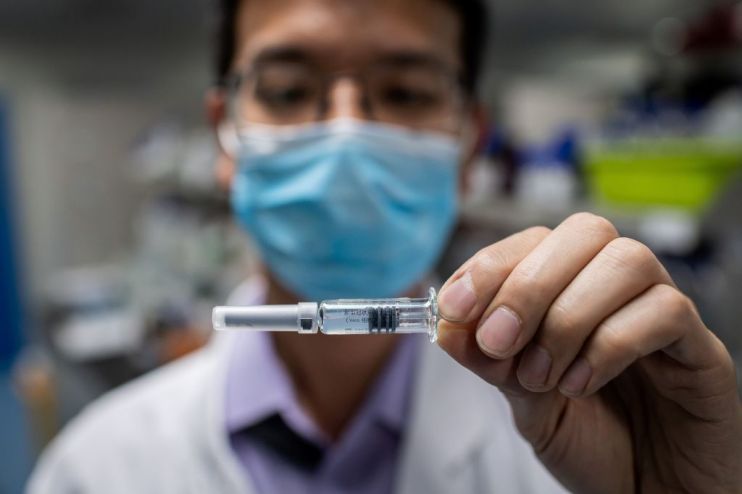
The science behind a coronavirus vaccine looks promising, but there is a long way to go from development to access

There is an unprecedented international scientific effort underway to develop an effective vaccine for SARS CoV-2 — the cause of Covid-19 — and we are all desperate for some good news. 

I have spent my life fighting infectious diseases around the world, from HIV to SARS to Ebola. Unfortunately, our collective track record for speedy vaccine development is, in truth, uneven and disappointing. The mumps vaccine holds the record at over four years, and we are yet to find one for HIV. 

And yet the science behind a coronavirus vaccine is not as daunting.

Leaving aside the Russian claims of a vaccine success, two of the most promising initiatives are in the UK and US. Last month, US pharmaceutical company Moderna began phase III trials of its vaccine. And at Oxford University, the first human trials have shown that the vaccine under development did not prompt any serious side effects and elicited both antibody and T cell immune responses.

This positive news has led to UK media headlines speculating that we could have a Covid-19 vaccine rolled out by Christmas. Recruitment is already underway for large scale trials which are due to begin in the coming weeks. 

However, developing a vaccine is only half the battle. The toughest trials lie ahead in ensuring equal and affordable access to any successful vaccine to the entire world.  

We have yet to create a proven model for vaccine development and distribution during a pandemic, let alone the kind that will be required by the entire global population. As an international medical and political community, we must ensure that any eventual treatment is free from the narrow and selfish calculations of “vaccine nationalism”. 

Read more

INEOS boss: North Sea decommissioning is ideological and destructive

Offshore oil rig platform with illuminated facilities and a long gangway over choppy North Sea waters.

There are multiple perils to be considered, from cost and vaccine hoarding to price gouging and lack of access for the most vulnerable in our societies. 

The issues of access and pricing are even more acute in poorer countries where it takes much longer to close vaccine coverage gaps. People in these countries will be at the back of the line.

While the impact of the virus has been far from equitable, it is our societal responsibility as global citizens to assure access to proven treatments and preventatives like vaccines to all who need them. 

I am concerned at the general assumption that coronavirus vaccines will be available free of charge to all and that pharmaceutical companies are only seeking to recover their costs. This is not the case. Stephane Bancel, chief executive of US biotech company Moderna, has been explicit about his plans to make a profit. Others are no doubt thinking the same, even if they are not saying it.

How will developing countries access a proven vaccine, and what will they pay? Many in the medical and research community would like to see an explicit commitment to free global distribution of a Covid-19 vaccination treatment, and more inclusive conversations happening right now about how that might work.   

The science behind a coronavirus vaccine looks promising, and the investment towards one is impressive — with $10–15bn invested in the US alone. But there is a long way to go from development to universal access. And right now, there remains a significant gap between the rhetoric and the reality.

Main image credit: Getty

Read more

The Capitalist: Tugendhat does the triple lock hop

Kemi Badenoch, Tom Tugendhat, James Cleverly, and a Conservative MP on stage during a reshuffle event.

Share this article

  • Facebook
  • X
  • LinkedIn
  • WhatsApp
  • Email

Similarly tagged content:

Sections

  • News
  • Opinion

Categories

  • Opinion
  • Politics
  • Tech

Trending Articles

  • Vodafone and Deliveroo look to patch up Reform ties after Yusuf prison threats

  • Trio of firms poised to quit London Stock Exchange as exodus gathers pace

  • Jim O’Neill: Capital gains tax hike ‘looms’ as top option for Burnham

  • Easyjet’s over-60s recruitment push is economically necessary

  • ‘Large tax hikes on the way’: How the global bond rout is boxing in Healey

More from Morning Wire

  • INEOS boss: North Sea decommissioning is ideological and destructive

    Opinion
    Offshore oil rig platform with illuminated facilities and a long gangway over choppy North Sea waters.
  • The Capitalist: Tugendhat does the triple lock hop

    Opinion
    Kemi Badenoch, Tom Tugendhat, James Cleverly, and a Conservative MP on stage during a reshuffle event.
  • Robert Jenrick: only Reform will cut spending and restore confidence in Britain

    Opinion
    Robert Jenrick speaking at a podium with BRITAIN NEEDS REFORM sign, wearing glasses, suit, and green tie.
  • Family businesses are the economy’s great survivors

    Opinion
    Barbour black hat with tartan lining and product tags, showcasing classic British family business apparel
  • Paragon MD: Planning system is quashing UK developers’ ambition

    Opinion
    Smiling man in a suit jacket and light blue shirt, with a blurred cityscape and greenery in the background
  • Burnham calls for honesty then sticks his head in the sand

    Politics
    Andy Burnham, Mayor of Greater Manchester, in a dark suit holding a red folder outside 10 Downing Street
  • The Bayeux Tapestry is British – we should keep it

    Opinion
    Bayeux Tapestry depicting soldiers on horseback and on foot in battle, with decorative borders.
  • The Debate: Is university now a waste of money?

    Opinion
    Oxford University students in academic gowns, one playing a trumpet, others drinking under an umbrella.
MorningWire

Independent European business, markets and political news for decision-makers.

Morning Briefing

Europe

  • Germany
  • France
  • EU Institutions
  • Europe

Business

  • Markets
  • Business
  • Economy
  • Regulation
  • Competition
  • Public Affairs

Editorial

  • Opinion
  • Editorial Policy
  • Corrections
  • Contact

Company

  • About Morning Wire
  • Privacy Policy
  • Terms of Use
  • Cookie Policy
© 2026 Morning Wire Ltd · Published by Morning Wire Media, Bahnhofstrasse 65, 8001 Zürich, Switzerland
Privacy · Terms · Cookies · Facebook