
Making the invisible, visible

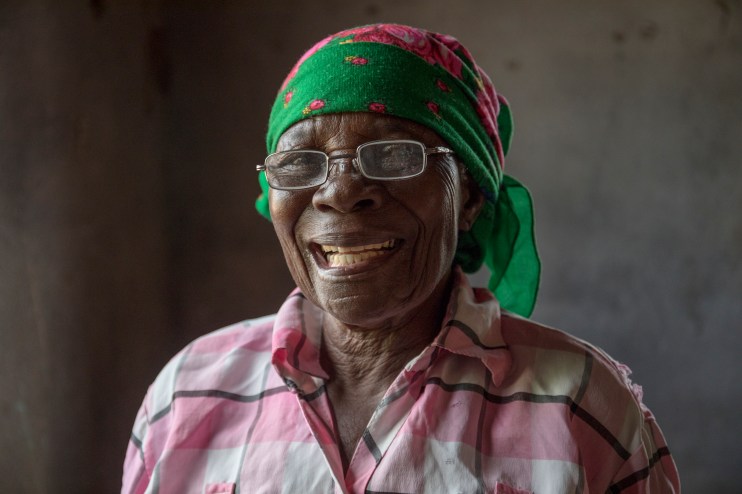
How an eye health programme in Zimbabwe is using technology to ensure no one is left behind.
Kiyasi can’t remember when she first noticed the problems with her eyes. “When I rubbed them, tears would come out, then I’d wipe the tears and then be able to see. My eyes seemed to have something in them but that thing would not come out, that’s how it started.”
The 74-year-old farmer from rural Zimbabwe didn’t realise that she was developing cataracts. Her vision became progressively worse, until one day it suddenly deteriorated and she couldn’t see the person sitting next to her.
Life became very hard for Kiyasi when she lost her eyesight. Her crops were neglected and she struggled to eat and drink. So when her son told her there was somewhere she could get treatment, she was happy to make the arduous journey to her nearest eye health clinic, operated by Zimbabwe Council for the Blind. Two cataract operations later and equipped with a pair of glasses, her life has been transformed.
“I am very happy with the glasses because I can now see things that are far away, that I couldn’t see before”, she says. “I no longer have to ask for the way, I just get on the road and go!”
Kiyasi is just one of more than a billion people worldwide living with poor eyesight or blindness. Like her, over 90% of the people affected live in low- and middle-income countries, where organisations like Zimbabwe Council for the Blind work tirelessly to find and treat everyone who needs access to eye health. But their work is extremely challenging. Resources are scarce and the number of people who need help is growing all the time.
The good news is that for most people, their eyesight problems can be solved with cost-effective treatments such as cataracts and glasses. So why are so many living with preventable or treatable eye conditions?
The challenge is not so much creating new treatments but ensuring the right treatments reach the people who need them.
Eye health services know what the broad range of problems are and they usually know the solutions once they see the patient. But they rarely have good-quality, timely information that tells them where the patients are or where they’ve been referred. So scarce resources are often stretched to breaking point in finding these patients and ensuring they receive treatment.
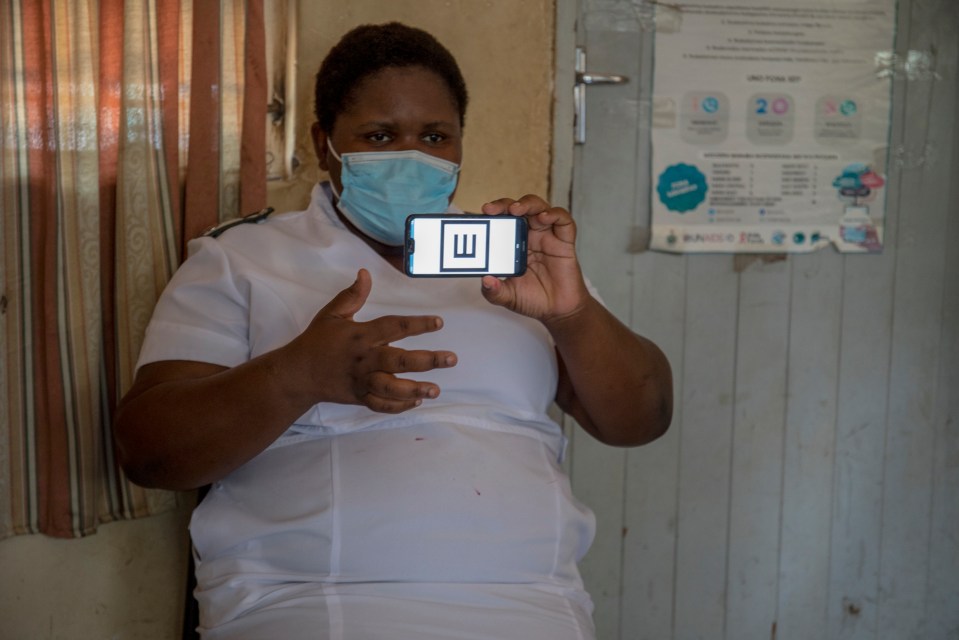
That’s where technology comes in. In Zimbabwe, Council for the Blind is working with CBM Christian Blind Mission, a leading eye health NGO, and social enterprise Peek Vision to deliver better services to the people who need them. Eye screening has been brought closer to communities like Kiyasi’s through the use of Peek’s smartphone-based vision test, which can be used by non-specialists to screen for vision loss.
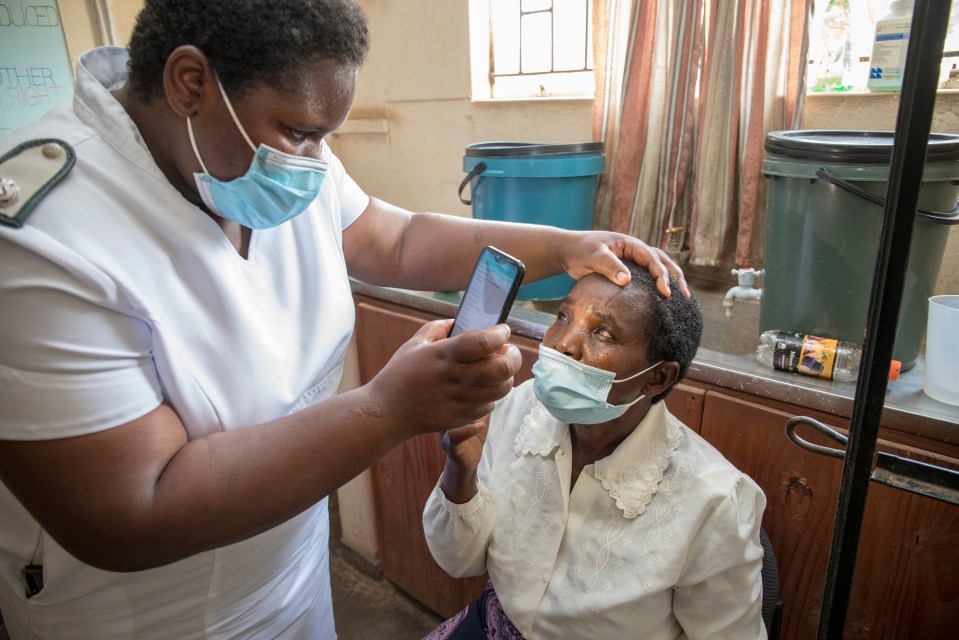
When Kiyasi visited her nearest eye health clinic, a nurse confirmed her eyesight problem using Peek. That triggered a referral for further investigation, which her son helped her to attend, and eventually resulted in Kiyasi receiving the surgery and glasses that restored her sight to her. Her entire journey to care was tracked by programme managers using Peek’s data-tracking platform.
Kiyasi had help from her son so she could access the care she needed. But people living with sight loss often struggle to access health services. In many cases, even after they’ve been located, patients are lost to the system. There are many reasons why they might not make it: perhaps they don’t understand the treatment they’ve been offered, or they can’t arrange travel to their appointment.
That is why it is so important that eye health services like those operated by Council for the Blind can access the data they need to understand why some people aren’t reaching care.
The CBM-Peek programme in Zimbabwe has given Council for the Blind the capability to measure what matters and make their services responsive and data-driven. The result is that patients who need access to eye services can be followed up and connected to care.
“With Peek, we are now able to reach the places that we never thought the eye health programme would take us,” says Busiswe Mzyece of Council for the Blind Zimbabwe. “For me, as an administrator, I am now able to see the impact that the project has had and the number of children or adults with eye problems, so it’s really assisting me.”
Thanks to the support of CBM and other eye health NGOs, as well as a small group of visionary donors, Peek’s data platform, is now being used in eleven countries in Africa and Asia. Peek is a prime example of how relatively simple technology can help transform eye health services. The kinds of improvements seen in Zimbabwe can’t come soon enough for the billion people who need access to eye health in low- and middle-income countries.
The Tej Kohli & Ruit Foundation is a restricted fund operating under the auspices of Prism The Gift Fund, registered UK charity number 1099682.