Skip to content
Wednesday 12 August 2026London --:--Frankfurt --:--Zurich --:--
NewslettersSearchEN · DE
MorningWire

European business, markets and politics

FTSE 100
10,844.19
-0.17%
DAX
26,391.42
0.00%
CAC 40
8,714.94
0.00%
STOXX 50
6,551.22
0.00%
  • Europe
  • Markets
  • Business
  • Economy
  • Technology
  • Politics
  • Opinion
More
GermanyFranceBankingAIEnergyFintechPropertyCapital Markets
  • Germany
  • France
  • Europe
  • Markets
  • Business
  • Economy
  • Technology
  • Politics
  • Opinion
  • DE
Morning Wire’s journalism is supported by our readers. .
Thursday 11 June 2026 12:01 am  |  Updated:  Wednesday 10 June 2026 1:29 pm

Making the jump to self-employment could damage your pension savings

By: Maisie Grice

Investment Reporter

Add as a preferred source on Google
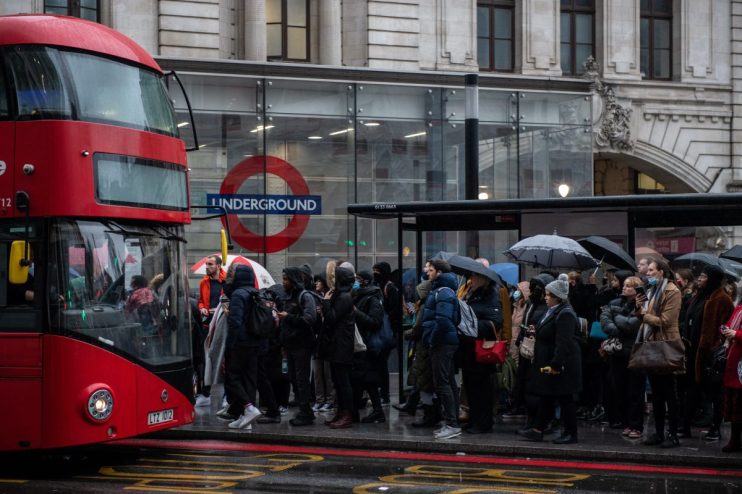
In 2022, rolling Tube strikes led to massive queues for crowded buses. (Photo by Chris J Ratcliffe/Getty Images)
Self-employed Brits are forgoing contributions

Employees making the leap into self-employment could put their retirement at risk, with many unlikely to continue saving into a pension upon leaving auto-enrolment.

Roughly one in five self-employed workers save into a private pension, compared with around four in five employees, leaving those working for themselves at greater risk of having insufficient savings upon retirement, according to findings from the Institute for Fiscal Studies (IFS).

The lack of engagement among self-employed Brits has been deemed urgent by the revitalised Pensions Commission, which has acknowledged warnings from the industry that more needs to be done to boost savings from this cohort.

In particular for those who leave full time employment to be self-employed, with over three-quarters who take the step halting pension allocations, despite having consistently made contributions before.

Average pension contributions also fall off the back of the decline in pension participation.

This has been credited to irregular earnings, the loss of auto-enrolment safety net and many failing to separate business finances from personal.

Young workers and low earners

The drop in participation upon moving into self-employment is largest amongst young people, with only 13 per cent of people under 30 saving into a pension in their first year of working for themself.

While this figure rises year on year, hitting 24 per cent in year five, it remains well below that of older Brits, with roughly 37 per cent aged between 30 and 41 and 38 per cent between 41 and 50 saving into a pension.

But this is consistent with patterns spotted for young workers who have access to auto-enrolment, with many being unlikely to engage with their pension or increase contributions, opting to use capital to deal with more immediate financial problems.

Read more

Pensioners hit with £8bn tax bill after government freezes allowances

City economists have warned that the triple lock pension is unsustainable and unaffordable given the state of the UK's public finances.

Self-employed Brits who earn less than £36,500 were also found to be contributing less, with participation falling under 20 per cent, compared to higher earners.

Nearly 40 per cent of people earning above £36,500 actively added to their pension.

Average pension contribution rates are also similar for the bottom and middle earnings groups both before and after moving from an employee job to self-employment.

Earning less than £36,500 when an employee, means pension contribution rates fall by around 5 percentage points from around seven per cent before the transition to just 2 per cent of earnings after becoming self-employed.

Need for policy change

The lack of contributions have set off alarm bells both in the industry, as despite the government taking steps to boost pension engagement, many argue not enough is being done to effectively serve this group.

Laurence O’Brien, senior research economist at IFS, said: “Boosting private pension saving among the self-employed is becoming an urgent challenge for policymakers. 

“One moment to target is the point when workers move from an employee job into self-employment, where currently over three-quarters of workers stop saving. Ideally, policies could make it easier for these workers to continue saving in the workplace pension pot they had with their previous employer.

“For example, employers or pension providers could potentially be required to provide more details on how to continue saving in the same pension pot when employees leave their job.”

Read more

Burnham and Healey face investor fury over summer of tax speculation

Andy Burnham, wearing glasses and a blue tie, speaks at a conference with a bald man in a red tie beside him.

Share this article

  • Facebook
  • X
  • LinkedIn
  • WhatsApp
  • Email

Similarly tagged content:

Sections

  • News

Categories

  • Personal Finance
  • Business

People & Organisations

  • IFS
  • Institute for Fiscal Studies
  • pension
  • UK economy
  • UK Government

Related Topics

  • employment and wages
  • Pensions
  • the pensions regulator
  • UK jobs, employment and wages
  • Unemployment

Trending Articles

  • Five-star Mayfair hotel hit with HMRC winding-up petition

  • Nottingham Forest owner Marinakis sues Crystal Palace for defamation

  • Back to basics: Sainsbury’s gradual retreat from the British high street

  • Hargreaves Lansdown orders staff back to office

  • As it happened: Intel, Arm shares slide; Oil climbs higher

More from Morning Wire

  • Pensioners hit with £8bn tax bill after government freezes allowances

    Personal Finance
    City economists have warned that the triple lock pension is unsustainable and unaffordable given the state of the UK's public finances.
  • Burnham and Healey face investor fury over summer of tax speculation

    Politics
    Andy Burnham, wearing glasses and a blue tie, speaks at a conference with a bald man in a red tie beside him.
  • State-backed pension scheme plans to pump £1bn into start-ups

    Investing
    City economists have warned that the triple lock pension is unsustainable and unaffordable given the state of the UK's public finances.
  • Neurodiversity, employment law and ‘reasonable adjustments’ – the new HR headache

    Law
    Four brown puppies playing on a green mat with pink toys and a paw-print blanket.
  • London Stock Exchange boss: We should know which companies our pensions are backing

    Markets
    Julia Hoggett and Rachel Reeves with other women leaders at a financial event, discussing pension industry overhaul.
  • IHT pension scramble shows ‘no sign of slowing down’, says Royal London boss 

    Investing
    Royal London shared £181mn with its 2.3m customers in April
  • Businesses can’t keep waiting for political stability

    Opinion
    Canada boundary dragon statue symbolizing economic uncertainty amidst political instability
  • Thin end of the wedge? LLPs brace for major tax overhaul

    Tax
    Canada
MorningWire

Independent European business, markets and political news for decision-makers.

Morning Briefing

Europe

  • Germany
  • France
  • Europe
  • UK & Ireland

Business

  • Markets
  • Banking
  • Technology
  • Energy
  • Property
  • Fintech

Editorial

  • Opinion
  • Editorial Policy
  • Corrections
  • Contact

Company

  • About Morning Wire
  • Privacy Policy
  • Terms of Use
  • Cookie Policy
© 2026 Morning Wire Ltd · Published by Morning Wire Media, Bahnhofstrasse 65, 8001 Zürich, Switzerland
Privacy · Terms · Cookies · Facebook