Male fail: why are modern men struggling to find a purpose?

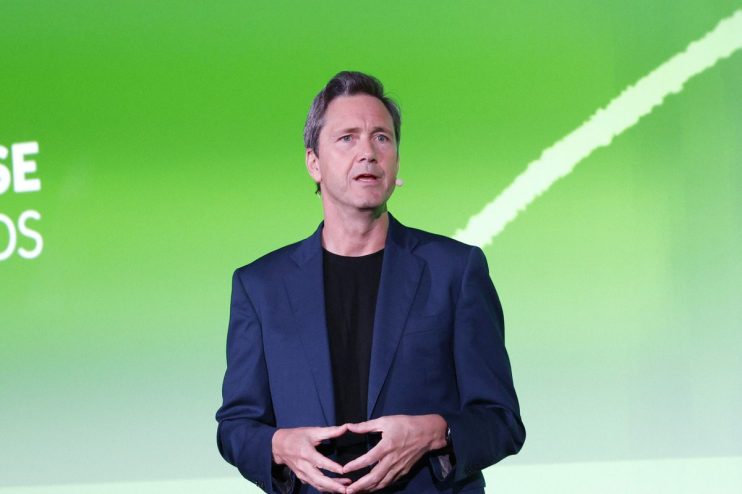
Men in modern society are grappling with a loss of traditional roles, increasing worklessness, and a lack of purpose — issues largely ignored by policymakers, says Emma Revell
What do men want?
No, I haven’t given up on dating apps and decided to try my luck on the Morning Wire opinion pages. This incredibly pertinent question was posed by an audience member at a Centre for Policy Studies panel last week.
The event hosted two phenomenal speakers, Richard Reeves and Nicholas Eberstadt, both of whom have written excellent books on the experiences of men in society today. How they are – for the first time, perhaps in human history – falling behind women in education and in work, and how society has struggled to adapt to a situation where men find themselves untethered from their traditional roles. ‘Male malaise’, as Reeves terms it, or the catchier, more quintessentially American ‘male fail’.
At the start of 1975, 90.5 per cent of working age men were in employment, compared to 55.7 per cent of women. Five decades later, women’s labour force participation has shot up to 71.9 per cent while men’s has dropped to 78.4 per cent – a significant shift in just one working lifetime, especially when you take into account the population increases.
One of the points raised by Reeves and Eberstadt, with Fraser Nelson chairing, was what they considered the alarming lack of attention paid to male worklessness. At the height of the Great Depression in the United States, 24.9 per cent of the total work force was unemployed. Now in Britain, 21.6 per cent of working age men are not in education, employment or training. We are not far off – in percentage terms at least – the rates of worklessness experienced during one of the most iconic economic crises in modern economic history. Why aren’t the public – and especially politicians – in uproar?
Partly, it’s because male worklessness isn’t as obvious as it used to be. First, taking overall labour force participation figures, the increase in women working has partially obscured the decline for men. Second, the current benefits system in the UK skews heavily towards long-term sickness and incapacity benefits. Men aren’t just out of work, they aren’t even looking. Third, this lack of desire to work or even volunteer means men are passively withdrawing from society, which makes it much harder to spot and even harder to address. As Eberstadt put it, unemployed men in previous generations would act out, today they have checked out.
‘The declining marginal utility of men’
Reeves linked this increasing worklessness to the “declining marginal utility of men” – men not participating in society because they struggle to see what the benefits are.
Men can easily feel untethered in the modern world. Their status as breadwinner is no longer guaranteed – in 2023 16 per cent of US heterosexual marriages had the female partner as the main or only breadwinner. Women no longer need husbands to co-sign mortgages or give their consent before the wife can open a bank account. Child-rearing is increasingly a thing women can do alone, albeit not always by their own choice. A modern man’s automatic value – that is to say value they have simply by being a man – is certainly lessened compared to his father or grandfather. As someone with a reasonable salary, no desire to have children, and quite able to cover the mortgage on a house I bought all on my own, I might be considered a good case study of the point Reeves was making.
So, going back to the audience member’s question, what do men want?
Thankfully, a tiny minority of men want to return to a society where women’s freedom was restricted to such an extent that men effectively made every societal, familial and financial decision. Our panellists agreed that when it comes down to it, all men really want is to feel useful, to have a role and a function that they can perform which obviously benefits those around them.
All men really want is to feel useful, to have a role and a function that they can perform which obviously benefits those around them
Funnily enough, that’s also what women want from men. As Nelson somewhat unexpectedly pointed out, Beyoncé has been telling us this since the late 90s. To quote Destiny’s Child’s 1999 hit Bills, Bills, Bills “When times get hard, I need someone to help me out – instead of a scrub like you, who don’t know what a man’s about.”
That sounds simple, but if it were that easy we wouldn’t have this problem. It would be easy for politicians to throw their hands in the air and say we can’t fix the way men feel, or avoid the problem altogether for fear of coming up against campaigners who automatically class women and girls as the discriminated against gender in any conversation.
The first step to turning the tide is recognising that we have a problem of male malaise, both here and in the United States. The second is to have laser-focused policies which support work and make work pay. Unfortunately the current Labour government seems determined to make the latter worse, not better, so we may be talking about male fail for some time to come.
Emma Revell is external affairs director at the Centre for Policy Studies