Mark Kleinman: Audit watchdog at risk of becoming empty shell

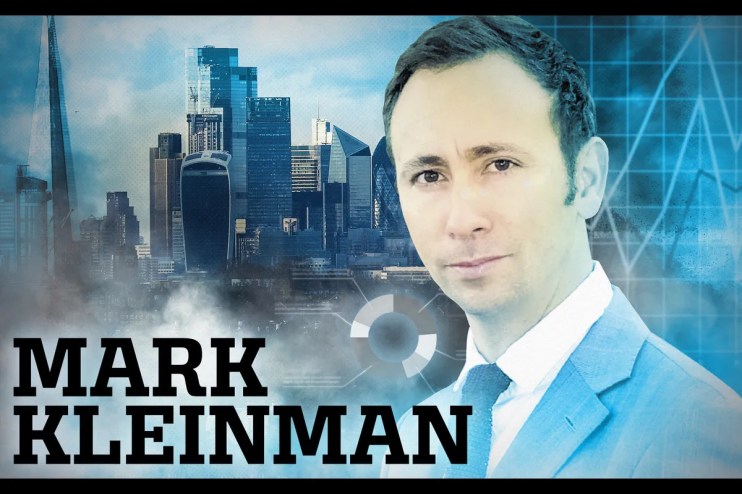
Mark Kleinman is Sky News’ City Editor and the man who gets the Square Mile talking in his weekly Morning Wire column
Audit watchdog at risk of becoming empty shell
Will the last one to leave please turn out the lights? That might seem an exaggerated extrapolation on the retirement of Sir Jan du Plessis, the septuagenarian chairman of the Financial Reporting Council (FRC). There are sound reasons, though, to suspect that it is not.
Sir Jan’s departure from the FRC after four years at the helm was neither expected, nor a surprise. A former chairman of BT Group, SAB Miller and Rio Tinto, the latter part of his corporate career was spent in blue-chip boardrooms, often consumed by the corporate governance issues in which the audit regulator specialises. There is little doubt that the allure of the FRC role partly lay in overseeing its abolition and replacement by a more powerful statutory body: the Audit, Reporting and Governance Authority.
Alas, almost eight years after Sir John Kingman tried to install his own version of an ARGA, ministers have thrown the towel in. The decision to abandon the legislation needed to deliver it aligns with the deregulatory push which has been dictated from Downing Street during the last 15 months, but it has drawn derision from senior figures in the City who are advocates of the need for more robust audit regulation.
Sir Jan himself was diplomatic in his resignation statement. “My experience at the FRC has only enhanced my belief that the UK economy benefits from high standards in corporate governance and corporate reporting, underpinned by high auditing standards,” he said last week. “However, these need to be applied in a proportionate and pragmatic manner to help businesses grow, whilst also meeting the expectations of wider society.”
There’s little doubt, however, that he has voted with his feet. The question now is when, not if, others follow him. Richard Moriarty, who was installed as FRC chief executive less than three years ago, is highly regarded in Whitehall. My sources in the watchdog’s sponsoring Department for Business and Trade say he is now firmly on resignation watch given that the mandate to deliver reform has been snatched from his grasp. Another round of instability at the top of the audit regulator is not the answer to Britain’s mountain of corporate red tape.
GlenTinto may be dormant again, not dead
If at first you don’t succeed, try, try again. That mantra is now so well-worn in the boardrooms of Rio Tinto and Glencore that the saying itself has become rather threadbare.
After the collapse of the latest effort to bring the two mining behemoths together to create a $280bn industry colossus, shareholders in both companies have been left with little choice but to ponder the motivations of the two sets of directors. That’s hardly surprising, given that the largest obstacle to a deal being consummated appears to have been Rio Tinto’s insistence that it install both the chairman and chief executive of the combined entity.
If that was really all it boiled down to, serious questions need to be asked. Some investors would certainly have preferred the new GlenTinto to have been run by Gary Nagle, Glencore CEO, rather than his counterpart at Rio Tinto, Simon Trott.
The termination of discussions for at least the third time leaves Glencore, as the smaller partner in the aborted marriage, in play. A break-up of the company remains a potential outcome, or, mining industry bankers suggest, it could yet attract takeover interest from BHP after the latter’s latest tilt at Anglo American also ended in failure.
Anglo, which snuck more or less under the radar to strike a deal with Canada’s Teck Resources, is now, partly for reasons of geopolitics, safe from predators. Not so, Glencore. The mining industry’s history of major deals has frequently become a chapter of the M&A playbook riddled with tales of value-destructive takeovers. Such is the sector’s hunger for scale, though, it feels inconceivable that Glencore won’t end up as part of another megadeal either this year or next.
Software rout leaves investors without energy supply
Who’d be a software investor right now? The indiscriminate rout in publicly traded software stocks in recent weeks has triggered all sorts of hyperbolic statements from analysts and investors, wiping billions of pounds from companies perceived to be among the most exposed, such as RELX and Thomson Reuters.
The reality, as ever, is more nuanced. While artificial intelligence (AI) will inevitably prompt a reshaping of many software-as-a-service (SaaS) providers’ business models, others’ workflows will be far harder for it to displace. Nevertheless, the consequences of this seismic shift in sentiment are plain to see. Last week’s ‘no bid’ statement from Apax Partners, the private equity firm, in relation to automotive software group Pinewood Technologies referred to “the prevailing challenging market conditions”, sending the target’s shares plummeting by as much as 30 per cent on Monday.
That implies a valuation mismatch which others will surely be prepared to take advantage of. Elsewhere, the AI-induced crisis of confidence in software assets must be making efforts to find external investors in Kaluza, Ovo Energy’s software arm, somewhat more complicated at a time when its parent company can least afford it. Conversely, Octopus Energy Group’s sale of a stake in Kraken, announced at the turn of the year, now looks an even smarter deal. In software M&A, as in life, timing is everything.