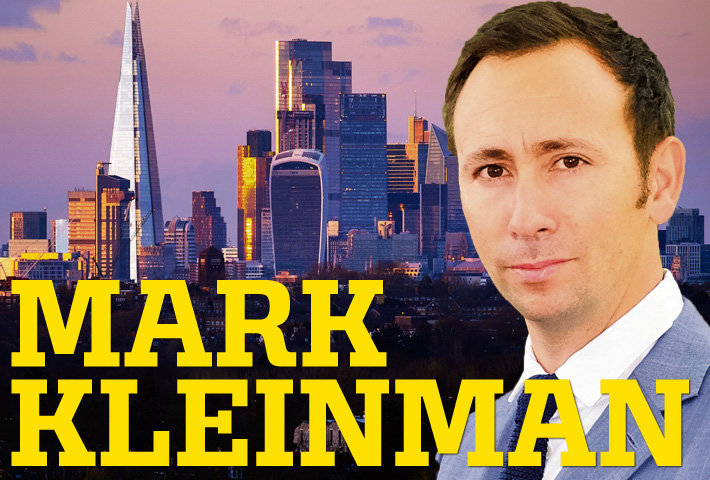
Mark Kleinman: This crisis feels far from over

Deal of the century or dud of the decade? UBS’s government-orchestrated swoop on Credit Suisse, its historic rival, was one of those moments in global finance that will be debated long after any of those involved in have retired to their lives of Alpine luxury.
Make no mistake: this was a state bailout masquerading as a private sector rescue. UBS chairman Colm Kelleher said as much in the formal announcement of the takeover, describing it as “attractive” to his shareholders but a mercy killing (my words) for those of Credit Suisse.
There’s truth in that, but a combination of UBS and Credit Suisse was a deal the Swiss government had always resisted. Bern had always wanted to maintain two national banking champions, and even Kelleher and his boardroom colleagues were lukewarm, at best, about the idea this time last week.
In the end, after 167 years, it took just a few days to seal Credit Suisse’s fate. The evaporation of market confidence that materialised last week, though, was a manifestation of the draining faith that investors had in the lender’s grasp of both its own balance sheet and moral compass. The last decade’s spying scandal, hedge fund blow-ups and deluge of mis-selling conduct had cost Credit Suisse its remaining goodwill from markets and regulators.
Management and board members over a long period of time must share the blame for that failure – although the malus and clawback rules introduced in the last ten years will be of little use now in holding them to account. Credit Suisse’s decision to pay bonuses – temporarily halted by the Swiss government – even after the announcement of the UBS rescue will stick particularly sharply in the throats of the holders of its AT1 bonds who have been wiped out as part of the takeover.
In one sense, the most alarming aspect of this unfolding crisis is how little it ostensibly has in common with that of 2008. Credit Suisse had a more than adequate capital buffer, and the credit line provided by the Swiss National Bank last week ought to have been sufficient from a liquidity perspective to reassure investors.
But the collapse of Silicon Valley Bank in the US this month, and the difficulty that even the likes of Jamie Dimon are having stitching together a rescue plan for First Republic, the US lender, underline just how tough governments and regulators are finding it to restore a sense of order. This crisis feels far from over.
Footie battles bigger off the pitch
Who’d be a referee? That question has been asked in football for years, but usually about the official on the pitch. Now, it might equally apply to the putative head of the sport’s still-conceptual regulator, the idea of which the government, somewhat bizarrely, believes might be a vote-winner come the next general election.
Proposals for fan involvement in the running of clubs, for a tougher test on the fitness of owners and for fairer distribution of the Premier League’s riches have been on the table for years.
The last of the three is the subject of tense negotiations between the top flight and the English Football League. As I revealed on Sky News this week, the Premier League is offering its lower league counterparts a £125m-a-year contribution beyond the existing solidarity and parachute payments.
That’s up from a £95m-a-year proposal tabled in December. It may not be enough. There remains a wide gulf between the Premier League offer and the EFL’s demands.
The disadvantage for Alison Brittain, the former Whitbread chief executive who now chairs the Premier League, and her CEO, Richard Masters, is that the government is liable to dismiss any proactive offer from the top flight as insufficiently generous.
A recent white paper on football governance highlighted a £4bn chasm between the aggregate annual revenues of the 20 elite clubs and those of the 24 in the Championship.
Rightly, the Premier League wants strict cost controls imposed on EFL clubs as a condition of future funding arrangements. History suggests that such a stipulation would be wise – the number of clubs which in recent years have run into financial quicksand either by chasing promotion with reckless abandon, or through sheer mismanagement, has caused heartache for fans across the country.
The Premier League will probably have to go further, though, if it wants a financial distribution agreement to be resolved well before the new regulator is established. The final whistle is not yet audible.
Brokers deal appears a wise one
If at first you don’t succeed, try, try again. That appears to be the corporate mantra adopted by the board of finnCap Group, the small-cap broking firm.
This morning, it’s expected to announce an all-share merger with Cenkos Securities, its listed rival, in the latest attempt by the City’s embattled brokers to get fitter through industry consolidation.
The terms of the deal are hazy, but I understand that the slightly smaller finnCap (in market cap terms at yesterday’s closing share price) will acquire Cenkos.
Two of the proverbial drunks propping up the bar? That may be how some competitors label the deal, but at first glance there’s strong industrial logic.
The merger will create the leading player in the market for serving smaller growth companies, allow the removal of unnecessary overheads, and establish a solid base to lead further dealmaking activity in dire need of it.
I’d expect a positive, if muted, response when the announcement hits the screen today – and don’t rule out others getting involved too.