Marketing in a crisis: Top tech bosses on how to build a brand through Covid-19

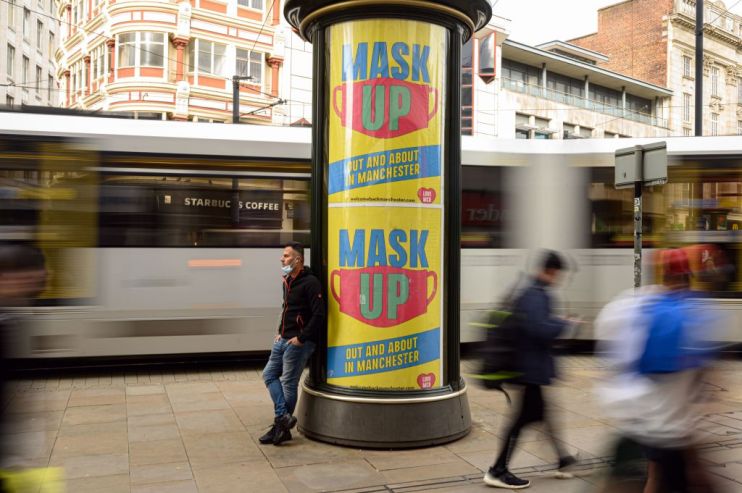
While the coronavirus pandemic has wreaked havoc through all parts of the business world, there are few who have had to argue their case for survival more than chief marketing officers.
As the economic downturn set in and companies scrambled to shore up their finances, marketing budgets have been slashed across the board.
Official industry figures released earlier this year forecast that UK ad spend will crash by more than £4bn in 2020 — the sharpest annual fall on record.
And yet marketers have consistently called for budgets to be maintained, with many warning of the dangers of ‘going dark’.
They have also been forced to adapt their messaging to a new era of home working and heightened health concerns.
Ahead of the Festival of Marketing next month, Morning Wire spoke to chief marketing officers at three top tech firms about how they adapted to the crisis and what’s in store for the future.
Ines Ures, chief marketing officer, Deliveroo

How has the lockdown most impacted your company?
At the beginning of the pandemic, restaurants were learning how to operate in new conditions and there was a general lack of trust from consumers, who thought you could catch COVID through food. Many restaurants decided to close down during the first weeks of the lockdown, which meant our offering was very limited and consumers didn’t have access to their favourite restaurants.
On the other hand, we wanted to make sure that we offered the best delivery conditions both to riders and consumers. We rolled out specific training and policies to help create a safer environment — including contactless delivery, which became the default form of delivery.
Currently, we’re operating at full capacity, and have become an essential service in people’s lives, when other entertainment is limited.
In what ways have you adapted your business in response to the challenges of Covid-19?
We have adapted in many ways. We have introduced specific rider policies and delivery procedures and provided training to restaurants on how to treat food. Deliveroo also released our “table service” technology, where customers can order food directly from their table in local pubs and restaurants that operate with Deliveroo. We also changed our marketing and adjusted our message to suit the circumstances.
How has data insight been used to best effect in your business?
We have used data in multiple ways. On the one hand, the most important task was to understand what was important to consumers. We ran several pieces of bespoke research to understand how consumers were reacting to the trends and adjusted elements like our product, marketing, customer care to what we thought would be best to help them during these difficult time. On the other hand, restaurant data helped us to understand how consumers were ordering and how order trends were changing. Based on this, our commercial team worked on expanding our selection on the most popular categories.
How has your approach to marketing changed during the pandemic?
We pivoted from very commercial and traditional advertising to a more social and CSR-focused approach. We really care about how to help consumers and we put all our energy into working with our restaurant partners to deliver better experiences and food to those in need. We pledged to Deliveroo 500,000 meals to the NHS — which we’re proud to say we achieved! And we worked with partners like TV stations to push our CSR message beyond our own channels.
What long-term impact will the pandemic have on your business and what are your main challenges for the year ahead?
Deliveroo has seen accelerated adoption thanks to Covid-19. Our mission is to be here to help and serve consumers, with the help of riders and restaurants. Overall, Deliveroo will continue adjusting to consumer’s needs.
Rav Dhaliwal, chief marketing and digital Officer, Easyhotel

How has the lockdown most impacted your company?
As an international hotel group, the biggest impact on our business has clearly been the need to temporarily close our entire estate during lockdown — we actually took the decision to do this and protect our guests before the government guidelines were announced. However, we spent the time carefully devising our reopening plans, so that when the time came, we were in a strong position to reopen safely and welcome back guests.
We have since benefitted from the ‘staycations’ trend taking over the UK, as many holiday goers choose to stay in the UK rather than risk going overseas — our strategy has always been to focus on city centre locations, which are attractive to tourists, and our value offer resonates with consumers wanting to be prudent with their spending in these difficult and uncertain times.
In what ways have you adapted your business in response to the challenges of Covid-19?
The biggest change we have had to make is without doubt the new approach to health and safety — both operationally in our hotels, and in ensuring our guests feel comfortable, protected and able to relax and enjoy their stays. For this reason we introduced a new brand pledge, ‘Stay easy, Stay Safe,’ which is focused around three pillars: ensuring cleanliness, keeping contact to a minimum and maintaining social distancing. The promise aims to give guests peace of mind by guaranteeing the very highest levels of cleanliness and safety.
How has data insight been used to best effect in your business?
We are investing significantly into CRM and customer personalisation, which will also power our digital CX. Given the broad range of cities through Europe that we have hotels, trend extrapolation can be difficult, however we hope to use these insights to drive our customer proposition.
How has your approach to marketing changed during the pandemic?
Covid has reduced the sole importance on price, as Covid isn’t an economic shock. A global health pandemic means that the reassurance that customers need is not economic; brands need to be more human, more caring. They need to be a reflection of the communities that are getting through such a crisis. This has been our approach at Easyhotel- to just be there.
What long-term impact will the pandemic have on your business and what are your main challenges for the year ahead?
While what will happen over the next year remains uncertain for everyone, what is certain is that the long term opportunity for our brand is significant and we remain committed to growth with a focus on key European cities.
Tom Wallis, chief marketing officer, Gousto

How has the lockdown most impacted your company?
Whilst we’ve seen incredible growth over recent years, overnight, our market opened up to a far larger audience with lockdown significantly increasing demand for our recipe boxes. We continue to see record sales — even with the progressive easing of lockdown restrictions — as new customers are won over by the variety of our offering, unbeatable value and convenience of the service. As a result, we have drastically accelerated our growth plans.
In what ways have you adapted your business in response to the challenges of Covid-19?
Increasing capacity became a bigger priority for the business than ever before. In addition to introducing innovative processes to increase output in the short term, we have invested in two new fulfilment centres as a result of the increased demand, which will help us deliver more meals to homes across the UK. By the end of next year, we’ll have a network of four fulfilment centres across the country.
How has data insight been used to best effect in your business?
Based on our customer behaviour, we foresaw the huge uplift in demand and the challenges this would pose for the business. This allowed us to get on the front foot, temporarily switching off new customer sign ups right at the beginning of lockdown, so we could continue to fulfil orders promised to existing customers and prioritise the vulnerable.
How has your approach to marketing changed during the pandemic?
We shifted our focus early on from performance marketing to creating really valuable content that our community could engage with, enjoy and feel supported by. We prioritised building a stronger connection with our community which we continue to focus on through more regular and content-led marketing.
What long-term impact will the pandemic have on your business and what are your main challenges for the year ahead?
The UK recipe box market has come of age with the recent lockdown accelerating structural trends which were already firmly underway. To meet the challenge of ever-increasing demand, we will continue to invest across the business, creating 1,000 new jobs to at least triple capacity by 2022, as we strive to become the UK’s most loved way to eat dinner.