Markets have bigger things to worry about than a change in Number 10
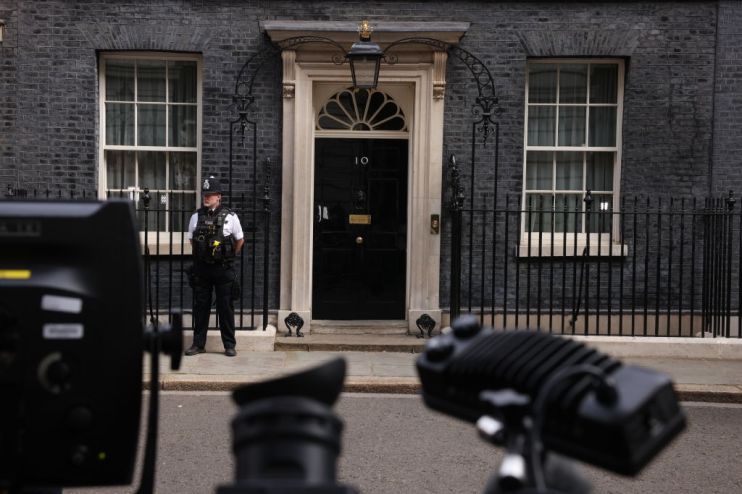
Markets tend to be one step ahead of everyone else.
Investors are always trying to identify new risks and limit their exposure to events that hurt stock markets.
That forward-looking ethos probably explains why they ignored the upheaval in Number 10 last week.
Boris Johnson’s position has looked wobbly for a while. Investors priced in his exit ages ago.
Instead, they are more worried about the underlying weakness of the UK economy and the growing risk of a recession hitting this year.
The country is suffering from the worst inflation in the G7, running at a four decade high of 9.1 per cent. It is expected to peak at just over 11 per cent in the autumn.
That price acceleration is likely to trigger a consumption slow down in response to strain on living standards.
The Bank of England – and other big central banks – responding to the large inflation shock by lifting interest rates five times in a row to a 13-year high of 1.25 per cent is also souring market sentiment.
Add to those headwinds the war in Ukraine, higher energy prices and China’s adherence to its zero-Covid policy, and it is easy to see why markets are not bothered about who wins the Tory leadership race.
“Markets simply have other, bigger things to worry about like the energy price surge, global recessionary fears, and uncertainty over the length of central banks’ hiking cycles,” Sanjay Raja and Shreyas Gopal, analysts at Deutsche Bank, told Morning Wire
Fears of lower demand have hit retailers. FTSE 100-listed high street fashion giants JD Sports and Next are down around 40 per cent and 20 per cent respectively so far this year.
Supermarkets have also come under intense pressure. Tesco is down over 12 per cent this year, while middle-class favourite and online supermarket Ocado has shed nearly half its value.
Steep falls among consumer-focused stocks suggest worsening economic fundamentals in the UK are more of a driving narrative for City traders.
A new prime minister can cushion the impact of the cost of living crisis, but cannot take away all the pain.
But, compared to its international rivals, the FTSE 100 has performed relatively well. Wall Street’s S&P 500 index is down nearly 20 per cent this year. The pan-European Stoxx 600 has shed nearly 16 per cent over the same period.
London’s premier index is down around four per cent.
A heavy weighting toward “old-economy” stocks – companies that use legacy methods of production – on the FTSE 100 partly explains why London shares have performed better amid the global market sell off.
Oil giants BP and Shell have notched big gains this year, led higher by Russia’s invasion of Ukraine and a surge in demand for energy after pandemic restrictions ease propelling oil and gas prices.
The pair represent a large share of the FTSE 100, meaning movements in their share prices exert a strong influence on the index’s direction.
Miners have also contributed to gains, but the likes of Anglo American and Glencore have come off their peaks as investors bet the global economic downturn pushes commodity prices lower.
Perhaps a better measure of how downbeat traders are on the UK economy is the pound’s tumble.
Sterling has dropped to a two-year low against the greenback. A weaker currency will strengthen inflationary pressures in the UK by making it more expensive to import products.
While recession anxieties are partly prompting investors to ditch the pound, zooming out, it is clear other factors are at play.
The US Federal Reserve has raised interest rates 50 and 75 basis points at each of its last two meetings. That has made dollar-denominated assets more attractive, which has hit other currencies.
The euro is nearly on par with the dollar, something that has not happened for 20 years.
Traders are also pouring into the greenback to shield themselves from the global slowdown. While the weaker pound is certainly a symptom of the underlying weakness in the UK economy, the currency is not alone in suffering a big correction.
A weaker pound actually helps London stocks by making exporters’ products more competitive.
Analysts are pretty united on their assumption a change in Tory leadership will lead to tax cuts.
The worry is these giveaways will add to inflation, steering the Bank of England toward a quicker tightening of policy.
“The new government will need to think carefully about the inflationary impact any stimulus will have. An ill-judged stimulus could force the Bank of England to react, tightening monetary policy further, pushing up borrowing costs, and placing the country’s finances in an even more precarious state,” Dean Turner, economist at UBS, said.
Analysts at Capital Economics agreed. “We suspect that the net result of the latest political turmoil will be somewhat stronger inflationary pressures in the UK. At the margin, this lends support to our view that the Bank of England will continue tightening monetary policy despite an environment of weakening economic growth,” they said, adding rates will reach three per cent.
Bare in mind though, market expectations for a series of 50 basis point rise from governor Andrew Bailey and co have been gathering momentum in recent weeks. Again, the City seems one step ahead.
A change in Number 10 is unlikely to shift the dial for traders. They have bigger fish to fry.