Mass migration is costing London renters £2,600 a year

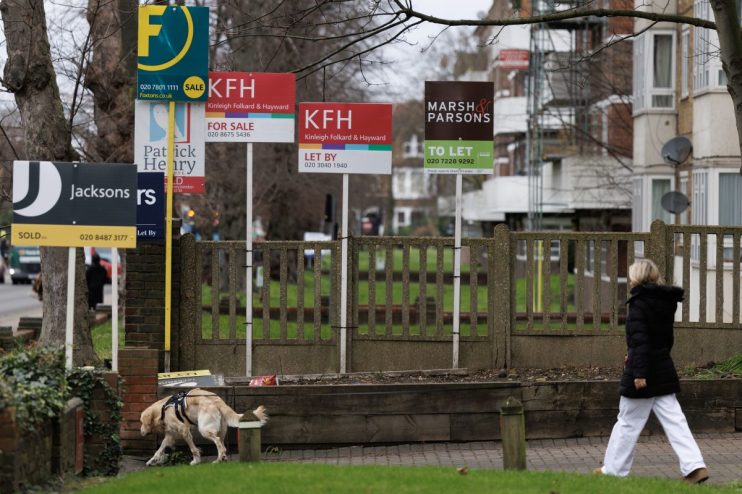
High net migration combined with a housing shortage is making London even less affordable, says Laurence Fredricks
London is an expensive place for renters. I live in a one bed flat in Zone 2 with my boyfriend and nearly £2000 a month from our salaries goes in rent. In my first year of living in London in 2023, we moved no less than three times in pursuit of affordable rent. One of those moves was prompted by an increase in our rent of £500 a month – we liked that flat, but we resignedly packed up our boxes and moved on. Many Londoners reading this will have had very similar experiences.
At Onward, Martin Seiffarth and I have put together an experimental model that looks at one reason why rent is so expensive in the capital and attempts to put a price on it – immigration. Lots of migrants want to come and work in London, for the same reasons that made me leave Southport and make this city my home. It is dense with economic opportunities, many of which just can’t be found elsewhere in the country.
But London is also a city with a housing shortage. Housebuilding targets are being failed across England, but London is the furthest behind of all English regions in meeting its housing need. But housing shortage or not, every new person who arrives in London, whether to work or to study or to join family members, needs a roof over their head. High numbers of people arriving coupled with a housing shortage means that demand for homes far exceeds supply. Supply and demand are inexorable forces that may not be denied or ducked – and when there is a shortage, prices must go up.
Supply and demand are inexorable forces that may not be denied or ducked – and when there is a shortage, prices must go up
Using our model, we estimate that high net migration since 2001 has increased rents by £216 a month for Londoners. That is almost £2,600 a year. For the rest of England, the monthly rental cost of high net migration is an estimated £132.
The Boris Wave
We have also used our model to estimate the impact of post-2021 immigration – the so-called ‘Boris Wave’ on rents in London. Our results show that the Boris Wave alone has added £79 onto average monthly rents in the capital. That means that the policy decisions of the Boris Johnson government – including the relaxation of student and graduate work visas and the decision to allow health and care workers to bring dependents with them – are costing the average London renter £948 a year. By comparison, the annual cost of these reforms to the average renter across England is £576.
And the situation may get worse. Despite demand for housing being greatest in the capital, the Labour Government’s removal of the 35 per cent urban uplift means the required number of homes to be delivered will be around 20,000 fewer in London each year. That means if migration doesn’t decrease (and absent a miraculous expansion of the number of homes we have), it may have an even greater impact on private rents in the future.
In 2024, Onward found that 68 per cent of Londoners wanted lower immigration to the UK. But of the 75 seats across the country that desired higher immigration and more relaxed controls, 52 were in the capital.
Whether you agree personally or not, one of London’s greatest draws for newcomers is its diversity of people. But something that repels people from London is its living costs, because rents decimate our wages and savings. The flow of new residents to London is too high for the number of homes we are building and renters, regardless of country of origin, pay the price.
London remains an attractive place to move to. But our analysis indicates a dual threat to its future: continued high net migration and low new home delivery. It would be devastating for London to lock out talent through high housing costs, but we are well on our way to doing so. Tough decisions must be made to rectify the problem: more homes is fundamental, but net migration must also be brought down.
Laurence Fredricks is senior researcher at Onward, the centre-right think tank