Meet the fund managers: Lessons from 40 years in the investment industry

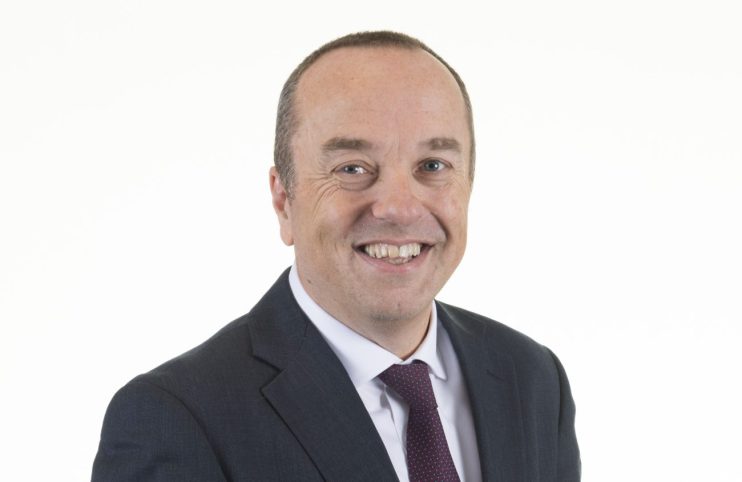
In Morning Wire’s weekly series, Elliot Gulliver-Needham sits down with David Coombs, head of multi-asset investments at Rathbones.
What’s the biggest change you’ve seen in the market during your career?
Computers and the volatility they cause. On a good – or a normal – day computers do the most amazing things that I could never have imagined while starting out in the investment industry 40 years ago by clipping bond coupons to mail out requests for interest payments.
The power of the phone in my pocket is lightyears ahead of the mainframe computers that used to whir away in the darkness. Digital tools are a slingshot for technological advances: our lives are so much easier now that many boring and low-value tasks take a fraction of the time.
Yet these benefits can also be curses. Now that computers can concoct and execute countless trades through algorithmic trading – and then create feedback loops to other computer-based traders – markets seem to whipsaw more than they once did.
The rising amount of ‘passive’ funds, which track indices, also reinforce such moves and create momentum that can prevent rebalancing driven by fundamental value (underappreciated profits, say).
While creating more than a bit of stress, this whipsawing is an opportunity to buy and sell at a wider range of prices. That’s valuable. I’ve found that we spend more time navigating the daily and weekly volatility of asset prices than I did several decades ago.
We don’t really get excited about stories –we’re more interested in how all the parts weave together to create a portfolio.
Which of your holdings are you most excited about?
While we work in the investment industry, at heart, we’re risk managers rather than stock-pickers. We don’t really get excited about stories –we’re more interested in how all the parts weave together to create a portfolio that should deliver the targeted return and the risk limits we set.
In terms of which holding I think will drive the greatest return over the coming year, I suspect it could be something unfashionable like data centre real estate investment trust Equinix.
Stratospheric growth in AI requires more data centres, which gives Equinix a strong runway. Meanwhile, when US interest rates start to drop – either because inflation falls or rates stay too high for too long and the US tips into recession – it should boost the value of a property company.
In the latter scenario, it might be a relative outperformance (i.e. less bad than others), rather than a stellar return in its own right.
What is the biggest mistake you’ve ever made in the fund?
A year ago, the first-ever social-media-driven bank runs sent several US regional banks to the wall. One of these was First Republic Bank, which we owned. Banks are magical things.
They take money put up by all of us that can be withdrawn at any moment and lend it out to people so they can buy homes, start businesses and generally put our society’s cash to better use than if it were stuffed under our mattresses.
Yet this is all based on faith – if everyone gets spooked and asks for their money, it won’t all be there. To paraphrase George Bailey from It’s a Wonderful Life, the money is in your neighbour’s house or your butcher’s inventory.
Last year, depositors spotted Silicon Valley Bank’s large mismatch between its assets (loans to customers and bonds it had bought) and liabilities (deposits) and fear spread like wildfire on social media. Just how fast deposits can be withdrawn in the digital era took us by surprise: in one day, customers drained it of $42bn – roughly a quarter of its total deposits.
For comparison, when major US lender Washington Mutual went bust in 2008 it lost only 11 per cent of its deposits in two weeks. First Republic was a quality operator without the same asset-liability mismatch yet, after Silicon Valley’s failure, worried depositors took no chances and withdrew billions anyway.
What’s one change you made in the fund recently? Why didn’t you make it sooner?
In the first quarter of this year, Rathbones bought a new diversifier to protect ourselves in case the heavily expected US interest rate cuts didn’t materialise.
Called a ‘Swaption’ (a swap option) it covers half the value of our US bond holdings and makes money if US 10-year government bond yields rise. If the yield remains flat or falls, we lose the small premium payment we made to buy the swaption. It works in a similar way to insurance.