Meta trial risks reputational damage that ‘dwarfs’ financial hit

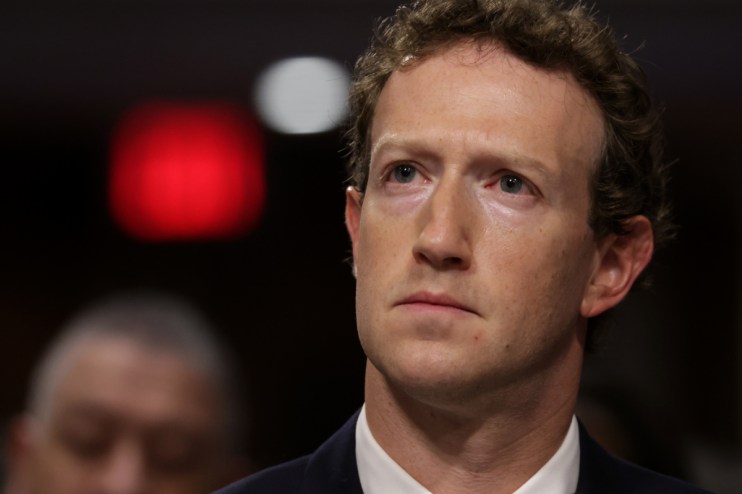
Meta faces a reputational hit that could “dwarf” even the potentially colossal financial penalties if it loses a landmark US trial over claims it deliberately made Instagram and Facebook addictive to children.
The tech giant goes to trial in California today in one of the biggest legal tests yet of the way social media platforms design their products for younger users, with states seeking billions of dollars in damages as well as sweeping changes to some of Meta’s most recognisable features.
Mark Jones, an online safety expert and criminal partner at UK law firm Payne Hicks Beach, said the case could prove to be Big Tech’s “big tobacco moment”.
“Meta is on trial for deliberately making Facebook and Instagram addictive to children,” he said. “If Meta is found guilty, this could be Big Tech’s ‘big tobacco moment’, and the reputational fallout may dwarf even the potentially colossal financial penalties.”
The case forms part of a lawsuit originally brought by a coalition of US states in 2023 accusing Meta of misleading the public about the safety of its platforms and knowingly designing features to keep children hooked.
Tuesday’s trial involves California, Colorado, Kentucky and New Jersey, with cases involving a further 25 states expected to follow.
The states also allege Meta routinely collected personal data from children under 13 without parental consent, in breach of US federal law.
Meta denies the allegations and said it was “proud” of its record protecting teenagers and the safeguards it had developed over a number of years.
“We look forward to showing the judge and the jury those facts in court,” the company said.
Algorithmic design choices under fire
The financial stakes are significant, but the case could prove more consequential for Meta if it forces changes to the mechanics that underpin Instagram and Facebook.
The states have sought restrictions on features including infinite scrolling, autoplay videos, visible “like” counts and disappearing posts, as well as changes to recommendation algorithms and stronger parental verification for teenagers.
Professor Miriam Buiten, professor of law and economics at the University of St Gallen, said forcing Meta to alter such features would strike directly at the economics of social media.
“Regulatory intervention that forces Meta to change core platform features matters enormously to the wider tech industry because it cuts directly into their business model, which revolves around keeping users engaged, young users especially,” she said.
“A feature like infinite scroll is a deliberate design choice to keep people on the platform. If companies can no longer make those choices freely, that changes how they operate.”
The case comes amid mounting scrutiny of social media design on both sides of the Atlantic.
Buiten said legal challenges were increasingly shifting away from simply holding platforms responsible for what their users post and towards looking into “what platforms themselves do” through their algorithms.
While that shift has largely come through regulation such as the Digital Services Act in Europe, she said it was increasingly being driven by litigation in the US.
The trial will be closely watched in Britain, where the government is pursuing its own tougher approach to children’s social media use.
The UK is moving towards a ban on social media for under-16s, expected to come into force around spring 2027, while ministers have also pushed technology companies to introduce stronger protections against children sharing intimate images.
Jones said regulators had “spent years trying to keep pace with platforms whose technology evolves far faster than the law”, while litigation could force companies to disclose internal decisions and attach a direct financial cost to harmful design choices.
Buiten cautioned that large fines alone were unlikely to fundamentally alter the industry.
“A fine becomes a cost of doing business,” she said. “Mandating design change is the more effective approach, but it is not easily achieved either.”
Meta chief executive Mark Zuckerberg is expected to testify during the six-to-eight week proceedings, alongside current and former employees. A verdict is expected this autumn.