Mike Lynch: Cass Business School’s new name is fitting tribute to information forefather Thomas Bayes

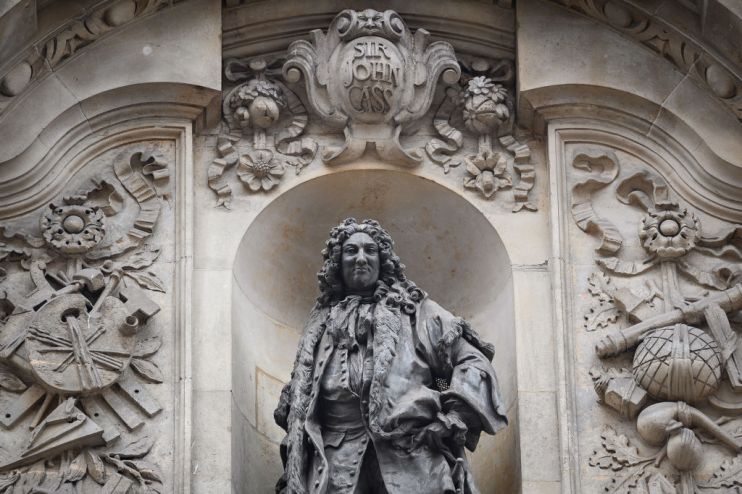
It was encouraging to read the news Cass Business School has been renamed after the statistician Reverend Thomas Bayes who, unbeknownst to many of us, plays an important part in all our lives – including my own.
Bayes deserves far more historical credit for the place he occupies among the forefathers of information theory. If you think of the 20th century as the era of modern physics, the names of the gods of that age, such as Einstein or Bohr, spring to mind. Now we are living in the information age, and the discipline has its own titans. The field is young enough to still warrant debate over its founding fathers but three names stand out: Alan Turing and his work in modern computing; Claude Shannon for his information theory and the Reverend Thomas Bayes.
Unlike Shannon and Turing, who are both 20th century figures, Thomas Bayes’ body of work was created far earlier – in the 1700s. His theorem provided a simple but revolutionary way of calculating how likely a particular hypothesis is.
My first encounter with Bayes’ work was an airless seminar room at Cambridge University in the mid-1980s. I was a junior research fellow within the signal processing group, where we tried to understand ‘signals’, or what you might call digital pictures, sounds and speech. A visiting professor, Bill Fitzgerald, began to explain his application of Bayes theorem to signal processing – how to find a signal under noise. Part of Fitzgerald’s research was focused on finding submarines in the ocean.
When he put his results on the screen, there was a sharp intake of breath that went around the room: they were too good to be true. Scientists tend to have a dose of healthy scepticism about them and we immediately went to work speculating about the flaws. But our professor showed us a second result, even more stunning than the first, and we were forced to accept it.
I left the seminar confused, wondering whether I had missed something, but also certain there was something truly fundamental in this approach. And indeed, over the last 35 years, I have seen how the approach of Bayesian inference and the related message has revolutionised the world in which we live.
Despite his ground-breaking work, we actually know relatively little about Thomas Bayes. He was an English country vicar living in Tunbridge Wells, and during his life he was eminent enough to become a Fellow of the Royal Society. One of the few pieces of primary evidence relating to Bayes life is his signature in the Fellows book.
The next part of his life is conjecture: the story goes that he tried to use mathematics to investigate a proof which sought to establish the existence of God. Whether this is true or not, he certainly did establish Bayes theorem, which is an incredibly elegant way of combining what you know, what you measure and what you think you know. It can meld the objective and the subjective. Bayes’ work has gone on to become the underpinning of our modern AI age. Everything from smartphones, Siri, modern economics, autonomous vehicles, genomics to trying to locate lost airliners is underpinned by Bayesian inference.
In fact, the precious few things we do know about Bayes comes from one of his friends, Richard Price. Whilst sources suggest that Bayes was a quiet and modest person, Price, luckily for us, was not. A radical thinker with a penchant for self-promotion, he edited and published Bayes’ seminal work posthumously, and so the insight that was to change the world 200 years later was not lost.
It is fitting that the Business Institute should be named after Thomas Bayes. It is also perhaps interesting to note how little we actually know of Thomas Bayes’ thoughts, views and opinions beyond his work. I was involved in the setting up of the Turing Institute, named after another of our great fathers of information. The Institute was flooded with mail from people offering their opinions on “what Alan would’ve wanted”. My background is in artificial intelligence, so I was ill-suited to the impossible decision of deciphering Turing’s desires. Troubled by this, I asked one of the world’s most eminent historians how we should best honour his legacy. In general, he told me, we would most like find we were both surprised and in some cases horrified by what many of our great predecessors would’ve wanted.
So perhaps the paucity of information on the great Reverend Thomas Bayes is just as useful for those that wish to name buildings after him as is his undoubted mathematical legacy for those building the next century.