Miliband’s proposals would fundamentally change our wage-setting framework

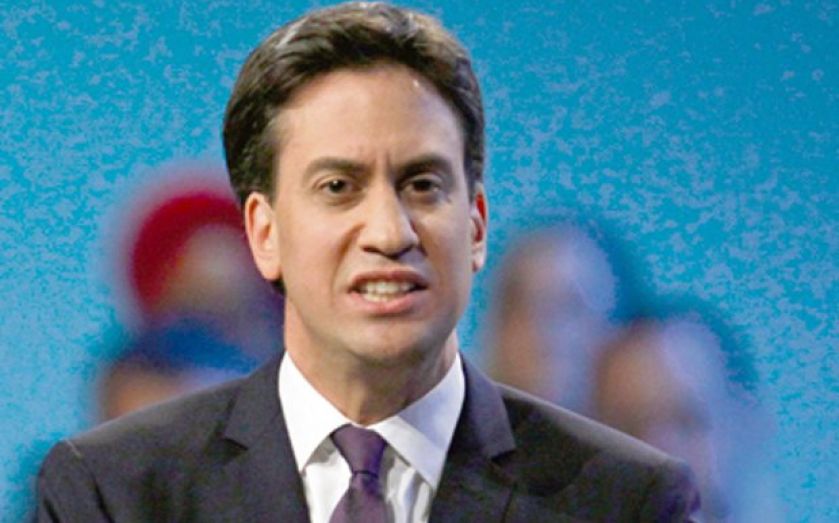
THE LABOUR party used to be “intensely relaxed” about people getting rich. Now it is “intensely relaxed” about the ability of governments, rather than markets, to set prices and wages without detrimental consequences. Following energy price freezes and rent controls, Ed Miliband has now set his sights on a beefed up National Minimum Wage (NMW).
When the Low Pay Commission (LPC, which sets the NMW) was introduced in 1999, the main justification was the elimination of exploitative low pay. Certain firms were said to have a degree of market power such that they could set pay lower than competitive market rates. Having a NMW, set by an independent LPC and bearing in mind the potential jobs trade-off, was seen as the least-bad response.
Yet yesterday Miliband threatened to overhaul this framework. He wants the LPC to set a higher target for the NMW to eliminate “low pay” (defined as a proportion of average hourly earnings), with the aim of hitting that target within five years. He also wants to change the remit of the LPC to give it broader terms of reference, including a wider duty to tackle poverty.
The implications could be profound. Since 1999, average earnings have increased by 61 per cent, but the NMW by 75 per cent. Already, the bite of the NMW has been increasing relative to earnings. Even since 2008, the NMW (14 per cent) has increased relative to average earnings (10 per cent). Miliband simply thinks the level of the NMW relative to earnings is still too low.
Many suggest that 60 per cent of median hourly earnings is his ambition. This would mean around 20 per cent of all UK employees having their hourly rate determined by a government quango. A target like this would clearly shift the emphasis of the LPC from setting a wage based on the ability of firms to pay and the state of the economy, to in effect targeting income inequality.
This could potentially be very damaging: the consensus view in the academic literature is that raising minimum wages has a small but significant negative effect on jobs. Those who suffer most are the young, unskilled, and people in low productivity regions. A step increase of this kind will simply mean fewer opportunities for many of those the NMW increase purports to help.
That we haven’t seen significant dis-employment effects overall in the UK since 1999 is precisely because the LPC has, until now, taken these trade-offs into account. Perhaps more significantly, Miliband is wrong to think the NMW is a well-targeted poverty reduction tool. In fact, 46 per cent of individuals in households defined as in poverty are workless: a NMW won’t help them. Further, many of those on low pay are part-time workers. Their problem is that they don’t work enough hours, not that their hourly wage is too low.
While many individuals would benefit from a NMW increase, many would not be from poor households: 44 per cent of low-paid workers are in households in the top half of the household income distribution. Miliband’s proposals are therefore very risky for many of the most vulnerable, while badly targeted to help those defined as “in poverty” – not to mention many other unintended consequences that will occur when wage-setting is constantly divorced from productivity considerations.
Ryan Bourne is head of public policy at the Institute of Economic Affairs.