Britain’s love of Channel 4 is blinded by nostalgia, it’s time to finally sell up

From a quasi-outsider’s perspective – I lived in Australia for the first 26 years of my life – Channel 4’s current makeup seems bizarre. It is state-owned, but commercially funded. Editorially independent, but bound by a legislative public service remit.
The notion of having a public broadcaster that provides news coverage free from all commercial bias – as well as having the remit to create fictional TV series without fear of advertiser reaction – is doubtless in the public good. The BBC does this job commendably and provides an important public service on an increasingly tight budget.
However, the need for Channel 4 to stay in public hands is less clear and Monday’s announcement confirming its privatisation seems like a natural step. For a moment, it’s important to be cynical and preface the following by saying the government’s privatisation of Channel 4 has more to do with the politics of the voters they are trying to woo, than the business case for the broadcaster.
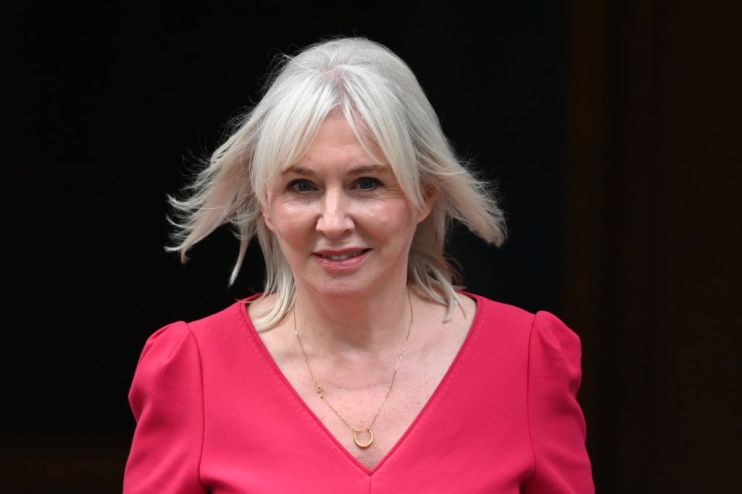
Boris Johnson’s administration has shown a penchant for picking culture war divides to try and reincarnate the Brexit debate and it also gets its hackles up when under intense press scrutiny. For culture secretary Nadine Dorries, it seems like the push is almost a personal vendetta against media elites who have drilled into her already heavily chipped shoulders over the past 12 years.
Instantly, the dreaded B word was thrown back into the public consciousness, with chair of the powerful Digital, Culture, Media and Sport committee Julian Knight asking if Dorries’ announcement was “revenge” against the anti-Brexit mob at Channel 4.
However, that doesn’t mean the policy is fundamentally wrong.
Channel 4’s broad remit to broadcast programming aimed at young and alternative audiences created a necessary entrant into the UK’s media landscape in the 1980s. It has meant the creation of shows that appeal to audiences historically underrepresented on British television in a time of limited media options.
Now Millennials and Gen Z-ers live their lives on the internet, this is unnecessary. Entire entertainment industries across the globe are increasingly aimed at younger audiences to reap the rewards from their valuable media consumption.
There has never been a time when it pays more for TV and online broadcasters to air programmes that appeal to a young audience. The progressive social agenda that has swept the West over the past 20 years also means minority groups like LGBT+ people, for example, are now a common fixture on television programming.
As a principle, why should the government retain ownership of an entity that already competes on the open market and has an obsolete directive? Much of the opposition to the move comes from a place of deep nostalgia, with many people complaining that “if Channel 4 was in private hands then show X or Y would not have been made”. You can love the Great British Bake Off as well as being sceptical of the continued public ownership of Channel 4.
This mentality belies the fact great programming has always been created on privately owned TV networks both here and abroad. ITV has made some of the UK’s most critically and commercially successful shows, while almost all the most beloved US programmes invariably come from privately-owned networks.
The most convincing argument for keeping Channel 4 in the state’s hands is the fact that a private owner may move to cut jobs and broadcast bases in regions outside London. This point was made eloquently by Ruth Davidson, the former leader of the Scottish Conservatives, who said yesterday: “It doesn’t cost the taxpayer a penny… (and) it’s one of the reasons we have such a thriving indy sector in places like Glasgow.” Gutting the broadcaster’s regional workforce would dent the government’s levelling up agenda and be a step in the wrong direction, but it is something that could be mitigated.
It is common in private equity buyouts for the purchaser to provide guarantees that jobs or plants are kept open and that they will not asset-strip the takeover target. There is nothing stopping the government from baking these terms into any Channel 4 sale to ensure jobs in places like the Midlands and North are not canned.
If we’re able to take off our blinkers of nostalgia and squint, we might be able to see that for once, Nadine Dorries’ isn’t talking nonsense and her plan to sell off Channel 4 is about a continual drive towards the future, not the past.