New satellite rules could prove catastrophic for UK business

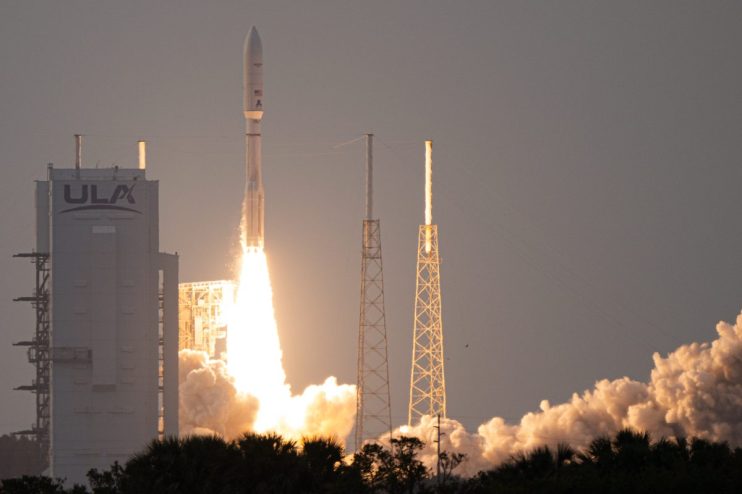
Satellite interference rules are being rewritten. The risks for defence and UK business interests could be catastrophic, writes Mark Allatt
As Britain navigates an increasingly contested space domain, proposals to weaken protections against international satellite interference pose grave threats not only to national defence but also to the City’s thriving business ecosystem. With the ITU Plenipotentiary Conference looming in Doha this November, and the World Radiocommunication Conference in Shanghai next year, the UK must act decisively to preserve these safeguards.
At stake are the Equivalent Power Flux Density (EPFD) rules, which limit interference from Low Earth Orbit (LEO) systems like SpaceX’s Starlink and Amazon’s Kuiper into geostationary orbit (GSO) networks. These rules have enabled over 10,000 LEO satellites to coexist with GSO systems, fostering innovation and competition. Yet, US giants are pushing for changes, allowing higher interference that could prevent others from offering connectivity on similar terms and prices. The changes also would preclude the ability of others to meet the near-99.99 percent level of reliability needed for critical defence and security services.
For UK defence, this is catastrophic. GSO assets provide persistent coverage essential for command and control, intelligence, surveillance and reconnaissance. Increased interference would cause outages lasting hours or days annually, disrupting drone operations, manpack communications and nuclear enterprise links. Small terminals under 45cm, vital for autonomous warfare on aircraft, vessels and vehicles, would become infeasible to deploy. Useful coverage of existing satellite assets could shrink by 50 per cent and impair the ability to serve critical regions like the Middle East, South America, the Baltic region, Scotland and Scandinavia, the northern routes vital for air travel, and other routes essential to transcontinental shipping.
How satellites impact UK business
Business implications are equally alarming. London’s financial sector relies on stable satellite connectivity for global trading, data centres and remote operations. Degrading other satellite networks with significant new interference would slow data flows and allow interference spikes that halt high-stakes transactions and streaming events. Aggregate interference from multiple LEO systems would compound this, raising costs for backups and reducing competitiveness. UK firms like Surrey Satellite Technology and the Ministry of Defence could face vendor lock-in, dominated by foreign operators with minimal UK presence, stifling innovation and investment in the £16.4bn space industry.
Cyber security risks escalate too. Elevated interference floors lower the bar for adversarial jamming, using smaller, mobile equipment to disrupt links. This blurs accidental outages with cyber-attacks, exposing critical infrastructure in finance, energy and aviation to exploitation. Switching to vulnerable LEO backups increases dependence on systems susceptible to spoofing, supply chain compromises and kinetic threats, as seen in recent conflicts.
A multi-orbit approach – combining the strengths of satellites operating in all orbits and hedging against their vulnerabilities NGSO – is key to resilience. Weakening interference protections creates single-orbit vulnerability for LEO, heightening exposure to state actors like China, whose expansion in LEO mirrors US efforts.
Ofcom must champion existing rules at upcoming conferences and align with the Cyber Security and Resilience Bill. Britain should invest in sovereign capabilities: domestic launch sites like Saxa Vord, manufacturing revival and alliances via AUKUS and NATO. Prioritising defence ensures business thrives in a secure space environment. The government must oppose these changes to longstanding interference management rules to safeguard national interests. Failure risks foreign dominance and economic fragility.
Mark Allatt is chairman of UK Defence First, a former parliamentary candidate, and a commentator on defence, security and foreign policy