The next generation: How we will prepare them for the business world of the future

Last week, I published the final instalment of my report on small firms. Unbelievably, the only other report on small business, the Bolton report of 1971, said that they were on the way out – that in a few years, they would cease to exist. Yet now, over 19 firms out of 20 employ fewer than ten individuals. About a third of today’s UK workforce is in large companies, just under half in small companies and the balance in government and the public sector.
SEA CHANGE
What caused this change? First, the reduction of bureaucracy and the elimination of punitive personal taxes in the 1980s kick-started the revival of the small firm. Secondly, the adoption of technology began to eliminate the hurdles to starting a business. Back in the 1980s, you needed a 500 square foot garage (at a minimum) to start a business.
But by the late 1990s, the internet was achieving critical mass – and the barriers began to fall. Today, you can start your own business with just a smartphone and a hot-desk – and hundreds do each week.
Under our Startup Loans Programme, over 25,000 new firms have been started over the last 30 months, and growth shows no sign of slackening. Moreover, a new category has entered the business lexicon – a non-employing business – and it is faster growing than the small, medium or large business sectors. By using technology, they are happy to be their own boss.
ROUGH WITH THE SMOOTH
Other technological advances have not been so beneficial. When I started my first business back in the early 1960s, my local bank branch manager was familiar with everything and was someone I could, and did, turn to for advice. But when the banks introduced computers into their branches, they saw it as an opportunity to reduce costs.
No longer would managers deal with small customers. Instead, the latter were left having to speak to someone they had never met before, and the personal relationship died. As a result, over the years, the local bank became increasingly irrelevant to the small firm.
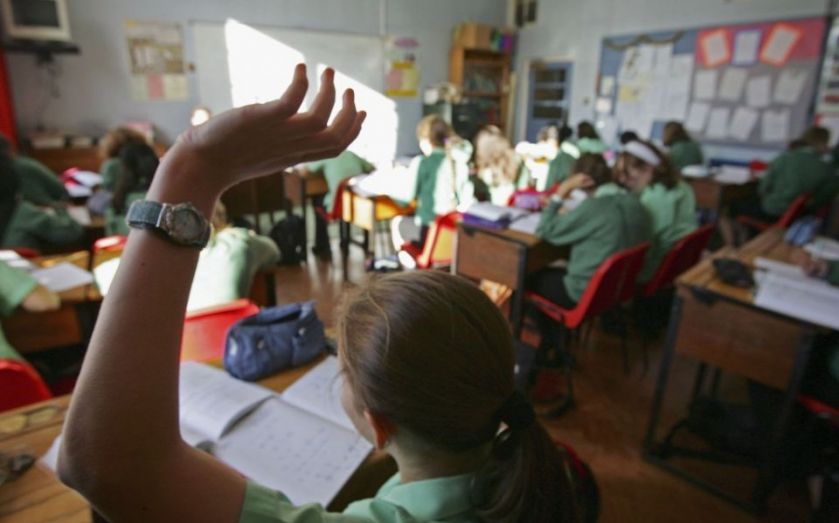
Then there have been other changes. No longer do young people leaving school look for a job that promises them lifetime employment. Indeed, surveys show a majority of young people at 18 want to work for themselves – even if they don’t know how. And even if people do not work for themselves, they are increasingly less likely to work for a large company. The skills required to work for a big business are very different from those required by a small firm, and we have to make sure that the education system turns out young people who can respond to the demands of the future.
In my last report, I proposed that we give every head teacher an Enterprise Adviser to bring relevant speakers into the schools to motivate young people in the first two or three years of their secondary education. The problems that I discovered while introducing the Youth Training Scheme 33 years ago – that up to a third of the young people leaving after eleven years of compulsory education were barely literate or numerate and felt like failures – still exist today.
Many young people do not learn unless they see the relevance of their lessons – for if they cannot understand why they are doing something, they will switch off. And it becomes almost impossible for them to rejoin later.
BRIGHT FUTURE
Now, we are introducing an Enterprise Passport for all children of school age. This will record all the activities that take place around and outside of school. There are many hundreds of voluntary bodies helping young people to broaden their experience – from Outward Bound, an outdoor education charity, to National Citizens Service. The Enterprise Passport shall bring them all in under the one umbrella, encouraging young people to do more in and outside school during the years that they are in the classroom.
Enterprise in education will ensure that we can create the next generation of entrepreneurs. But it’s also about much more than that. It is about motivating young people to succeed and supporting them to develop a more positive attitude to life. This is important in any future profession – whether they are working for someone else, or themselves. Above all, today’s young people must be prepared for their very different world of tomorrow.