Tunnel vision? Why the approved Thames crossing at Silvertown could be in doubt

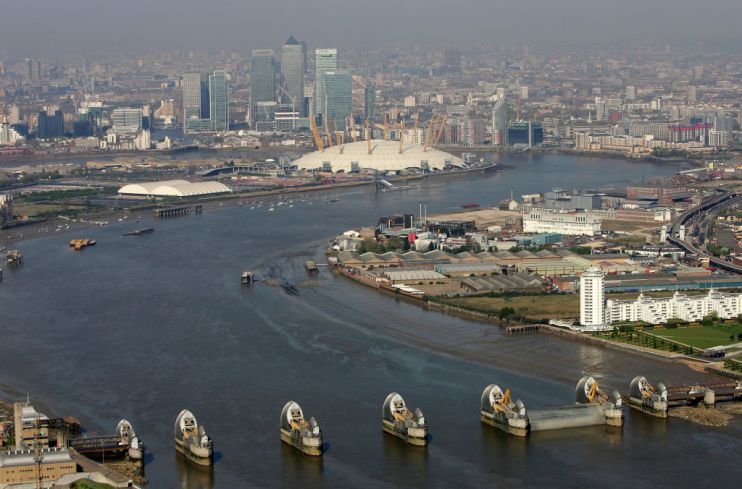
London’s new road tunnel at Silvertown was years in the making and given the go-ahead by Sadiq Khan in 2019, but ever since then opposition to the eastern crossing has grown.
Those in favour of the development, such as business groups London First and Logistics UK, say the business case remains the same: a new tunnel is central to providing east London with the connections it needs.
However, a broad coalition, consisting of MPs, London Assembly Members, and environmental campaigners, has amassed against the project, saying that the business case for the tunnel has changed since development consent was given in 2018.
Luisa Porritt, Liberal Democrat candidate for mayor of London, recently wrote to Khan calling for a review of the project.
She told Morning Wire that the tunnel was not compatible with the Mayor’s environmental targets nor took into account the long-term impact of Covid.
“I don’t see why Sadiq is doubling down on this. He’s just made a fresh commitment that London will be carbon neutral by 2030 and the SIlvertown tunnel will not fulfil that objective.
“We don’t think that the logic for building a new road stacks up. If we want to trigger a shift to cleaner, greener transport, that’s where we should be investing.
“We want it scrapped; we’ve been clear on that. But at the very least, the Mayor should face the facts that circumstances have changed. There should be a review of all the projects in TfL’s portfolio and see what we are going to need in the future.”
TfL continue to insist that the project, which sits inside the ULEZ zone, will reduce congestion, increase cross-river links, and improve air quality in areas such as Newham, which has some of the worst pollution in the country.
Logistics UK’s Natalie Chapman, head of roads policy in the south, agreed. “East London’s roads do not have huge capacity to enable vehicles to cross the River Thames, yet it is one of the capital’s main growth areas.
“The new Silvertown tunnel is set to improve river connectivity, reducing vehicle mileage and emissions while ensuring that logistics operators can continue to deliver for homes and businesses in the area swiftly and efficiently.”
Road charging to make the difference?
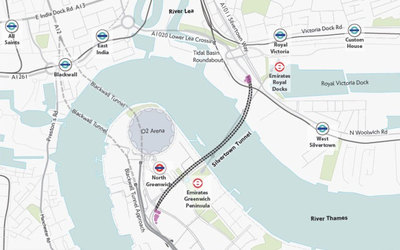
The new tunnel will connect Greenwich to the London Docklands and provide an alternative crossing to the Blackwall tunnel, which TfL says is antiquated and prone to excessive congestion.
Given the twin upheavals of the coronavirus pandemic and the UK’s departure from the EU, Phil Goodwin, emeritus professor of transport policy at UCL, says it is time for TfL to carry out new analysis of the tunnel.
TfL has not carried out any modelling on traffic estimates or tolling revenue since the tunnel was given planning consent in 2018.
“No one knows what the future impact will be yet, but that’s no reason to assume that there won’t be one and that the old case holds”, he told City A.M. “This is exactly the right moment to stop and reconsider those calculations in light of the huge changes in travel trends that Covid and Brexit have caused.”
A spokesperson for the transport operator said that new modelling work for traffic was underway, pointing out that traffic levels through the tunnel have already returned to pre-pandemic levels.
And London First transport programme director Adam Tyndall said: “Throughout the pandemic we have seen the importance of keeping vital supply chains moving and the popularity of online shopping. This requires adequate road infrastructure.
“We should not confuse the urgent need to transition to electric vehicles with the need to better connect our city and our communities.”
But Goodwin also pointed out that if TfL were to introduce a broader system of road charging, which has been much mooted to help prop up its finances, it could do away with the need for a second tunnel altogether.
“If the whole road network becomes subject to a toll, then maybe it won’t be necessary for a particular charge on the two tunnels”, he said.
“It could be that the impact of that wider toll would be enough to reduce traffic through the Blackwall tunnel to a manageable level.”
Porritt and the Lib Dems are among several groups in favour of such a charging system to be put in place across London.
And even if a London-wide road charging scheme isn’t implemented, campaigners have repeatedly asked why TfL hasn’t produced a new analysis of the impact of instead putting a toll on the Blackwall tunnel first.
Such a study was carried out back during the planning process for the tunnel, and concluded that a single toll would have a limited impact on addressing congestion at the approach to the Blackwall crossing.
Victoria Rance, spokesperson for the Stop the Silvertown Tunnel campaign, puts it like this: “People believe that building the tunnel is what is going to ease traffic and congestion, but that’s not true – it’s the toll”, she said.
A TfL spokesperson said: “Silvertown, and particularly the Blackwall tunnels run through some of the most deprived neighbourhoods in London. When the Silvertown Tunnel is built it is these same neighbourhoods that will see direct benefits to air pollution from improved public transport links and reduced congestion.
“Anyone who has ever been caught in traffic due to a problem in the Blackwall Tunnel, will know that there is an urgent need for another river crossing in this part of London.
“Extensive modelling shows that the introduction of tolls on both tunnels at Silvertown and Blackwall will mean no overall increase in traffic and an overall improvement in air quality.”
They added that the tunnel would add a range of improvements on both sides of the tunnel, including new green spaces, noise barriers, and cycling and walking improvements.
TfL’s economic and environmental claims challenged
Construction of the project will be funded by a £1bn PFI contract run by the Riverlinx consortium, but recent figures showed that TfL could end up paying double that over the next 30 years to maintain and operate the tunnel.
Under TfL’s plans, construction costs will be paid for by a new road charge for users of both the new and existing tunnels, which relies on traffic levels staying at a certain level in order to pay for construction and maintenance costs.
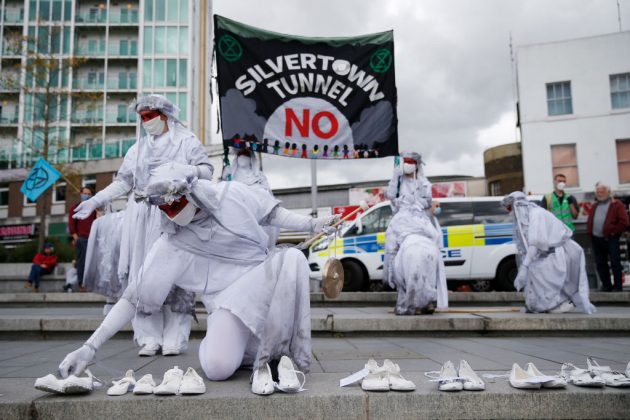
Campaigners have long argued that plans for the tunnel go against the chief goal of the Mayor’s long-term transport strategy – that 80 per cent of all journeys in the capital are made by foot, bike, or public transport by 2041. According to the Lib Dems, this means reducing the current number of car journeys by about 30-35 per cent over the same period of time.
But according to Lyn Brown, MP for West Ham and a long-term opponent of the scheme, achieving this would undermine the business case for the tunnel.
Brown told Morning Wire: “We all want to reduce the volumes of traffic flowing through East London. We can’t address the climate crisis or protect our children from the health impacts of air pollution without doing that.
“Despite that shared goal, the toll-based repayment model for the Silvertown tunnel depends on high volumes of traffic for decades to come, and if what we want happens, and these volumes fall, this could leave the public purse at more financial risk.”
Green Party mayoral candidate Sian Berry agreed, raising the question of how TfL, with its finances already reeling from the pandemic, would then go about paying back the consortium for building the project.
“If there’s a drop-off in the revenues that are collected by tolling the tunnel, what then happens to the amount of money that TfL owes to the contractor?”, she asked.
TfL said that its modelling had been subject to “extensive scrutiny” and that the revenue generated by the charges would “more than cover” the costs of construction.
A spokesperson added that any excess revenue would be reinvested back into the transport network.