Not all is doom and gloom: a recession is not the only possible scenario facing Britain

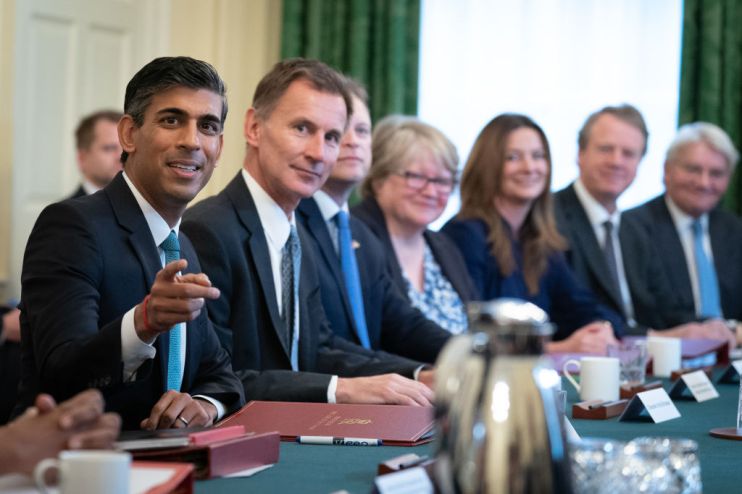
The prime minister and the Chancellor are struggling to “balance the books”. Around £50bn might be needed from a combination of cuts to spending plans and increases in taxation. This has led to a chorus of voices squealing about austerity creating a major economic recession.
The argument goes back to Keynes, writing in the aftermath of the Great Depression in the early 1930. His revolutionary new idea was something which he called the “multiplier”. An increase in public spending means that more people are employed – in the public sector itself or in something like building infrastructure, for instance. Tax cuts mean that individuals have more money to spend and create jobs in the companies whose products they buy. The newly employed people in turn spend more money and the effect ripples across the economy. The final impact is a multiple – hence the word multiplier – of the initial increase in spending.
The whole argument can readily be reversed. The effects of cuts in spending or tax increases are enhanced by the multiplier. This seems a no-brainer, but common sense can often lead us astray. It seems to be common sense that the Sun goes round the Earth – it goes round the sky after all.
Keynes thought that the multiplier might have a value of between 2 and 3. So if the government now takes £50bn out of the economy, the eventual impact would be between £100 and £150bn.
The one thing which modern economists agree on is that the multiplier is considerably lower than Keynes’s estimate: the upper bound of the various estimates is around 1.5.
A key reason for this is that the UK, like other Western economies, is much more open than it was in the 1930s. So a big portion of any increase in spending goes on imports. Equally, if cuts are made, the impact on the UK is muted because part of the reduction in spending will be on imports rather than on domestically produced goods.
Now comes some even better news. There is a school of thought which argues that, in certain circumstances, the multiplier could be negative. In other words, cuts to spending may boost the economy rather than cause a recession. This concept was introduced by the Harvard economists Alberto Alesina and Silvia Ardagna in the aftermath of the financial crisis of the late 2000s.
The idea came under fierce attack from self-styled Keynesians. But the experience of the short-lived Truss government provides strong evidence in support of this thesis. The Harvard economists were not claiming that expansionary fiscal policy ends up always being contractionary – and vice versa. They were stating that in some circumstances this would be true.
The energy price subsidy proposed by Truss and Kwarteng was like an enormous tax cut. The explicit tax cuts proposed by the duo were a relatively small part of the package.
In the short term, if orthodox Keynesian thinking is correct, these measures should have provided a massive boost to the economy. However, interest rates soared and both business and consumer confidence collapsed. These factors would have more than offset the potentially expansionary impact of the fiscal boost, large though it was.
Rishi Sunak and Jeremy Hunt have so far succeeded in bringing interest rates down and restoring confidence, at least in part. This will largely mitigate any negative impacts of spending cuts and tax increases. The apparent contractionary fiscal stance may even prove to be expansionary.