Not just oil: Fertiliser and helium are at risk in the Strait of Hormuz standoff

Since the start of the Middle Eastern conflict nearly a month ago, analysts have kept their eyes glued to the latest energy market data.
On 2 March, Iran declared the Strait of Hormuz, a waterway which is responsible for shipping roughly one fifth of the world’s oil and gas, was “closed” and oil prices have slipped out of control ever since.
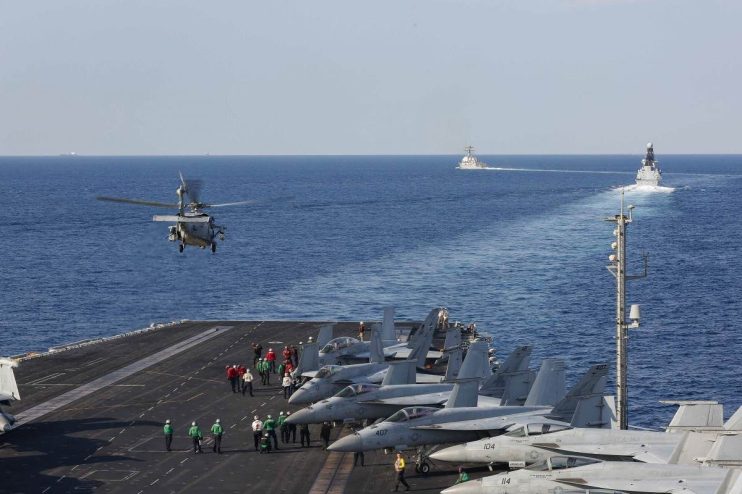
Oil prices surged to over $110 (£82.14) per barrel, leading the US to launch an operation to reopen the strait, deploying jets and helicopters to the region.
But while the market tracks the oil price and fret over a potential fuel shortage, other commodities are also trapped in the Gulf and could have stinging repercussions.
Helium
Surprisingly to some, the range of applications for helium goes well beyond birthday balloons, with the gas also a key input in chip making, medical imaging and space technology.
Qatar supplies a third of the world’s helium, which passes through the strait, but the nation has been forced to halt production after war broke out, with the nation’s state-owned gas company saying that strikes on energy infrastructure would further cripple exports.
Helium is also deemed tricky to transport as it is stored in insulated containers for 35 to 48 days as a liquid.
After this time frame, molecules start to warm up and escape, becoming a gas once more and escape, meaning those stuck in the strait are quickly losing value and damaging the supply chain.
Helium is essential for manufacturing semiconductors, including the chips used in artificial intelligence models, and a shrinking supply could have a knock on effect for leading technology stocks who are already fighting fears of a potential AI bubble.
Other uses
Elsewhere, the medical technology industry uses helium in MRI machines to cool magnets, while the space industry uses the gas to purge rocket fuel tanks.
Its demand within the space industry is expected to grow as more private companies enter the fray, with both Elon Musk’s Space X and Jeff Bezos’s Blue Origin planning more frequent launches of their vehicles.
Thomas Abraham-James, founder and chief executive of Pulsar Helium, said: “What makes this particularly alarming is that the crisis presents not one problem for helium markets but two.
“Even where physical infrastructure remains intact, the effective closure of the Strait of Hormuz means that no product can reach market until hostilities cease.
“Qatar’s helium, used in everything from semiconductor fabrication and MRI machines to fibre optics and space launch vehicles, is therefore simultaneously impaired by structural plant damage on one hand and an export blockade on the other.
“Should the Strait reopen and tensions de-escalate, limited volumes may resume within weeks, but meaningful supply normalisation is likely months away at best and full restoration of damaged capacity years away.”
Fertiliser
The Strait of Hormuz is also responsible for carrying the fertiliser components that underpin around half of the world’s food supply.
The Gulf states account for 49 per cent of globally traded urea, a nitrogen-rich fertiliser used for a variety of crops, including wheat.
The price of urea has rocketed more than 40 per cent since the outbreak of the war in Iran, with the cost spike arriving during spring planting season for farmers across the Northern Hemisphere, meaning the effects are likely to trickle down to shoppers.
Away from soaring prices, the hold up of fertiliser also impacts overall food production as the inability to purchase the commodity could lead to a decline in crop yields.
Kelly Xu, commodity and energy strategist at Alpine Macro, said: “Beyond energy markets, the Iran conflict is increasingly spilling over into global fertilizer markets.
“Prices for key fertilizer products have already moved sharply higher. Since the onset of the Iran conflict, urea and ammonia prices have risen by roughly 50 per cent and 20 per cent, respectively.
“Sustained disruption risks amplifying pressure on agricultural markets. Farmers in the Northern Hemisphere are entering the spring planting season facing elevated input costs and uncertainty, raising the risk of lower application rates, weaker yields, and, ultimately, higher food inflation.”
The Gulf also contributes around 30 per cent of ammonia, another key fertiliser component, with a number of suppliers, including Qatar, forced to shut down production off the back of strikes and the strait closure.