Skip to content
Friday 7 August 2026London --:--Frankfurt --:--Zurich --:--
NewslettersSearchEN · DE
MorningWire

European business, markets and politics

FTSE 100
10,867.89
-0.19%
DAX
26,140.13
+0.05%
CAC 40
8,699.71
0.00%
STOXX 50
6,502.56
+0.39%
  • Europe
  • Markets
  • Business
  • Economy
  • Technology
  • Politics
  • Opinion
More
GermanyFranceBankingAIEnergyFintechPropertyCapital Markets
  • Germany
  • France
  • Europe
  • Markets
  • Business
  • Economy
  • Technology
  • Politics
  • Opinion
  • DE
Monday 02 March 2026 8:17 am  |  Updated:  Monday 02 March 2026 10:33 am

Oil prices spike as UK base hit by Iranian missile
By: Samuel Norman and Mauricio Alencar

Add as a preferred source on Google
Dynamic newsroom setting with journalists working on computers, reflecting the hustle of a busy news day.
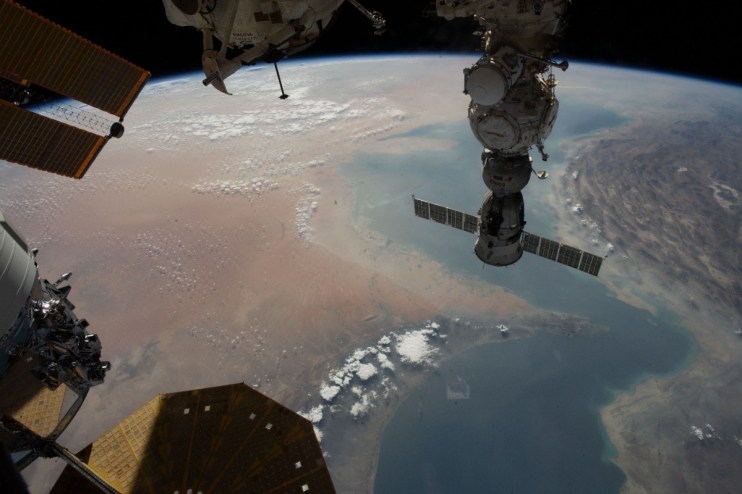
A fifth of world oil rests on the Strait of Hormuz. (Image: Nasa on Flickr)

Oil prices spiked this morning as tensions continued to escalate in the Middle East, raising concerns that a key shipping route could be halted and an Iranian missile attack on an RAF base could drag the UK into a regional war.

The cost of a barrel of brent crude – the international benchmark for oil prices – climbed 13 per cent to $82 on early Monday marking its highest level since July 2024.

Prices did ease slightly after the initial spike at around the $78 mark, but this remained around $5 higher than Friday.

Brent soared around eight per cent higher in February as US and Iran peace talks came off track.

Kathleen Brooks, research director at XTB, said the fact oil had “rallied into this crisis” as tensions built in the region meant “part of the conflict has been priced into the oil price already”.

On Sunday, oil producing nations OPEC+ agreed to a slight uptick in oil production for the next month by bolstering its output by 206,000 barrels a day from next month.

“While this is a small increase, it is very symbolic that the world’s major oil producing nations and willing to react to the crisis and adjust supply to stop an oil price shock,” Brooks said.

UK gets dragged into conflict

The UK economy is set to be hit by an oil price surge as higher energy costs could trigger another spike in inflation.

Sir Keir Starmer’s government is also rushing to the defence of Middle Eastern countries hit by Iranian missile attacks.

The Ministry of Defence said an RAF base in Cyrpurs was hit by a drone strike, though no injuries were reported.

Starmer has also authorised the US to use UK military bases for “specific and limited defensive purposes”.

British troops are not joining the US and Israel in an offensive against Iran while the government did not initially allow the US to use bases in the UK and in the Chagos Islands to attack Iran, citing legal advice provided to ministers and military chiefs.

Read more

As it happened: FTSE 100 slump as oil soars; Trump says Iran will be ‘hit hard’ tonight

Breaking news article with a focus on general updates and engaging content displayed professionally on a business website

All eyes on Strait of Hormuz

Ipek Ozkardeskaya, Senior Analyst at Swissquote, said despite the soft retreat “longer tensions persist – and the wider they spread geographically – the greater and more durable the impact on energy prices”.

Much of the concern around volatile oil prices rests on the Strait of Hormuz – a passage between the Persian Gulf and the Gulf of Oman. 

The strait provides the only sea passage from the Persian Gulf to the open ocean and is recognised as one of the world’s most strategically important choke points, which refers to a narrow maritime passage connecting two larger bodies of water, where high volumes of shipping traffic are forced to converge, often creating a bottleneck

It is estimated the ships crossing the Strait of Hormuz carry around one-fifth of global oil supplies at around 20 million barrels per day.

Former foreign secretary David Lammy previously warned that blocking the Strait of Hormuz would be a “catastrophic mistake” when the US and Iran engaged in a 12-day war last June. 

Kallum Pickering, the chief economist at Peel Hunt, said: “We need to brace for many weeks of uncertainty, especially given the absence of obvious off-ramps for de-escalation, at least for now.

“The potential economic consequences are complex and far-reaching. We need to watch both China and Russia, which rely on Iranian hydrocarbons and military equipment, respectively. For Europe and other advanced economies, the primary risks stem from uncertainty and the potential for higher hydrocarbon prices to push up consumer prices.”

Elsewhere, gold began closing in on the $5,400 mark on Monday morning, in a clear sign investors were flocking to safe haven assets as risk aversion spread.

UK has no ‘wider involvement’

The inflammation of tensions in the Middle East come after a joint-strike by Israel and the US on Iran over the weekend.

President Donald Trump announced in a video broadcast on Truth Social that the US has launched “major combat operations” against Iran, adding that it was ready to leave the country’s armoury “totally obliterated”. 

Israel has labelled its attack as being “pre-emptive,” with the IDF stating Iran attacked Israel in response to the attack. 

The fast-growing conflict has piled more pressure on Prime Minister Sir Keir Starmer, who is now facing mounting criticism from senior Conservatives over Britain’s response to the unfolding conflict.

Read more

Exclusive: Saudi ship struck by Houthis had insurance from Lloyd’s insurance giant

Rising borrowing costs depicted amid escalating tensions following the Iran war, illustrating economic impact on global ma...

Share this article

  • Facebook
  • X
  • LinkedIn
  • WhatsApp
  • Email

Similarly tagged content:

Sections

  • News

Categories

  • Energy
  • Business
  • Economics
  • Markets
  • Politics

People & Organisations

  • big oil
  • Energy
  • FTSE
  • ftse 100
  • Iran
  • iran conflict
  • Middle East
  • Oil
  • oil and gas
  • oil and gas services
  • oil major
  • oil majors
  • oil price cap
  • Oil prices
  • oil refinery
  • oil sector
  • oil services
  • oil tanker
  • President Donald Trump
  • strait of hormuz
  • trump
  • Trump administration
  • UK economy

Trending Articles

  • Donald Trump is creeping towards a shrewd sanctions policy

  • Rupert Lowe axes pensions triple lock and pledges tax cuts in economic plan

  • West Ham: Staveley receives Sadiq Khan encouragement to buy London Stadium

  • North Sea is not competitive, says BP boss days after exit

  • Luke Combs, Wembley review: as personal as a Texas honky-tonk

More from Morning Wire

  • As it happened: FTSE 100 slump as oil soars; Trump says Iran will be ‘hit hard’ tonight

    Markets
    Breaking news article with a focus on general updates and engaging content displayed professionally on a business website
  • Exclusive: Saudi ship struck by Houthis had insurance from Lloyd’s insurance giant

    Insurance
    Rising borrowing costs depicted amid escalating tensions following the Iran war, illustrating economic impact on global ma...
  • Strait of Hormuz ‘closed’ as Iran and US exchange strikes

    Economics
    Bustling shipping activity in the Strait of Hormuz with tankers and cargo ships navigating Iranian waters.
  • As it happened: FTSE 100 recovers after oil surge dampens mood; Strikes in the Strait of Hormuz

    Markets
    Donald Trump speaking at a political rally, surrounded by supporters, emphasizing key points in a vibrant, dynamic setting
  • Oil prices return to crisis levels

    Markets
    Close-up of a petrol pump nozzle dispensing fuel at a gas station, highlighting rising fuel costs and economic impact.
  • UK borrowing costs soar as Iran ceasefire collapses

    Markets
    Rising borrowing costs depicted amid escalating tensions following the Iran war, illustrating economic impact on global ma...
  • Oil price falls but Trump and Iran clash on negotiations claim

    Markets
    Donald Trump smiling in a blue suit and tie with an American flag pin, US flag in background
  • Shell launches bumper buyback after earnings more than double on Middle East turmoil

    Energy
    Shell CEO Wael Sawan in a boardroom setting, highlighting his reported £4.5m pay boost under new remuneration policy.
MorningWire

Independent European business, markets and political news for decision-makers.

Morning Briefing

Europe

  • Germany
  • France
  • Europe
  • UK & Ireland

Business

  • Markets
  • Banking
  • Technology
  • Energy
  • Property
  • Fintech

Editorial

  • Opinion
  • Editorial Policy
  • Corrections
  • Contact

Company

  • About Morning Wire
  • Privacy Policy
  • Terms of Use
  • Cookie Policy
© 2026 Morning Wire Ltd · Published by Morning Wire Media, Bahnhofstrasse 65, 8001 Zürich, Switzerland
Privacy · Terms · Cookies · Facebook