
Omicron: what’s the current picture?

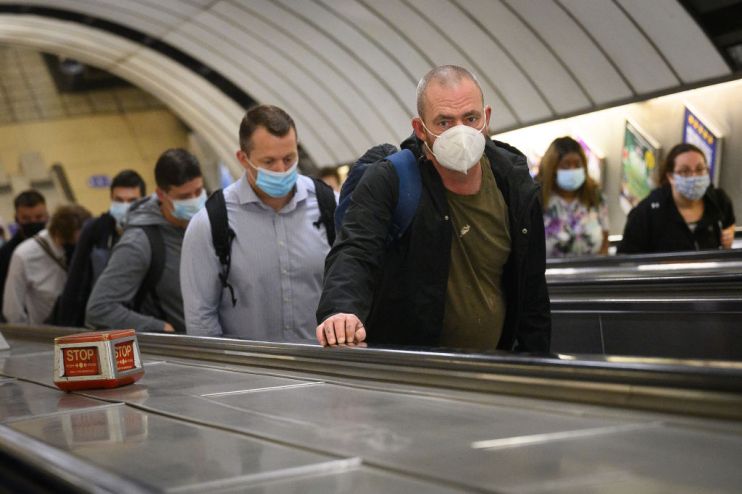
The Omicron wave appears to have peaked in some countries, with the UK preparing to loosen restrictions. Mark Ainsworth, Head of the Schroders Data Insights Unit, explains what to expect next.
The Omicron variant has spread rapidly since its initial detection last year but hasn’t been as severe as initially feared in terms of health outcomes.
The example of London illustrates what appears to be the typical dynamic: cases soared above last winter’s levels but appear to have peaked, while the number of patients in hospital and/or on ventilators has been far lower than last January.
It is clear that the vaccines are offering good protection against the risk of hospitalisation and death, and prior infection is also helpful here. However, neither vaccination nor prior infection offer much, if any, protection from infection with Omicron.
Three reasons why Omicron is different
We knew last year that Omicron was different to previous Covid-19 variants. But we now know more about how those differences have resulted in both the faster spread but also the less severe health impacts.
- Firstly, scientists identified very quickly last year that Omicron contained different mutations in spike proteins compared to earlier variants. This enabled it to bypass antibody immunity, leading to greater numbers of people becoming re-infected, or infected or even if they are fully vaccinated. But what we can see now, given the reduced rates of severe illness, is that T-cells – the deeper layers of the immune system – are working well in fighting the virus. That has meant significantly fewer people are severely ill, and has reduced the overall impact on health systems by at least half.
- Secondly, we now know that the specific types of human body cells Omicron is good at infecting is different from previous variants. In effect, Omicron thrives in the upper airways, rather than the lungs. This makes it fundamentally less severe and results in fewer infected people needing hospital treatment, especially mechanical ventilation. We estimate this difference has reduced impact on health systems by around a quarter.
- The third difference – its speed of transmission – is perhaps the most surprising. When Omicron cases were first growing very rapidly in South Africa or in London, researchers assumed that it must be doing so because each infected person was going on to infect many others, as measured by the ‘R number’. When viruses have high R numbers, they invariably only stop spreading once a large proportion of the population has caught the virus, and this threatened to overwhelm hospital systems by sheer volumes of infections. Indeed, this is precisely why the world went into lockdowns in previous waves. However, it now appears that Omicron infections are faster. Multiple lines of evidence (whether Norwegian super-spreading events or South Korean contact tracing studies) point to Omicron infections taking much less time between someone getting exposed to it and then going on to infect others. This means that the peak of the wave, and the total number of people catching Omicron, is turning out significantly lower than previously feared. This has also reduced the total strain on health systems by at least half.
However, Omicron’s strain on healthcare systems has been serious in many countries, and people who have no prior immunity can still be at risk of severe illness.
Countries at different stages in Omicron wave
As with the other Covid-19 variants, different countries are experiencing the Omicron wave at slightly different times. Some of the countries that were hit early – such as South Africa, or the UK – are already seeing confirmed cases fall.
Other countries are still experiencing rising cases, such as Germany. However, cases in Germany haven’t risen as high as we might have expected and are showing signs of slowing.
We estimate that many countries where cases are still rising are perhaps only a week or two away from their peak.

Way down will be slower than way up
However, while cases may be starting to plateau or fall, the drop in cases will not be nearly as sharp as the rise. We can see this on the chart above where South Africa’s recent fall in cases is more gentle than the preceding rise.
This is because of the interaction between case rates and the population’s behaviour. Some countries were swift to bring in extra restrictions as a result of Omicron. Others did not but populations nevertheless adjusted their behaviour to limit social interactions.
As cases start to drop, governments and populations will become less cautious, restrictions will be lifted and behaviour will gradually normalise. The rate of decline in cases will therefore moderate. So if the rise in cases took two weeks, for example, it may well be one or two months before they fall back to prior levels.
What this means is that although cases may be peaking is some countries, it could still be a few months before we really feel that the Omicron wave is over in terms of pressure on hospitals. We should also remember that hospital occupancy typically peaks two weeks after cases do.
Discover more by visiting Schroders’ insights or click the links below:
– Read: Outlook 2022: UK equities
– Listen: Outlook 2022: Things will never be the same again
– Read: Three graphics that will help you picture what 2022 might look like
What does this mean for restrictions and economic activity?
As Omicron is moving faster than previous variants, the same may well apply when it comes to unwinding restrictions. Indeed, the UK this week announced that its “plan B” restrictions – which include advice to work from home where possible – will end next week.
The unwinding of restrictions, and voluntary changes in people’s behaviour, will likely take a couple of months once a country has passed its peak of cases. Strain on the healthcare system is likely to be a key factor in governments’ decisions to loosen restrictions.
Clearly, one final crucial point to note is that China is still holding firm to its “zero Covid” strategy. While this has been effective, many other countries which had similar zero Covid policies are now exiting them (for example, Australia, which has experienced sharply rising cases as a result). China’s stance includes strict lockdowns and curtailments of mobility which could continue to put pressure on supply chains and economic activity in 2022.
– For more visit Schroders insights and follow Schroders on twitter.
Topics:
Important Information: This communication is marketing material. The views and opinions contained herein are those of the author(s) on this page, and may not necessarily represent views expressed or reflected in other Schroders communications, strategies or funds. This material is intended to be for information purposes only and is not intended as promotional material in any respect. The material is not intended as an offer or solicitation for the purchase or sale of any financial instrument. It is not intended to provide and should not be relied on for accounting, legal or tax advice, or investment recommendations. Reliance should not be placed on the views and information in this document when taking individual investment and/or strategic decisions. Past performance is not a reliable indicator of future results. The value of an investment can go down as well as up and is not guaranteed. All investments involve risks including the risk of possible loss of principal. Information herein is believed to be reliable but Schroders does not warrant its completeness or accuracy. Some information quoted was obtained from external sources we consider to be reliable. No responsibility can be accepted for errors of fact obtained from third parties, and this data may change with market conditions. This does not exclude any duty or liability that Schroders has to its customers under any regulatory system. Regions/ sectors shown for illustrative purposes only and should not be viewed as a recommendation to buy/sell. The opinions in this material include some forecasted views. We believe we are basing our expectations and beliefs on reasonable assumptions within the bounds of what we currently know. However, there is no guarantee than any forecasts or opinions will be realised. These views and opinions may change. To the extent that you are in North America, this content is issued by Schroder Investment Management North America Inc., an indirect wholly owned subsidiary of Schroders plc and SEC registered adviser providing asset management products and services to clients in the US and Canada. For all other users, this content is issued by Schroder Investment Management Limited, 1 London Wall Place, London EC2Y 5AU. Registered No. 1893220 England. Authorised and regulated by the Financial Conduct Authority.