
One march that paved that way for social reform

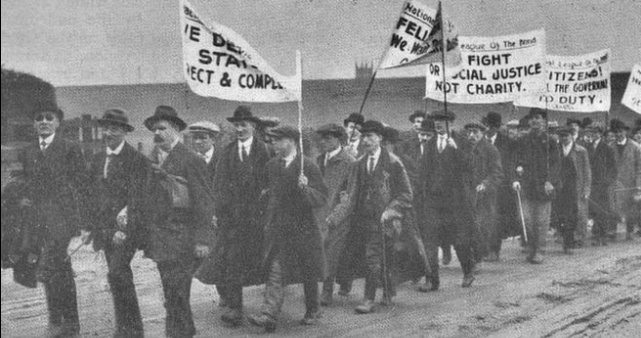
With World Sight Day just around the corner, taking a look back to a moment that helped shape the nation’s support of visually impaired people seems fitting.
In ancient times, blindness was associated with intelligence and creativity – take Homer for example, one of the most celebrated authors of all time. There are blind characters in some of the world’s most famous myths and stories, from Sophocles to the New Testament to the 2006 Hollywood film The Blind Side.
Blind people have been celebrated for their contributions to society in some cases, yet on the other end of the spectrum they can undergo some of the worst conditions a human can experience such as extreme poverty and an early death. So how has the idea of blindness made this journey in recent history?
The Blind Act 1920
In the early 1900’s, the economic prospects of a blind or visually impaired person in Great Britain was limited. The majority of blind people fortunate enough to find work were working for charities in workshops where pay was minimal and rules and regulations were rigorous. Many of the remaining blind population were living a life of extreme poverty, with hundreds of blind men and women living on the streets of cities.
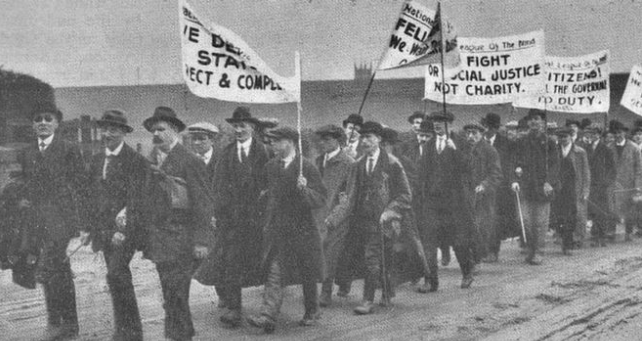
Born blind, trade unionist and piano tuner, Ben Purse led a newly formed union that would operate in the interests of England’s blind population. The National League of the Blind and Disabled was founded in 1893 and it staged its first strike in 1912 with the goal of revealing the grim living conditions many blind people suffered. For years the union tried without triumph to improve the lives of blind populations and reduce the rules that charities imposed on their visually impaired employees, one being that blind workers were unable to marry without the permission of their employers.
It wasn’t until April 1920 that the work of the National League of the Blind truly became a milestone in the history of visual impairments. A march to Trafalgar Square from large cities like Leeds, Manchester and Newport was staged in support of what we know as the Blind Persons Act. Marchers were made up of blind men, as the conditions were deemed too rough for women, who walked arm in arm or followed a rope on the gruelling 20-day journey carrying signs that read ‘Justice Not Charity’. Over 10,000 people were at Trafalgar Square when the marchers arrived, showing their solidarity with the cause. After waiting for five days at Trafalgar Square, on the 25th of April, 200 blind protestors marched to the House of Commons where speeches were made by prominent figures in the campaign, including Ben Purse.
The leaders of the march met with the Prime Minister at the time, David Lloyd George, to express their wishes. The goals of the union were to receive support so that blind people no longer were forced to live in worse conditions than those with sight, and that the government would put support in education and workplaces in place. Much to the dismay of the union, Lloyd George did not confirm any of their pledges and instead ensured that all marchers were given free train tickets so they could get home safety.
With momentum still high due to the large crowds and attention the march attracted, a bill was eventually passed in August later that year. The Blind Persons Act ensured that blind people over the age of 50 could receive a pension, usually given to those over 70, and every council would ‘provide and maintain or contribute towards the provision and maintenance of workshops, hostels, homes, or other places for the reception of blind persons’.
Though not all demands were met initially, the march is seen as a historic point for all disabilities. In the years that followed, Britain saw many marches that protested poverty and inequality in the country, most notably the Jarrow March, a movement that is said to have sparked social reform post World War II. The Nation League of the Blind and Disabled march ignited a belief that campaigning can make a difference and proved that with momentum and support from the public, equality in the country can be achieved.
Today, the Equality Act 2010 is in place to protect those living with disabilities from exploitation and discrimination in the workplace. There are steps in place for visually impaired workers to go through if they do feel that their place of work is treating them unfairly, as well as charities to go to for support such as the RNIB (Royal National Institute of Blind People).
Sources
https://www.bbc.co.uk/news/disability-52477587
https://alexanderstreet.com/sites/default/files/UseCase_BlindMarch_R03.pdf
The Tej Kohli & Ruit Foundation is a restricted fund operating under the auspices of Prism The Gift Fund, registered UK charity number 1099682.