Skip to content
Thursday 10 September 2026London --:--Frankfurt --:--Zurich --:--
NewslettersSearchEN · DE · FR
MorningWire

European business, markets and politics

FTSE 100
10,611.33
-0.55%
DAX
25,469.60
-0.42%
CAC 40
8,138.61
-0.22%
STOXX 50
6,279.18
-0.51%
  • Europe
  • Markets
  • Business
  • Economy
  • Regulation
  • Politics
  • Opinion
More
GermanyFranceEU InstitutionsCompetitionPublic AffairsBankingTechnologyEnergy
  • Germany
  • France
  • Europe
  • Markets
  • Business
  • Economy
  • Regulation
  • Politics
  • Opinion
  • DE
Tuesday 29 November 2022 6:15 am  |  Updated:  Monday 28 November 2022 5:10 pm

Open banking should be a blueprint to create more competition across sectors

By: John Penrose

Add as a preferred source on Google
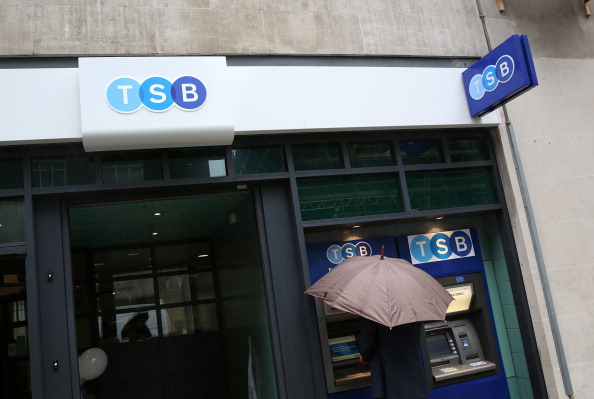
TSB Returns To The High Street After Split With Lloyds
Open banking has created a revolution in finance, meaning many high street branches have closed. (Photo by Peter Macdiarmid/Getty Images)

Along with butchers, it is increasingly rare to see a bank branch on your local high street. Changing habits mean we’re all doing more shopping and banking online and less in our local high street. Why bother putting on a tie to see your bank manager when you can get the best deal via an app on your phone, at any time of day or night?

But this banking transformation didn’t happen on its own. It had to start somewhere, and the spark was struck by a pretty-obscure rule change a few years ago that forced high street banks to let us all move our banking data around. The result was “open banking” and a huge, fundamental change in the way an entire industry works. It has put the UK in a world-leading position for anything to do with “fintech”, and spawned literally thousands of new companies, jobs and types of business to boot, while the next step in the journey, open finance, promises to unleash even more potential.

Today over six million people in the UK are using open banking to manage their finances better and, most importantly, save money. A recent study by open banking platform Yapily found that 95 per cent of consumers are worried about the cost of living, with nearly 9 in 10 turning to financial products and services over the last 12 months to help.

Many consumers are doing so for the first time, with 68 per cent using bill management tools and 63 per cent using budgeting apps for the first time this year. With the Bank of England recently announcing the largest rise in interest rates since 1989, and inflation at 10.09 per cent, these numbers are set to grow. Open banking powers the most tailored and effective of these tools and is a crucial puzzle-piece to help consumers tackle the cost of living crisis. But there are more benefits yet to come.

Best of all, this ought to be just the start of something even bigger, stretching well beyond banking to give everyone better deals across the rest of our economy too, from insurance and mortgages to online groceries, energy companies, broadband firms and water. The potential for portable personal data to open the lid on all these industries at a time when money is tight and household incomes are squeezed should be huge, provided we use the banking changes as a blueprint for the rest of the economy. We mustn’t stop at open banking – that isn’t nearly ambitious enough: we need to aim to open everything.

Take transport as an example. In 2009 Transport for London opened up their data to developers, enabling the creation of third party apps like Citymapper, now used by millions and saving TfL up to £130m a year.

Key to all of this is a new piece of legislation, the upcoming Data Protection and Digital Information Bill. It’s a promising start, but it’s tentative: it won’t get us to open everything, because it doesn’t go far or fast enough. And our rivals in other countries aren’t standing still either. They’ve seen the phenomenal success of open banking and, unsurprisingly, they’d like some of what we’ve got too. If we don’t get a move on, they won’t just copy what we’ve done already; they’ll leapfrog and overtake us.

We have an opportunity to use this as a mechanism to make us more ambitious and move from open banking to open everything as fast as possible. Doing so would maintain our global leadership, create thousands more valuable, world-beating UK-based startup firms and mean the industries and skills of the future would be created right here. We used to be the “workshop of the world” and, if we get this right, we could be again.

Read more

The European fintech American dream is being called into question

Wise logo with downward trending stock chart, highlighting fintechs share decline amid Belgium fraud investigation

Share this article

  • Facebook
  • X
  • LinkedIn
  • WhatsApp
  • Email

Similarly tagged content:

Sections

  • Opinion

Categories

  • Opinion

Trending Articles

  • Tesco and Boots lead 100,000 jobs pledge to tackle Neets crisis

  • Airport chaos latest: Heathrow, London City ‘starting to recover’ after air traffic control failure

  • Hedge fund billionaire Chris Rokos joins UK wealth exodus 

  • Primark sales slip as owner dresses up retailer for demerger

  • Five lenders hike mortgage prices as interest rate threat looms

More from Morning Wire

  • The European fintech American dream is being called into question

    Fintech
    Wise logo with downward trending stock chart, highlighting fintechs share decline amid Belgium fraud investigation
  • Big bank bosses on alert as tax noise gets louder under Burnham

    Banking
    Two men, one in a white shirt and red tie, the other in a navy jacket, conversing outdoors.
  • JP Morgan boss issues bank tax warning to John Healey

    Banking
    JPMorgan Chase CEO Jamie Dimon
  • Revolut US licence win ‘strengthens pre-IPO story’

    Fintech
    Nikolay Storonsky discussing business strategy at a press conference, emphasizing innovation and growth in the financial s...
  • Monitoring the situation: HSBC to add 46 CCTV cameras with ‘face detection’ outside new City HQ

    Banking
    Multiple CCTV security cameras in light blue and white against a green background, emphasizing surveillance and monitoring.
  • Government pushes Bank of England to innovate on payments and digital currencies

    Regulation
    Bank of England building on Threadneedle Street, London, showcasing its historic architecture and financial significance
  • Stamp duty on shares is ‘biggest handbrake’ says UK bank chief

    Markets
    LSEG logo on a large screen inside a modern building with stock tickers and glass ceilings.
  • Citi hit with £5m fine for violating UK sanctions on Russia

    Banking
    Citi invests in digital strategy with Google Cloud partnership
MorningWire

Independent European business, markets and political news for decision-makers.

Morning Briefing

Europe

  • Germany
  • France
  • EU Institutions
  • Europe

Business

  • Markets
  • Business
  • Economy
  • Regulation
  • Competition
  • Public Affairs

Editorial

  • Opinion
  • Editorial Policy
  • Corrections
  • Contact

Company

  • About Morning Wire
  • Privacy Policy
  • Terms of Use
  • Cookie Policy
© 2026 Morning Wire Ltd · Published by Morning Wire Media, Bahnhofstrasse 65, 8001 Zürich, Switzerland
Privacy · Terms · Cookies · Facebook