Open the floodgates: Britain’s planning reform needs to defend our homes

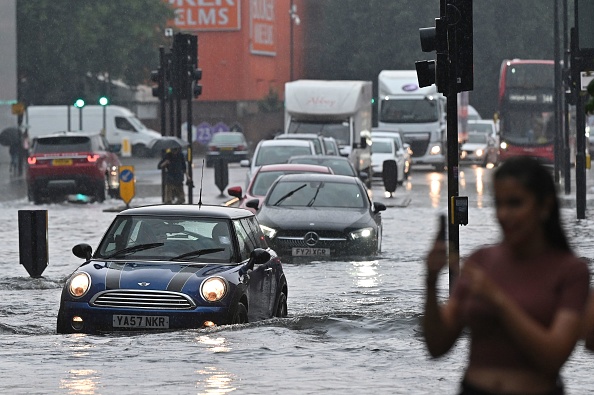
Brits have been told to brace for flooding with an exceptionally wet January and February forecast by the Environment Agency. In England, there are 5 million properties – one in six – at risk of flooding. Overflows are a complex issue encompassing planning and resilience, climate change and housing. But it is not one taken seriously enough, with 30 per cent of people living in at-risk areas yet to put in place protective measures before the winter.
Councils on the east coast of England are the most frequent victims of river flooding. Jonathan Werran, chief executive of the think tank Localis, laments a lack of coordination between central government and local authorities on the issue. “No one takes full responsibility. What you find is a failure to have harmonious operational relationships between the centre and the localities, let alone businesses and civil society”, he says. Yet, according to fresh research from the think tank, housing needs have meant authorities approved 5,283 new dwellings on floodplains in the first nine months of 2021. Clearly there is a risk there, and it can only begun to be addressed by a reset in relations.
It’s easy to think building on floodplain is a nonsensical thing to do. But according to Samer Bagaeen, professor of Urban planning and resilience at the University of Kent, it’s not just that those one in six houses are in the wrong place; it’s the only place.
To build enough homes we need flexibility, as different communities have different housing needs. There is no single answer in building on brownfield, greenfield or climbing into the sky, but in a delicate web of the three, delivered with local interests in mind.
Planning policy already steers new developments away from areas at risk of flooding. When things do need to be built there, the local authorities have to “meet extremely stringent mitigation requirements” set out by the Environment Agency. If the EA rejects their plans, local authorities can still go ahead, but they will have to justify their actions to the government. They rarely consider doing this: 97 per cent of the homes being built in the year 2019/20 followed the EA advice. Clearly we shouldn’t be building a high number of homes in areas at risk. But to make a dent in the housing crisis we can’t completely rule out all areas affected by flooding. Especially because it doesn’t happen only in the graceful English countryside, but also in our cities.
According to Richard Blyth of the Royal Town Planning Institute most claims insurance companies get are surface overflooding – water filling roads and getting into houses. This is reminiscent of last summer’s scenes, when London briefly looked more like a swamp than a capital. According to Blyth, the flooding of so many houses – especially basement flats – is because London itself is built on a floodplain, but Londoners don’t put the necessary measures in place. “Around 10 percent of the entire country’s poorly-rated flood defences are in London, this should be a major cause for concern”, he says. With a problem affecting the countryside as well as cities, the focus shifts from how to avoid it to how to mitigate the worst of the damage.
Ultimately, this will require planning reform with climate change at its core. The risk of flooding and other natural disasters is only set to increase because of warmer temperatures, sea level rise and beach and river bank erosion. “We were very worried because there was very little mention of climate change in the planning white paper when it was first published. The government should tilt the debate from just granting as many housing permissions as possible, and bring the climate element of that up to speed”, says Blyth.
The Localis report is right in arguing that floodplain development presents “either an opportunity or obstacle for building back better, depending on policy choice and political governance”. Local authorities need to be able to deliver flood defences where they are most at risk, but cash strapped budgets means the push needs to come from Westminster. In the capital, Canada Corporation has vowed to up its flood defences. But it cannot become the prerogative of those with the most cash to protect people’s homes. Climate change must be at the core of planning reforms, or what we build won’t last the test of time.