OpenAI, SpaceX, Anthropic: the tech giants lining up blockbuster IPOs

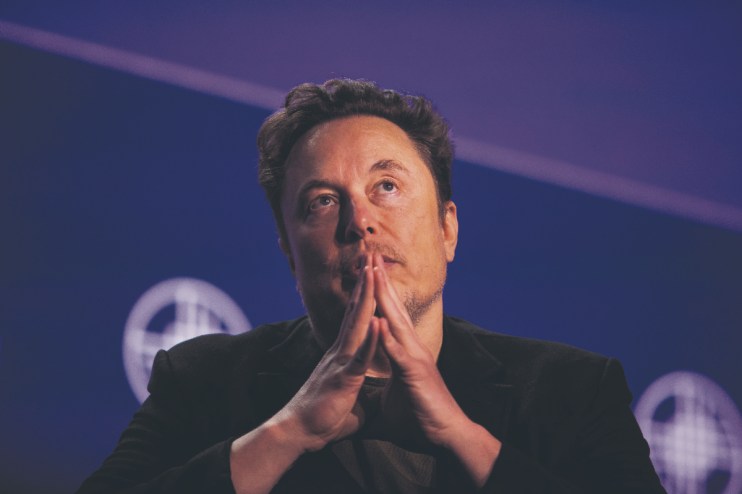
For more than a decade, Silicon Valley’s most powerful companies have stayed private for longer than ever before, buoyed by deep pools of capital and sovereign wealth funding.
But, as interest rates remain higher, AI infrastructure costs balloon and some of the world’s largest private firms mature into businesses of national, and increasingly geopolitical, importance, the public markets are creeping back into view.
This is not an IPO boom, with executives continuing to insist they are in no rush, and in many cases, they are probably sincere.
But across AI, space and enterprise software, a cluster of companies is now large, capital-hungry and operationally complex enough that preparing for life as a public company has become less optional. 2026 is emerging as a plausible, if still unofficial, horizon.
AI’s capital problem
Anthropic has been the most explicit about laying groundwork.
The AI lab, backed by Amazon, has hired Wilson Sonsini, a law firm closely associated with major US tech listings, to advise on public-market readiness, it was reported earlier this month.
The company has said this is prudent housekeeping rather than a signal of intent, but the timing is telling.
Training new AI models now requires multibillion-dollar commitments to compute, energy and long-term cloud contracts.
Even for firms that can raise private capital at eye-watering valuations, the balance between flexibility and permanence has changed.
Anthropic’s latest funding round valued the business at well over $300bn (£221bn), but sustaining that trajectory means securing financing on terms that do not become progressively more restrictive.
Elsewhere, OpenAI sits in a more awkward position, with Reuters recently reporting that the company is preparing for a potential IPO in the second half of 2026, possibly at a valuation approaching $1tn.
Publicly, OpenAI plays down the idea. Sam Altman has even questioned whether the scrutiny and short-termism of public markets suit an organisation tasked with building general-purpose AI.
Yet OpenAI’s own forecasts point to the tension. Revenues are growing rapidly, but so are obligations to long-term contracts for chips and data centres that stretch years into the future.
It is the sheer scale of those commitments that makes the question of sustainable capital structure harder to avoid, whether or not a public listing is the chosen answer.
SpaceX and the limitations of staying private
If OpenAI mirrors the financial strain of AI, SpaceX represents the limits of private ownership at scale.
It has been reported that Elon Musk’s company could list as early as mid-to-late 2026, potentially at a valuation of up to $1.5tn.
Musk has not confirmed a timeline, but he has acknowledged that reports of IPO preparations were broadly accurate.
What has changed is the business mix. Around 70 per cent of SpaceX’s revenue now comes from Starlink, its satellite broadband division, which has millions of subscribers and a recurring revenue model that looks increasingly familiar to public-market investors.
Space launch remains capital-intensive and unpredictable. Look at Starlink, which, by contrast, resembles a global telecoms operator.
Even so, a listing at anything close to the figures being discussed would require confidence not just in Starlink’s growth, but in SpaceX’s ability to execute on Starship and defend its tech lead as China accelerates its own commercial space ambitions.
This is less a question of hype than of whether private markets alone can continue to absorb the scale of investment needed for the firm.
Quieter wins
Elsewhere, a second tier of late stage tech firmns look far closer to a conventional IPO trajectory.
Databricks and Canva, in particular, resemble businesses that have spent several years deliberately preparing for public markets rather than flirting with them.
Databricks, whose data and analytics software is present much of the modern AI stack, is now generating more than $4bn in annualised revenue, and has told investors it is cash-flow positive.
The firm raised funding this year at a reported valuation of around $134bn, proving its status as one of the most valuable private software firms in the world.
Chief executive Ali Ghodsi has been unusually candid by Silicon Valley standards, acknowledging that a public listing is the “natural outcome” for a business of its scale.
But, he has insisted that timing is what matters most. And with business customers increasingly sensitive to stability and long-term roadmaps, amid talks of a so-called AI bubble, a listing could offer reassurance as much as liquidity.
Canva’s path has been even more methodical. The design platform claims more than 250 million monthly active users globally and has steadily expanded beyond consumer graphics.
It has already conducted multiple internal share sales to give employees liquidity, revamped governance structures and hired senior finance executives with public-market experience, which are all pre-IPO signals.
Still, founders Melanie Perkins and Cliff Obrecht continue to stress independence, saying that profitability and product expansion come before flotation.
What distinguishes these companies from the AI labs and space ventures is predictability. Revenues are recurring, capital needs are manageable, and business models are already well understood by investors.
So if the IPO window does reopen in earnest, it may be these quieter, less spectacular names that test the waters first.