Skip to content
Sunday 9 August 2026London --:--Frankfurt --:--Zurich --:--
NewslettersSearchEN · DE
MorningWire

European business, markets and politics

FTSE 100
10,901.09
+0.31%
DAX
26,319.45
+0.69%
CAC 40
8,714.93
+0.17%
STOXX 50
6,523.86
+0.33%
  • Europe
  • Markets
  • Business
  • Economy
  • Technology
  • Politics
  • Opinion
More
GermanyFranceBankingAIEnergyFintechPropertyCapital Markets
  • Germany
  • France
  • Europe
  • Markets
  • Business
  • Economy
  • Technology
  • Politics
  • Opinion
  • DE
Tuesday 08 July 2025 1:45 pm

OpenAI’s security crackdown signals new AI battle

By: Saskia Koopman

Tech Reporter

Add as a preferred source on Google
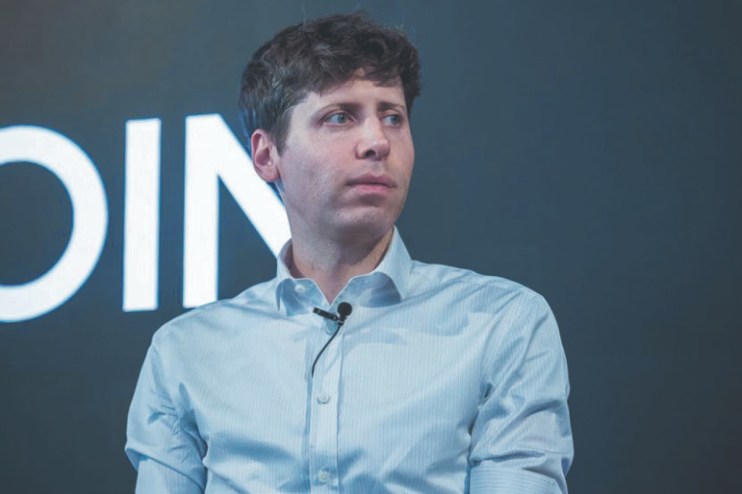
OpenAI chief executive Sam Altman emphasised the Stargate project’s significance.

Silicon Valley’s $300bn crown jewel, OpenAI, is shifting focus from building artificial intelligence to protecting it.

OpenAI, the maker of ChatGPT and arguably the most scrutinised name in AI, has imposed a sweeping internal lockdown.

From biometric fingerprint scans, to offline ‘tented’ R&D zones, the San Fransisco-based firm is tightening security across the board amid growing fears of foreign espionage and tech theft.

It has been reported that the clampdown has been months in the making but that things escalated after Chinese AI startup DeepSeek released a rival model in January.

OpenAI claimed the Chinese firm used “distillation” techniques to mimic its models, a charge DeepSeek is yet to address publicly.

Silicon Valley’s new arms race

The move comes amid heightened competition in the global AI sector, as governments, as well as Big Techs, prioritise securing access to cutting-edge technology.

Sam Altman’s firm has been “aggressively expanding” its security operations. That includes hiring Dane Stuckey, former cyber chief at Palantir, and bringing retired US Army general Paul Nakasone onto its board.

Internally, OpenAI’s approach is now defined by what’s being called ‘information tenting’, a highly compartmentalised system in which even senior staff are walled off from one another depending on the project.

Only those formally ‘read in’ to a project can access or discuss it, a system that, while arguably effective, has frustrated some teams and slowed collaboration.

Sensitive projects – including last year’s ‘o1’ model, codenamed ‘Strawberry’- are now developed in isolated, offline environments.

Read more

Sovereign AI is no longer a nice to have, and with open source, more achievable than ever

AI sovereignty shield with brain circuit icon and padlock, glowing lines on ground, London cityscape at sunset.

Espionage, paranoia, or both?

Some will say OpenAI’s instincts are justified. The US government has warned repeatedly that foreign adversaries, including China, are ramping up efforts to access America’s most sensitive intellectual property.

And when models like GPT4 or its successor could underpin everything from autonomous weapons to economic modelling, the stakes are high.

But there’s a fine line between vigilance and paranoia. The firm’s security shift comes amid rising concerns about xenophobia in Big Tech, particularly in high trust roles.

A large proportion of Silicon Valley’s technical talent is of Asian descent, something that’s prompted awkward conversations in boardrooms as fears of espionage rise.

There’s also a practical cost. Highly siloed systems can stifle innovation – the very currency AI labs trade on. The more locked down a model is the fewer minds that can work on improving it.

For a company like OpenAI, which pitches itself as an industry leader, collaboration has long been its key selling point.

A market watching closely

From the City’s perspective, the OpenAI clampdown is just as much about protecting shareholder value as it is about guarding state secrets.

With a private-market valuation nearing $300bn (£232bn) and Microsoft’s backing in hand, the stakes have never been higher. If an IP leak were to devalue OpenAI’s moat, its model weights, architecture, or training data, it wouldn’t just be a cybersecurity failure. It would be a business disaster for member of the so-called Magnificent Seven.

OpenAI, for its part, insists this isn’t a response to any specific breach. “We’re investing heavily in our security and privacy programs as we seek to lead the industry,” a spokesperson told the Financial Times.

Still, investors and rivals alike will be reading between the lines. With whispers of internal leaks and increased friction among staff, it’s clear the firm isn’t just fending off foreign adversaries; it may be grappling with internal growing pains, too.

Read more

UK government probes OpenAI breach after ‘unprecedented’ hack

Sam Altman discussing OpenAIs ChatGPT advancements at a press conference, emphasizing AI innovation and future developments

Share this article

  • Facebook
  • X
  • LinkedIn
  • WhatsApp
  • Email

Similarly tagged content:

Sections

  • News

Categories

  • Tech
  • Business

People & Organisations

  • artificial intelligence
  • big tech
  • ChatGPT
  • Deepseek
  • magnificent seven
  • OpenAI
  • Sam Altman

Trending Articles

  • Thames Water faces fresh threat to survival after pensions regulation breach

  • PwC’s Embankment HQ to get major makeover ahead of Canary Wharf move

  • Family feud: London estate agent Winkworth sues chair over plot with wife to oust son from board

  • As it happened: Stocks rise despite new tensions in Strait of Hormuz; Oil price climbs

  • A tribute to wine legend Matthew Jukes by his friend Libby Brodie

More from Morning Wire

  • Sovereign AI is no longer a nice to have, and with open source, more achievable than ever

    Opinion
    AI sovereignty shield with brain circuit icon and padlock, glowing lines on ground, London cityscape at sunset.
  • UK government probes OpenAI breach after ‘unprecedented’ hack

    Tech
    Sam Altman discussing OpenAIs ChatGPT advancements at a press conference, emphasizing AI innovation and future developments
  • Cognita Reply Named an OpenAI Advanced Partner to Accelerate Enterprise Adoption of Frontier AI

    Business Wire
  • UK’s AI watchdog flags new OpenAI and Anthropic cyber alarms

    AI
    Smartphone displaying the Claude by Anthropic AI assistant app, showing the app icon and interface.
  • OpenAI’s proposed ‘Trump stake’ raises ‘governance overhang’ fears ahead of IPO

    Tech
    Sam Altman discussing OpenAIs ChatGPT advancements at a press conference, emphasizing AI innovation and future developments
  • Monzo founder joins Anthropic as AI talent race heats up

    Tech
    Claude AI interface showcasing advanced features in a business setting
  • ‘Extremely dangerous’: AI warfare much bigger threat than LLM model advances, experts warn

    AI
    Swarm of AI-powered drones flying over a city skyline, symbolizing modern warfare and autonomous technology.
  • Cloudflare Announces Research Pilot with OpenAI

    Business Wire
MorningWire

Independent European business, markets and political news for decision-makers.

Morning Briefing

Europe

  • Germany
  • France
  • Europe
  • UK & Ireland

Business

  • Markets
  • Banking
  • Technology
  • Energy
  • Property
  • Fintech

Editorial

  • Opinion
  • Editorial Policy
  • Corrections
  • Contact

Company

  • About Morning Wire
  • Privacy Policy
  • Terms of Use
  • Cookie Policy
© 2026 Morning Wire Ltd · Published by Morning Wire Media, Bahnhofstrasse 65, 8001 Zürich, Switzerland
Privacy · Terms · Cookies · Facebook