Skip to content
Sunday 6 September 2026London --:--Frankfurt --:--Zurich --:--
NewslettersSearchEN · DE · FR
MorningWire

European business, markets and politics

FTSE 100
10,831.09
0.00%
DAX
26,046.40
+0.17%
CAC 40
8,278.77
-0.09%
STOXX 50
6,392.93
+0.16%
  • Europe
  • Markets
  • Business
  • Economy
  • Regulation
  • Politics
  • Opinion
More
GermanyFranceEU InstitutionsCompetitionPublic AffairsBankingTechnologyEnergy
  • Germany
  • France
  • Europe
  • Markets
  • Business
  • Economy
  • Regulation
  • Politics
  • Opinion
  • DE
Thursday 13 February 2014 5:54 am

Osborne’s claims that Scotland couldn’t use the pound don’t stack up

By: Peter Spence

Add as a preferred source on Google

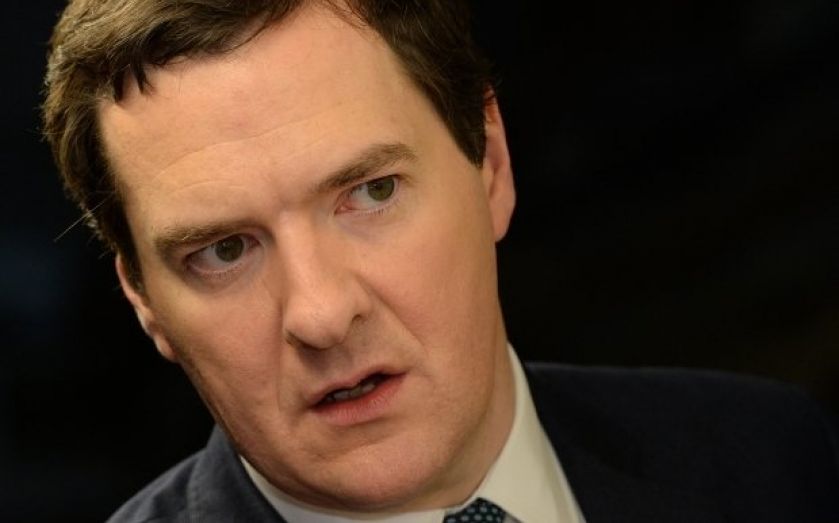
Chancellor George Osborne is on the warpath this morning.

He's knocking the idea of Scotland using the pound, without asking England's permission. Something that Adam Smith Institute research director Sam Bowman says the English government couldn't stop it doing.

Pointing to other countries that do something similar – Panama with the dollar, and Montenegro with the euro – Osborne said that they're not "the two strongest precedents or the countries you'd want to follow".

Panama as precedent?

Those examples both come from "Scotland analysis: Assessment of a sterling currency union". But Osborne's criticism of them is unfounded.

Panama is one of the world's fastest growing countries. According to the World Bank the economy "did relatively well during the global financial crisis" when compared with "other countries in the region", with 3.2 per cent growth in 2009.

In 2010 the economy resumed its growth rate with an increase of 7.6%, and growing 10.6% in 2011, 10% in 2012.

Panama is "the most competitive economy in Central America, and second in Latin America" according to the 2013-14 World Economic Forum Global Competitiveness Report.

It would be hard to come to the conclusion that Panama is a bad example unless you have some kind of prejudice against Latin American economies.

And looking at Panama's capital, Panama City, it's certainly difficult to conclude that it's any kind of basket case.

Dollarized success

Osborne's more serious contentions – that by entering a sterlingzone Scotland would have no control over its monetary policy, would have no lender of last resort, and no control of its money supply – deserve more attention.

Government analysis says that other countries who use the currency of another end up having no influence over monetary policy – with Panama and Montenegro having "no influence over [the] US … or influence over at the European Central Bank" respectively.

But for a country like a newly independent Scotland – the issues Osborne highglights don't seem to play out.

Last December ratings agency Moody's said that becoming a dollarized economy "has ensured macroeconomic stability."

For the stability of its banks Panama ranks seventh in the world out of 148 countries according to the aforementioned World Economic Forum report.

Lack of monetary control?

It's true that Scotland would have no power over monetary policy – but do many think that Scotland gets much consideration from the Bank of England at present?

The Scottish population stands at around 5.3m of a total United Kingdom figure of 63.2m.

Lender of last resort?

Economist George Selgin has pointed out that not having a lender of last resort has actually been a positive for dollarized economies as "by doing away with, or at least greatly limiting, any prospect of a bailout, it has caused creditors and banks to behave more prudently.

Share this article

  • Facebook
  • X
  • LinkedIn
  • WhatsApp
  • Email

Similarly tagged content:

Sections

  • Opinion

Categories

  • Opinion

Trending Articles

  • Victoria Beckham owed £350,000 by Harvey Nichols

  • M&G: FTSE 100 giant hits out at Rayner’s ground rent cap as it suffers loss

  • Fulham owner Khan sees his £1bn stadium construction project take next steps

  • John Lewis boss: UK economy facing a ‘permacrisis’ 

  • Don’t underestimate the free trade agreement Britain just joined

More from Morning Wire

  • Nanochon Receives Regulatory Approval from Panamá’s Ministry of Health to Initiate First-in-Human Clinical Study of Chondrograft™

    Business Wire
  • The Highland tourist tax: Is Scotland pricing out whisky tourists?

    Whisky
    Red deer stag on a heather-covered hillside overlooking a loch and mountains in the Scottish Highlands
  • Sex Education star makes investment into women’s football vehicle

    Sport Business
    Gillian Anderson in a white collared shirt with embellishments, blonde hair updo, soft makeup, against a blurred backdrop
  • Why The Outer Hebrides is Scotland’s ultimate wellness escape

    Life&Style
    Aerial view of Outer Hebrides coastline, turquoise sea, white sand beach, green fields, and scattered homes.
  • Amentum Selected for Projects to Upgrade and Protect the UK Energy Grid

    Business Wire
  • How padel courts became a must-have for upscale hotels and members’ clubs

    Sport Business
    Outdoor padel tennis court with green turf, high fences, and a net, against a backdrop of trees and buildings.
  • Mark Kleinman: Frasers’ touchiness shows importance of Harvey Nicks swoop for Ashley

    Business
    Mark Kleinman is Sky News' City Editor and writes a column for Morning Wire
  • Londoners can no longer afford the Notting Hill Carnival

    Opinion
    Joyful reveler in vibrant feathered and jeweled costume at Notting Hill Carnival 2025, holding a pink mug.
MorningWire

Independent European business, markets and political news for decision-makers.

Morning Briefing

Europe

  • Germany
  • France
  • EU Institutions
  • Europe

Business

  • Markets
  • Business
  • Economy
  • Regulation
  • Competition
  • Public Affairs

Editorial

  • Opinion
  • Editorial Policy
  • Corrections
  • Contact

Company

  • About Morning Wire
  • Privacy Policy
  • Terms of Use
  • Cookie Policy
© 2026 Morning Wire Ltd · Published by Morning Wire Media, Bahnhofstrasse 65, 8001 Zürich, Switzerland
Privacy · Terms · Cookies · Facebook