Skip to content
Saturday 5 September 2026London --:--Frankfurt --:--Zurich --:--
NewslettersSearchEN · DE · FR
MorningWire

European business, markets and politics

FTSE 100
10,831.09
0.00%
DAX
26,046.40
+0.17%
CAC 40
8,278.77
-0.09%
STOXX 50
6,392.93
+0.16%
  • Europe
  • Markets
  • Business
  • Economy
  • Regulation
  • Politics
  • Opinion
More
GermanyFranceEU InstitutionsCompetitionPublic AffairsBankingTechnologyEnergy
  • Germany
  • France
  • Europe
  • Markets
  • Business
  • Economy
  • Regulation
  • Politics
  • Opinion
  • DE
Thursday 10 October 2013 8:37 pm

Our economic boomlet won’t last if monetary policy remains loose

By: Express KCS

Add as a preferred source on Google

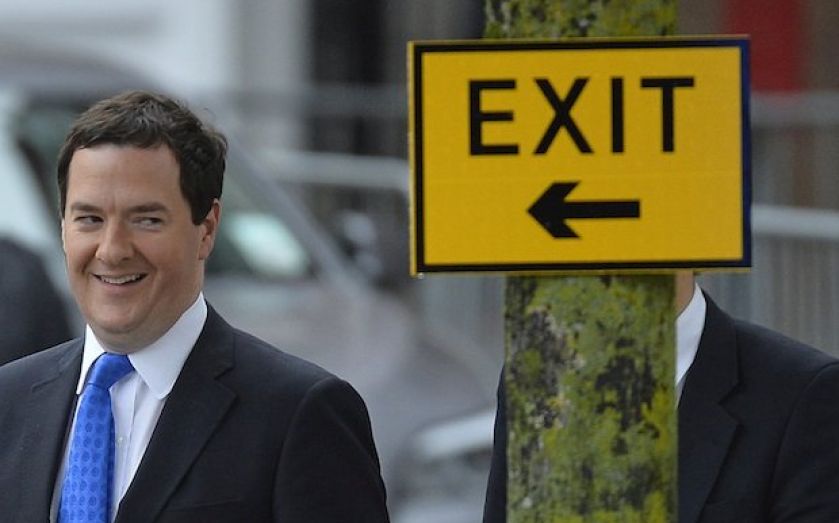
THE ECONOMY has rebounded strongly in 2013, surprising the pundits but vindicating “monetarist” optimism. George Osborne, among others, suggests that the economy “is turning the corner”, implying a return to “normality”. Normal, of course, is subjective, but to the average person it probably means an environment in which the economy grows steadily, inflation is contained, living standards rise, and the real interest rate on savings is positive. Such a scenario, sadly, still seems distant.

First, the good news. Solid economic growth will likely continue into 2014. This is suggested by strong money supply expansion in the summer of 2013 – monetary trends lead the economy by six months or so according to the monetarist rule. The “best” money measure for forecasting the economy is the narrow aggregate M1, comprising physical cash and instant-access bank deposits. M1 holdings of households and private non-financial firms rose by an annual 11 per cent in August – the fastest rate since 2004, when the economy was growing by 3 to 4 per cent per annum.

Upbeat news may be accompanied by a further fall in inflation. A second monetarist rule is that inflation trends reflect monetary developments two years earlier. This has worked well in 2013 – this year’s inflation fall matches a slowdown in monetary expansion in 2010 to 2011. Consumer price index inflation could fall to 2.5 per cent by early 2014 – below the Monetary Policy Committee’s (MPC) 2.9 per cent projection for the first quarter.

So why doubt that the economy is “normalising”? There are three reasons. First, inflation is likely to rebound later in 2014 and 2015, in lagged response to faster monetary expansion in 2012 to 2013. Depending on commodity price and currency moves, it could return to more than 3 per cent in the second half of next year. Market interest rates will probably rise in anticipation of this pick-up, in turn causing money supply growth to slow.

Secondly, the MPC should be acting now to head off inflationary risks by lessening the degree of monetary stimulus. Instead, it has locked itself into a straitjacket in the form of its convoluted forward guidance framework. By mid-2014, with inflation picking up and the unemployment rate at or close to its 7 per cent “threshold”, the MPC may be forced into belated – and significant – restraint. This would compound a market-led tightening and could lay the foundations for another downturn in 2015 to 2016.

A third reason for refusing to don the rose-tinted spectacles is the UK’s continued dismal productivity performance. The MPC expects output produced per hour worked to resume respectable growth as the economy revives, but the lesson of the last major productivity slowdown – in the 1970s – is that weakness can persist for years in the absence of policy change. Sluggish productivity implies that solid growth may run swiftly into capacity and inflation constraints, while real wages may continue to languish.

Osborne may be enjoying this economic boomlet, but the odds are that it will burn out before 2015 – partly because of the loose stance of his hand-picked monetary policy general.

Simon Ward is chief economist at Henderson Global Investors.

  • Shut out: Thousands denied stake in £3.3bn Royal Mail share sale
  • Delivering a privatisation by punishing enthusiasm is wrong
  • Royal Mail: What happens now
  • Inside Track: Independent analysts don’t always say what you want

Share this article

  • Facebook
  • X
  • LinkedIn
  • WhatsApp
  • Email

Similarly tagged content:

Sections

  • Opinion

Categories

  • Opinion

Trending Articles

  • Victoria Beckham owed £350,000 by Harvey Nichols

  • M&G: FTSE 100 giant hits out at Rayner’s ground rent cap as it suffers loss

  • Fulham owner Khan sees his £1bn stadium construction project take next steps

  • John Lewis boss: UK economy facing a ‘permacrisis’ 

  • Labour calls for Mayor to explore London Stadium sale to West Ham

More from Morning Wire

  • Andrew Bailey: Populism a threat to global economy

    Economics
    Andrew Bailey, Bank of England governor, discusses economic policy during a press conference at the central bank headquart...
  • Rupert Lowe axes pensions triple lock and pledges tax cuts in economic plan

    Politics
    Rupert Lowe, former Southampton FC chairman, smiles while holding files on a city street, wearing a suit and pink tie
  • Iran war could ‘halt growth’ across UK economy 

    Economics
    Andy Burnham, Mayor of Greater Manchester, in a dark suit and glasses, listening intently at a wooden table.
  • Jenrick refuses to rule out bank tax 

    Politics
    Robert Jenrick speaking at a podium with British Workers First and Union Jack flags, discussing bank taxes.
  • UK economy to ‘reverse gains’ as construction drags growth

    Economics
    Retail sales slowed in September
  • UK economy stuck in ‘slow lane’ as business investment to slump 

    Economics
    Westminster Parliament building under a clear sky, showcasing its iconic architecture in a news context.
  • UK economy weathers Iran war shocks but slowdown incoming

    Economics
    Chancellor John Healey smiling, wearing a navy suit, white shirt, and red tie.
  • Manufacturers overcome gloomy economy as output surge continues

    Industrials
    Manufacturing sector faces mounting tribunal pressures amid economic uncertainty
MorningWire

Independent European business, markets and political news for decision-makers.

Morning Briefing

Europe

  • Germany
  • France
  • EU Institutions
  • Europe

Business

  • Markets
  • Business
  • Economy
  • Regulation
  • Competition
  • Public Affairs

Editorial

  • Opinion
  • Editorial Policy
  • Corrections
  • Contact

Company

  • About Morning Wire
  • Privacy Policy
  • Terms of Use
  • Cookie Policy
© 2026 Morning Wire Ltd · Published by Morning Wire Media, Bahnhofstrasse 65, 8001 Zürich, Switzerland
Privacy · Terms · Cookies · Facebook