Our prosperity depends on embracing disruption – but don’t forget the losers

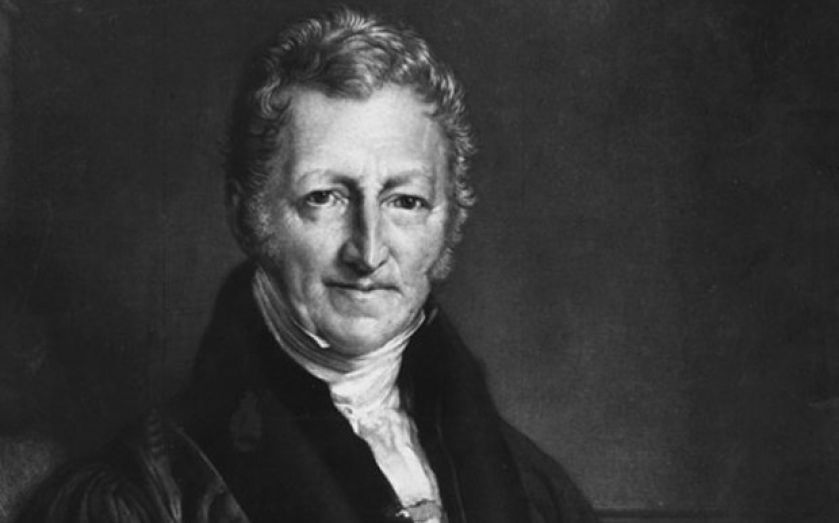
HERE is your starter for ten. What do the Uber app and David Ricardo have in common? “Ricardo?”, I hear you ask. Scarcely known outside academic economics, he ranks equal with Adam Smith and John Maynard Keynes as the greatest ever British economist. His classic Principles of Political Economy was published in 1816, and he made at least a million pounds on the stock market, at a time when a million was a vast amount of money.
Ricardo addressed highly practical issues. A crucial one at the time was how to understand the stupendous changes which were taking place in Britain in the early decades of the Industrial Revolution. It was by no means clear to his contemporaries, for example, that these developments would be permanent.
One of his main concerns was whether the rapid technological innovations which were taking place were a Good Thing. How would the workers and their standard of living be affected? This question, of course, is highly relevant in the early twenty-first century. The Uber app threatens to deskill taxi driving and to make many cabbies redundant. Airbnb threatens to do the same to many hotels and their staff. There was no easy answer, and even Ricardo struggled. In the first edition of his Principles, he concluded that innovation was good. In the second he changed his mind. In the third and final edition, he decided that it all depended on the particular circumstances, though his reasoning was more subtle than the standard caricature of the modern economist saying “on the one hand, but on the other”.
When a technological innovation comes along, the immediate losers are easy to identify, whether they are Luddites or taxi drivers. But with the benefit of 200 years of hindsight, we can now see that it is precisely the ability of the Western economies to innovate that has caused the enormous increase in living standards since Ricardo’s time. The standard of living of a country ultimately depends upon its ability and willingness to adopt new ways of producing goods and services. Eventually, everyone gains.
The question becomes just how disruptive a new technology is at any point in time. The technology of the internet still has the potential to cause disruption on a massive scale. Global market research companies like Nielsen and GfK may soon come under threat, for example. Advanced maths algorithms sweeping the web can not only gather socio-economic data on consumers much more cheaply than standard survey methods, but can also obtain information on things like their psychological state, which existing techniques find hard to glean at any price. Whole swathes of professionals will find themselves deskilled.
In the long run, Britain will benefit. But as Keynes remarked, in the long run we are all dead. Market-oriented economies are the great strength of the West, the basis for our prosperity. But markets take time to react to major shocks, and we may need to re-think the potential role of the state as a co-ordinating agency in what may be very turbulent times.
Paul Ormerod is an economist at Volterra Partners, a visiting professor at the UCL Centre for Decision Making Uncertainty, and author of Positive Linking: How Networks Can Revolutionise the World.