Our theories of growth are broken — ‘do good’ businesses will boost Britain

We’ve exhausted the other options for growth, it’s time to embrace a purpose-led economy, writes Andrew O’Brien.
Growth, growth, growth. It’s all politicians want to talk about. The Autumn Statement put securing long term growth at its core. Securing the highest sustained growth in the G7 is the highest priority of Labour’s five missions. Despite all this talk about growth, the nagging fear at the heart of our political debate is that we still lack a credible strategy.
In essence, there are three narratives on this. The first is that we just need policy stability. Get inflation down. Keep public spending under control. The private sector will come in and do the rest. The second is that we just need tax cuts. Businesses will invest if we simply create the incentives to do so. The third is that we just need more public investment. If the state invests more then business will follow.
The problem is, that to some extent, we have tried all three of these approaches and the limitations of them are clear. The ‘Great Moderation’, the period of low inflation, low levels of public borrowing and benign global trading conditions during the 1990s and 2000s did not see growth accelerate but actually saw a gradual slowing of growth, productivity and stagnant investment.
Corporation tax cuts that cost tens of billions of pounds in forgone revenue during the 2010s did see business investment recover from its low base after the financial crisis, but has stalled in recent years.
New Labour significantly increased public investment, but private investment did not increase in kind. During its time in office, public investment more than doubled but business investment increased by only around a tenth. If there was a crowding in effect from government investment, it was marginal and certainly not at the scale we require.
Significant improvements in economic growth are, historically, closely associated with changes in business practice. Britain became home of the Industrial Revolution not just because of our inventiveness, but because we were better able to organise production through a combination of strong property rights, relative freedom for business owners and access to capital.
A similar surge in the US saw a similar surge in economic leadership in the late 19th Century through a professionalisation of business, developing a managerial class that revolutionised the way that firms were organised. Finally, in the post-war period, Japanese businesses took forward new ways of organising innovation and production, particularly through co-production with employees. Fittingly, it was these practices that were brought to Britain, the early business innovator, in the 1980s and saw the revitalisation of industries such as car manufacturing which were feared to have been lost. In each of these periods, the leaders in business innovation saw acceleration of investment, productivity and ultimately economic growth.
The next revolution in business practice is from putting social and environmental purpose into the heart of corporate governance. From baristas like Change Please to management consultants such as Baringe, businesses that do this outperform their peers. These businesses achieve higher levels of growth, higher levels of innovation and higher levels of investment because they are better at taking long term decisions.
Unsurprisingly, the gains from spreading this type of business throughout our economy would be vast. According to a report for Demos, a “purpose-led” economy could add £149bn to UK GDP – a seven per cent boost in economic output. It would do this through the significantly higher levels of investment in capital, research and development and investment in skills. In the long term, these effects could be even bigger with purpose-led businesses creating a positive feedback loop which sees higher levels of investment translating into a stronger economic performance that generates higher levels of growth.
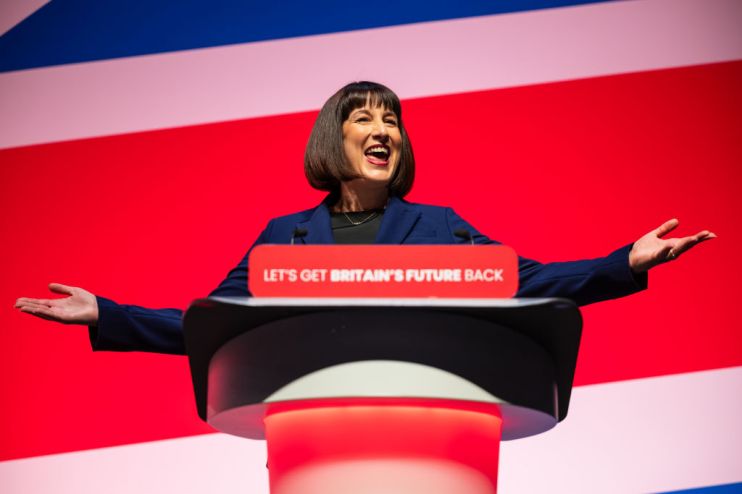
This is the kind of bold “supply-side” reform that politicians such as Rachel Reeves say Labour want to pursue.
There is already significant business support for this, with over 2,000 firms backing a proposed change to the law, which would turn every business into a purpose-led business. It is also popular, with 77 per cent of people saying that businesses should have a legal responsibility to think about people and the planet in what they do. However, we need far-sighted leaders that can cut through the noise of the economic debate and focus on the fundamentals. The truth is that what primarily determines our future is not what government does itself, but the rules and structures it puts in place for business.
Andrew O’Brien is the author of a report ‘The Purpose Dividend’ by Demos