Oxford Street pedestrianisation: Don’t let local objections ruin the nation’s high street

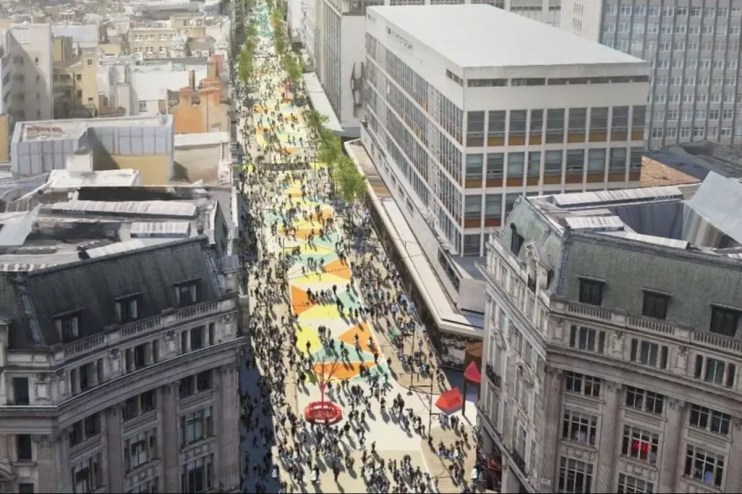
Pedestrianising Oxford Street will unlock benefits for the whole country. We can’t let local politics derail it, writes Ben Johnson
Oxford Street generates £25bn a year – one per cent of the UK’s entire economic output – from just 1.2 miles of road. Home to high street brands, venerable department stores and souvenir shops, Oxford Street is more important to UK prosperity than most medium sized-towns or cities. It should be seen as a national asset. Instead, it’s been treated like a local headache.
The decline of Oxford Street as a destination over the past decade has been well documented, and moreover, is one of those things that Londoners implicitly understand. It was exacerbated by the pandemic and the changing trends in consumer and worker behaviour that it accelerated – particularly the marked increases in online shopping and remote working that were necessitated by lockdown and never went away.
The efforts of those who seek to protect and improve the nation’s high street have been well intentioned, but fundamentally constrained. The New West End Company has worked tirelessly despite a myriad of challenges. But the real problems on Oxford Street are structural. It suffers from overcrowded footways and a poorly conceived public realm, restricted by unnecessary street furniture. Over 100 different landlords own a slice of the street, many hidden behind opaque overseas companies, which have enabled the influx of low-end, transient and even shady businesses. Contrast that with Regent Street – almost entirely owned and curated by the Crown Estate – and the difference in cohesion and quality is stark.
This is before we arrive at the politics of it all.
Local resistance to the plans
Oxford Street sits at the intersection of local control and national significance – and has suffered for it. It’s too simple to blame NIMBYism, though that’s part of it. The deeper issue is that the future of one of the UK’s most important economic assets has been shaped by short-term electoral calculation by local councillors, based on the votes of a few hundred residents of this heavily commercial area of Westminster.
Sir Sadiq Khan’s plan to pedestrianise the street was originally supported by the then Conservative council in 2017. But when politics shifted – and they started to fear defeat for the first time in the City of Westminster Council’s history – they got cold feet. The ambitious vision was replaced with some superficial plans anchored by what became ‘the mound’ – transformative perhaps, but not in a good way.
When Westminster finally did change hands in 2022, the resistance stuck. Labour’s new administration had promised residents before the election that it would continue the Conservative policy of blocking pedestrianisation. We can’t blame local politicians from keeping their promises, but we can question whether matters of national economic significance should be so wholly dependent upon local politics.
Pedestrianising Oxford Street is a win-win-win
That’s why Angela Rayner’s decision to back a Mayoral Development Corporation – enabling the Mayor to take formal control over a strategic asset – is so important. It’s a grown-up solution that allows a strategic view of what the capital needs from one of its main commercial districts. And it works for everyone involved: the Deputy Prime Minister gets a win on growth, the councillors get the cover they need to step out of the way and the Mayor gets to deliver a major legacy project.
The case for pedestrianisation is strong. It enables Oxford Street’s offer to be brought up to date, to radically transform the public realm and to offer visitors a memorable experience. World class retail alongside hospitality and leisure – offering an experience, not just a shopping trip.
But it’s not a done deal yet. The Mayor is consulting on his proposals, and those opposition voices will remain loud. But this is a rare opportunity to reclaim Oxford Street’s place as the vibrant heart of the capital – not just a through-route, but a destination worth pausing for.
If you want that too, make sure your voice is heard before the consultation closes on 2 May.
Ben Johnson is the director of Blakeney and a former adviser to the London Mayor