Skip to content
Tuesday 11 August 2026London --:--Frankfurt --:--Zurich --:--
NewslettersSearchEN · DE
MorningWire

European business, markets and politics

FTSE 100
10,862.95
0.00%
DAX
26,346.63
+0.09%
CAC 40
8,721.37
-0.05%
STOXX 50
6,551.01
+0.24%
  • Europe
  • Markets
  • Business
  • Economy
  • Technology
  • Politics
  • Opinion
More
GermanyFranceBankingAIEnergyFintechPropertyCapital Markets
  • Germany
  • France
  • Europe
  • Markets
  • Business
  • Economy
  • Technology
  • Politics
  • Opinion
  • DE
Monday 28 April 2025 10:51 am  |  Updated:  Monday 28 April 2025 10:55 am

Parliamentary debates must stop being dictated by MPs’ train times

By: Omar Salem

Add as a preferred source on Google
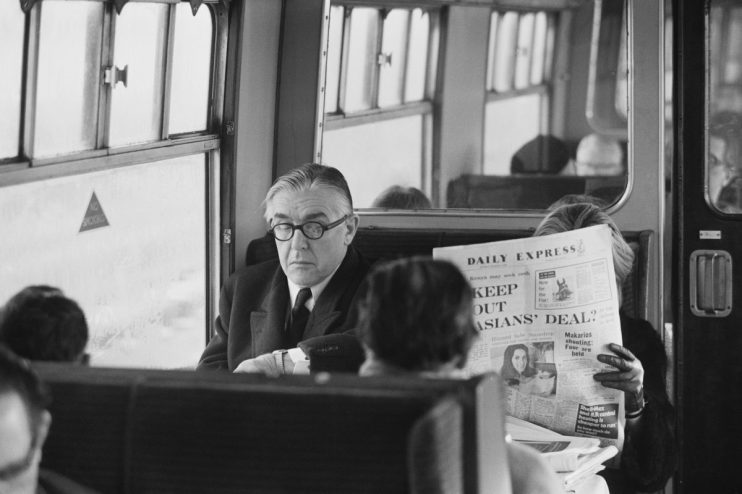
British Labour Party MP Richard Crossman (1907 - 174), the Secretary of State for Social Services, in the restaurant car of the Banbury to London train, UK, 9th March 1970. (Photo by Len Trievnor/Daily Express/Getty Images)

When important parliamentary debates are being rushed on account of MPs’ home times, something needs to change, writes Omar Salem

“I’m afraid I’m being urged to wrap up”. Those were the words of City minister Emma Reynolds MP when leading a debate in Parliament at 2pm on Thursday last week. The minister’s words may seem innocuous but they are not. 

This was the last debate of the day that MPs had to vote in and they were waiting to leave. The whips, who are responsible for making sure MPs turn up to vote, would have known this, and likely asked Reynolds to finish off. Moments earlier, some MPs cheered when the minister said she was coming to the end of her remarks. With a hint of frustration, she noted that there was “quite a lot of discussion around the edges” and that “if I could hear myself think, it would be nice”.

The debate, on a bill for recapitalisation of failing banks, had only taken 40 minutes when the MPs cheered. The effect of this pressure was that Emma Reynolds turned down an attempted intervention by fellow Labour MP Gareth Snell. Yet, parliament was debating a bill that could affect millions of people and the financial stability of the UK. There was another three hours allocated for discussion but the debate lasted less than an hour. 

The taxpayer spent a net £23bn on bailing out the banks during the last financial crisis and the bill is aimed at trying to reduce the risk of this happening again. This includes requiring the Financial Services Compensation Scheme (FSCS) to provide funds to the Bank of England to cover certain resolutions and the FSCS recovering the funds through levies on the banking sector. 

One amendment proposed by shadow City minister Mark Garnier MP aimed to restrict the new powers to smaller banks that do not have MREL, the capital that larger banks have to hold in case they get into financial difficulty. He is concerned about the bill capturing larger banks that already hold substantial loss-absorbing capacity.

Another amendment focused on better protecting building societies from demutualisation. The amendment would have put in guidance to the Bank of England to pay due consideration to the impact of demutualisation on members and on the mutuals sector in such a scenario.

Garnier’s third amendment required the Chancellor to report on whether the bill could be extended so it could be used for credit unions. I do not know what Gareth Snell wanted to ask but he is a former director of a credit union that went into administration. He may have had something pertinent to say. Clive Jones, the Lib Dem spokesperson, also tabled an amendment for the Bank of England to consider competitiveness and growth before using its new powers.

There is a human side to this. Many MPs have long journeys back to their constituencies on Thursdays to do constituency work before returning to Parliament on Monday. In addition, many MPs’ families will live in their constituency. That does not however justify curtailing debate on important issues by the backdoor. If there are issues with the parliamentary timetable they should be addressed by reforming, not side-stepping, it.    

It is easy to be earnest but it is worrying that debate on important legislation is being curtailed because MPs want to catch a train back to their constituency. What is more, what kind of message does this send to regulated firms about how seriously some MPs take these issues?

Omar Salem is a financial regulation partner at Fox Williams

Read more

Keir Starmer wasn’t weird enough for Westminster

Keir Starmer holding a football with a World Cup logo, smiling and engaging in a sports event discussion.

Share this article

  • Facebook
  • X
  • LinkedIn
  • WhatsApp
  • Email

Similarly tagged content:

Sections

  • Opinion

Categories

  • Opinion
  • Business

People & Organisations

  • Emma Reynolds
  • Parliament
  • UK Government
  • UK politics

Trending Articles

  • Nottingham Forest owner Marinakis sues Crystal Palace for defamation

  • Five-star Mayfair hotel hit with HMRC winding-up petition

  • Back to basics: Sainsbury’s gradual retreat from the British high street

  • Hargreaves Lansdown orders staff back to office

  • As it happened: Intel, Arm shares slide; Oil climbs higher

More from Morning Wire

  • Keir Starmer wasn’t weird enough for Westminster

    Opinion
    Keir Starmer holding a football with a World Cup logo, smiling and engaging in a sports event discussion.
  • Farage quits to stand in ‘people versus establishment’ by-election

    Politics
    George Cottrell and Nigel Farage engaging in a conversation at a political event, both dressed in formal attire.
  • Sadiq Khan lobbies Burnham to appoint Miliband as Chancellor 

    Politics
    Sadiq Khan addressing media at a press conference in formal attire, discussing recent developments in London policies
  • Get ready for new energy minister Miatta Fahnbulleh’s war on London’s drivers

    Opinion
    Miatta Fahnbulleh, director of New Economics Foundation, smiling and holding red documents, wearing a black blazer.
  • Treasury minister: Meeting Nato defence pledge is Burnham’s job

    Politics
    UK defence strategy meeting, officials discussing military advancements and security measures in a conference room setting
  • Going on holiday as Prime Minister comes at a cost

    Opinion
    Andy Burnham smiling and holding a pint of beer and a smartphone in a pub setting
  • Reform’s Richard Tice under parliamentary investigation

    Politics
    Reform UK leader Nigel Farage and Deputy Leader Richard Tice are set to meet with Andrew Bailey to discuss interest rates and stablecoins.
  • ‘Pro-business’ Burnham eyes Reynolds return to top business job

    Business
    Jonathan Reynolds addressing the SMMT's annual International Automotive Summit (image courtesy of SMMT)
MorningWire

Independent European business, markets and political news for decision-makers.

Morning Briefing

Europe

  • Germany
  • France
  • Europe
  • UK & Ireland

Business

  • Markets
  • Banking
  • Technology
  • Energy
  • Property
  • Fintech

Editorial

  • Opinion
  • Editorial Policy
  • Corrections
  • Contact

Company

  • About Morning Wire
  • Privacy Policy
  • Terms of Use
  • Cookie Policy
© 2026 Morning Wire Ltd · Published by Morning Wire Media, Bahnhofstrasse 65, 8001 Zürich, Switzerland
Privacy · Terms · Cookies · Facebook