Skip to content
Sunday 13 September 2026London --:--Frankfurt --:--Zurich --:--
NewslettersSearchEN · DE · FR
MorningWire

European business, markets and politics

FTSE 100
10,650.44
+0.39%
DAX
25,568.56
+0.82%
CAC 40
8,179.77
+0.78%
STOXX 50
6,325.13
+0.90%
  • Europe
  • Markets
  • Business
  • Economy
  • Regulation
  • Politics
  • Opinion
More
GermanyFranceEU InstitutionsCompetitionPublic AffairsBankingTechnologyEnergy
  • Germany
  • France
  • Europe
  • Markets
  • Business
  • Economy
  • Regulation
  • Politics
  • Opinion
  • DE
Thursday 10 December 2020 3:25 am  |  Updated:  Wednesday 09 December 2020 2:35 pm

Pay no attention to the left-wing brigade, a Covid wealth tax would be a disaster

By: Mark Littlewood

Add as a preferred source on Google
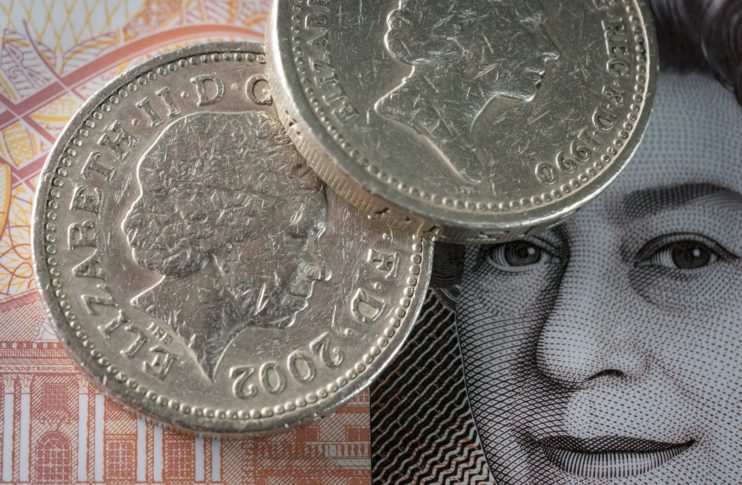
Old Pound Coin Sterling Ceases To Be Legal Tender on Sunday
Proponents of the wealth tax hope that this will raise approximately £250bn over five years, through a five per cent tax on the net wealth of individuals over £500,000.

It is incredible how, in the 12 years since the financial crisis, the position of so many organisations has changed. 

In 2008/9, think tanks like the Institute of Economic Affairs (IEA) argued that the British day-to-day deficit required prudent reforms to public spending, while those on the left claimed that there wasn’t a problem and that we should just keep borrowing to spend at the same level.

Today, however, during a once-in-a-generation public spending event — a pandemic — when even we fiscal conservatives at the IEA have released a paper arguing the public finances can cope thanks to long-term debt repayment (what is government debt for, after all, if not to cover this sort of emergency spending?), many of those on the left are now suggesting that such debt is an urgent problem that can only be solved through huge tax rises on “the rich”.

The Wealth Tax Commission released a report this week which, perhaps unsurprisingly, calls for a massive, one-off confiscation of personal wealth and property. Its authors hope that this will raise approximately £250bn over five years, through a five per cent tax on the net wealth of individuals over £500,000, including residential homes and pension pots. 

The plan is naturally pernicious for anyone who believes in private property rights and fairness in taxation. While on the surface it might seem moderate, the results could be devastating — for individuals, and for the UK economy as a whole.

First, the proposals make no effort to consider the state of an individual’s finances over that five-year period. If you are eligible to pay the tax the first year, you keep paying the same amount for the next four years — regardless of what happens to your wealth during that time.

There are also numerous questions as to whether the tax would even raise the £250bn that is claimed. The current use of debt by the super-wealthy for tax purposes would likely make their wealth pots much harder to plunder than wealth tax supporters think. 

Read more

UK debt ‘hits £3 trillion’ milestone

Houses of Parliament in Westminster showcasing historic architecture under a clear sky, central to UK government and politics

The valuation of assets will almost certainly be harder than is assumed too. Indeed, the Inland Revenue Service in the US routinely finds that the value of the assets of super-wealthy families comes out up to 50 per cent lower than expected, leaving large holes in expected revenue.

Finally, there are administration costs to consider, including those of sending Whitehall inspectors to argue the valuation of elderly Mrs Miggins’ antique drawers and jewellery. Admittedly, these costs are a larger problem for ongoing rather than one-off wealth taxes, but they were a major reason why wealth taxes were abandoned in three quarters of the European nations that had them in 1990.

And even if the tax did bring in the claimed £250bn over five years, the downstream effects on growth and other taxes would be disastrous. What business adviser could recommend a wealthy citizen move to a country that has such a penalising tax? How could they guarantee that this “one-off” raid didn’t become a regular feature of the tax structure? 

We are, after all, still paying the “emergency” income tax introduced to win the war against Napoleon. New taxes have a nasty habit of sticking around.

The top one per cent in this country are already responsible for almost a third of our income tax take. If a significant share of them were to move their funds off-shore, instead of “long Covid” we could find ourselves with a bad case of “long wealth tax”.

Main image credit: Getty

Read more

Government debt repayment ‘could rise to half’ of total taxes

UK public finances and sovereign debt crisis

Share this article

  • Facebook
  • X
  • LinkedIn
  • WhatsApp
  • Email

Similarly tagged content:

Sections

  • Markets & Economics
  • News
  • Opinion

Categories

  • Economics
  • Opinion
  • Politics

Trending Articles

  • Wetherspoon boss: ‘Not up to Burnham’ to choose who is on the high street 

  • Badger Beer maker Hall & Woodhouse doubles profit ahead of tie-up with James May

  • Four interest rate hikes loom despite surprise economic growth

  • Primark sales slip as owner dresses up retailer for demerger

  • As it happened: FTSE 100 rallies as economy beats forecasts; oil falls back

More from Morning Wire

  • UK debt ‘hits £3 trillion’ milestone

    Economics
    Houses of Parliament in Westminster showcasing historic architecture under a clear sky, central to UK government and politics
  • Government debt repayment ‘could rise to half’ of total taxes

    Economics
    UK public finances and sovereign debt crisis
  • Our debt addiction can only end in tears

    Economics
    UK public finances and sovereign debt crisis
  • UK poised to pay highest borrowing costs since 1998

    Economics
    Treasury Department building with government bonds signage, representing financial management and bond issuance responsibi...
  • Healey oversees unexpected rise in borrowing in first month as Chancellor 

    Economics
    Man in suit and red tie speaking at a podium to an audience in a modern building.
  • Burnham’s in hock to the bond markets – whether he likes it or not

    Economics
    Andy Burnham speaking in Parliament, surrounded by other politicians and officials.
  • Andy Burnham is on course to rack up the second highest debt interest bill on record

    Opinion
    UK National Debt Clock showing £3 trillion, with Big Ben and the Union Jack in the background.
  • Surge in borrowing costs could force Healey to deliver ‘emergency Budget’

    Economics
    Patrick Healey in a suit with a red tie, looking contemplatively to the left, with an American flag behind him.
MorningWire

Independent European business, markets and political news for decision-makers.

Morning Briefing

Europe

  • Germany
  • France
  • EU Institutions
  • Europe

Business

  • Markets
  • Business
  • Economy
  • Regulation
  • Competition
  • Public Affairs

Editorial

  • Opinion
  • Editorial Policy
  • Corrections
  • Contact

Company

  • About Morning Wire
  • Privacy Policy
  • Terms of Use
  • Cookie Policy
© 2026 Morning Wire Ltd · Published by Morning Wire Media, Bahnhofstrasse 65, 8001 Zürich, Switzerland
Privacy · Terms · Cookies · Facebook