Pixel 3 review: Google’s flagship returns with an improved camera, better software, and the notch to end all notches

In the 1995 film Casper, there existed a machine that could give ghosts corporeal form, turning them from translucent, intangible spectres into real, physical beings.
In much the same way, Google’s range of Pixel phones gives the company’s far-reaching software a hard, phone-shaped body in which to exist. To put it in even more 90s terms: if Google is Krang – the scrotum-shaped bad guy from the Teenage Mutant Ninja Turtles – then the Pixel 3 is the seven-foot tall robot body he stomps around in.
When last year’s Pixel 2 was announced, Google rightly bemoaned the homogeneity of the smartphone market. The top handful of phones, indistinguishable from one another in terms of aesthetics and raw specifications, had all but plateaued. What set each apart was the underlying software, something Google proved by steadfastly sticking to a single rear camera when others were adding multiple wide-angle and telephoto lenses. With less hardware, the Pixel 2 still produced the best photography of any smartphone, thanks to the effective magic of its software processing and machine-learning techniques.
At launch and until very recently, the Pixel 2 (along with its bigger brother the Pixel 2 XL) was the best Android phone money could buy. But Google’s tunnel-vision belief that software trumps all else left the device falling short in a few areas. The Pixel 3 addresses these problems with a renewed focus on the glass-and-aluminium slab in your hand, while continuing to be a manifestation of Google’s grand, artificial-intelligence driven mission.
The Screen
The 6.5-inch OLED screen of the larger model is improved over the faintly washed out and dull appearance of the Pixel 2’s display, with better colour accuracy and just the right degree of vibrancy. It’s still light and natural looking at all angles, with none of the eye-searing acidity of Samsung’s mega-bright, just-dropped-acid gamut.
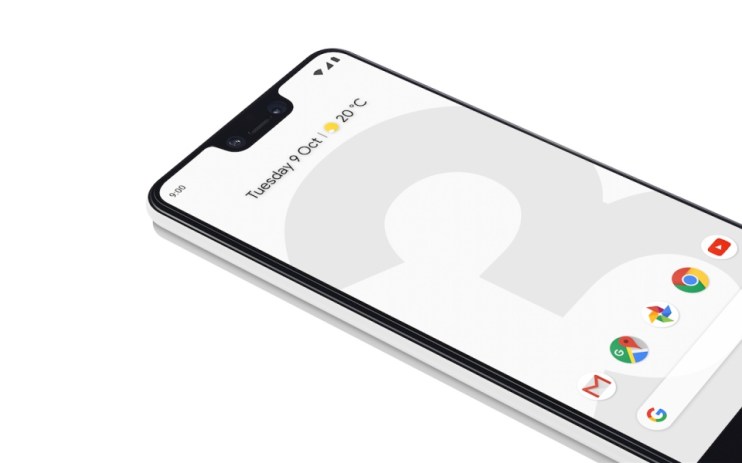
At the top of the larger Pixel 3 XL display is that hard to miss notch. It’s twice as tall as the leading brand and houses two front-facing cameras, enabling wide-angled group selfies, but on first impressions it is not pretty. It is enormous. I’ve lived in London flats smaller than this notch. Your eyes soon learn to adapt to its looming presence – after a little use it basically vanishes, like the frames of your glasses in your peripheral vision – but in certain apps the notch is still intrusive, either obscuring some content or pushing it down the screen, creating dead spaces in the corners of the interface.
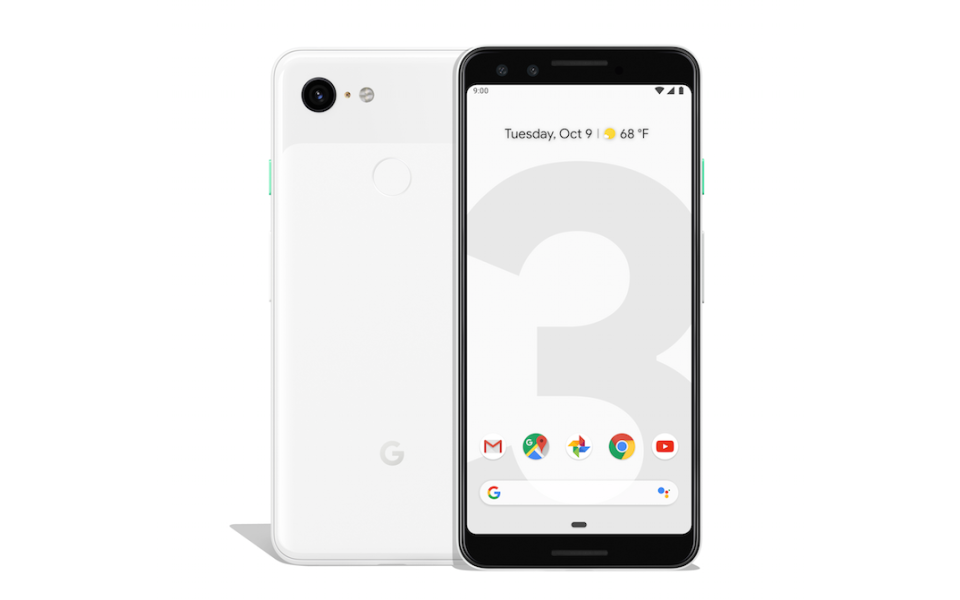
But don’t let that give you the impression that this isn’t a well designed device. The finish on the Pixel 3 and Pixel 3 XL is exceptionally slick, with a new half-matte, half-glossy glass back that feels nicer in the hand, smoother but not slippery, and so smudge-averse you’ll begin to wonder if you’ve still got fingerprints.
The Camera
And then there’s the camera, which improves upon the class-leading camera of the Pixel 2. While the lens specifications themselves have hardly changed, Google’s software (along with the improved Pixel Visual Core chip, the phone’s stand-alone image processing unit) has ushered in a whole glossary of new features.
The processing of photographs on the Pixel 3 has also been refined, with a more subtle application of high-dynamic range effects that retains contrast while avoiding washing out shadows. It takes great pictures without you having to try very hard.
Top Shot will automatically recommend a better picture if you mistime your shot, letting you scrub backwards and forwards in time to capture the precise moment you were trying to snap. Super Res Zoom uses the natural shaking of your hand while digitally zoomed in to extract some extra detail from a scene. Photo Booth waits until everyone in your selfie is eyes open and smiling before it snaps. Motion Auto Focus can track a moving target to keep them in focus whether shooting stills or video. It’s perfect for dogs and kids, but not having either I tested it on a horrible looking spider. Here it is.

A low-light, night-time mode that promises to make your flash redundant is also in the pipeline, though not available at launch. None of these features need to be manually selected, instead they spring into action when Google’s camera app determines they’re needed, driven by the phone’s machine-learning magic. The processing of photographs on the Pixel 3 has also been refined, with a more subtle application of high-dynamic range effects that retains contrast while avoiding washing out shadows. It takes great pictures without you having to try very hard.
The Software
Behind all of this new hardware is the operating system and ecosystem that Google has been developing for years. Android Pie and the increasingly useful Google Assistant are the very backbone of the phone, and there’s not much of Google’s software that’s been made exclusive to this third-generation Pixel. Features like Google Lens, which uses the camera to identify stuff like book covers, albums, landmarks, dog breeds and movie posters, are rolling out to Pixel 2s. The same goes for its suite of Digital Wellbeing features, which dial down the blue-light of the screen as bedtime approaches, and lock you out of Instagram if you’ve been bingeing on stories.
The Pixel 3 and the Pixel 3 XL represent the best Android experience you can get, albeit packaged in a somewhat compromised chassis.
One interesting update that is exclusive to the Pixel 3, for now at least, is the ability to screen your calls, with the assistant asking whoever’s on the end of the line to identify themselves before displaying their response as text. You can pick up, or trigger a canned reply, halting any PPI spam calls or undesirable chats with relatives in their tracks. The Google Assistant can only screen calls in the US right now, with plans to roll the feature out to the UK at a later date. Until then we’ll have to answer our own phones, like cavemen.
The Verdict
The Pixel 3 and the Pixel 3 XL represent the best Android experience you can get, albeit packaged in a somewhat compromised chassis. It’s powerful and fast, boasting an improved camera and better performance, but that honking great notch on the XL – and the chunky bezels on the smaller device – shows that Google still has some way to go before its hardware and software divisions are in operating in harmony. And with many of the software updates likely to be rolled out to older devices, this might be a year Pixel owners can skip.