Playing FTSE: How a global index was born in London

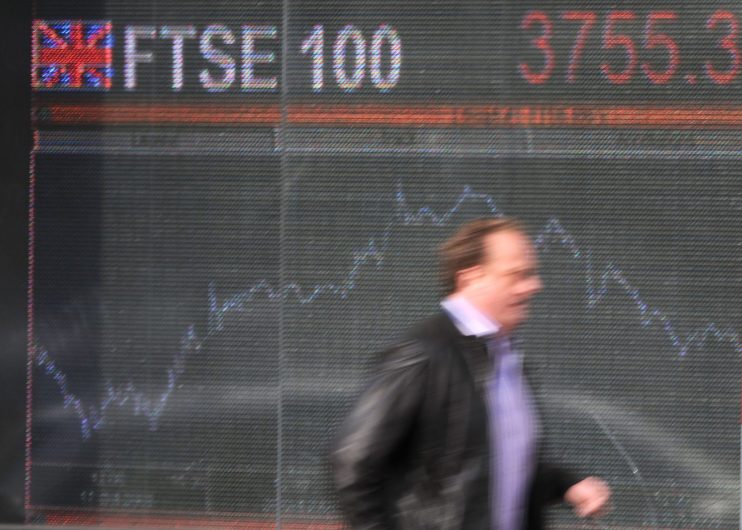
It is now more than two decades since FTSE was founded – becoming common parlance not just in the City but across the business world.
FTSE’s founder Mark Makepeace has teamed up with respected business journalist James Ashton to tell the story of the FTSE – and how it grew from nine people in an office to being featured on every ticker on the globe.
Today James Ashton writes for Morning Wire on the rise of FTSE, and the deals that saw it come to pass.
Canada has played host to numerous multi-billion-pound mergers and takeovers over the years, but one of the most successful unions cooked up by two of the Square Mile’s most famous institutions cost close to nothing.
Twenty five years ago this month the Financial Times and the London Stock Exchange pooled resources to create FTSE International, a joint venture company with the mission to commercialise a small set of stock indices that started life with the FTSE 100 in 1984.
Into the start-up went contracts worth an annual £2.85m, a loan facility, nine staff – and a good dose of enmity shared between the two sides.
Read more: To audit or not to audit? Big 4 look nervously at their client list
Home was St Alphage House, a tatty tower block built during the 1960s redevelopment of London Wall that the exchange had lying empty on a long lease.
What was at the time known as FT-SE was the result of an uneasy courtship dating back more than a decade. Before the 100 index started life on January 3 1984 to measure the minute-by-minute performance of a basket of London’s 100 largest qualifying stocks, the FT ruled the index roost. But the FT 30, compiled since 1935 from prices collected from jobbers on the exchange floor and promoted assiduously in the newspaper’s salmon-pink pages, was showing its age.
Updated hourly from a set of 30 largely industrial stocks, it was an equal-weight index that did not factor in constituents’ wildly different market capitalisations. It was not fit for purpose when it came to the sophisticated world of options and futures contracts, where the growth in trading volumes lay.
Seeking to breathe life into its traded options market, the exchange borrowed an idea from the Chicago Board Options Exchange (CBOE) by creating a contract around an index, instead of a handful of individual stocks.
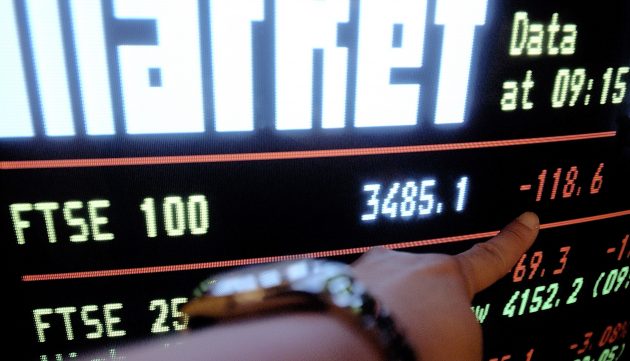
The London International Financial Futures and Options Exchange (LIFFE), which had launched with great razzamatazz in 1982, also needed new products to sustain interest. But before they could launch anything, someone needed to construct a new index.
That was down to the exchange’s enterprising IT department, with some help from the team at the stockbroker W Greenwell & Co, actuaries and academics.
The FT was apoplectic when it found out about the plan in autumn 1983, and coverage was scant in its pages when the SE 100 – as it was first called – launched in the January and was made available to all subscribers of the exchange’s electronic information system, Topic.
There followed a remarkable lobbying campaign to get the FT involved, led by Richard Lambert, who would go on to edit the paper from 1991. LIFFE and the exchange boss Sir Nicholas Goodison saw some upside to a collaboration and feared a hostile media.
It was down to the FT’s chief executive, the no-nonsense Lancastrian Frank Barlow, to strike a deal. The paper would publish and support the 100 index, but only if it changed its name. The Stock Exchange FT Index, or SEFT, was proposed but Barlow said that only putting the FT name first would do. He got his way, and “Footsie” – originally christened “footsy to its friends” by the FT’s Lex column, was born.
Fast forward 11 years to 1995, and the gentlemen’s agreement needed formalising. It had taken 18 months of conversations because the FT was reluctant to formally partner with the exchange.
Its reputation had suffered after the collapse of Transfer and Automated Registration of Uncertified Stock (Taurus) IT project that was meant to replace paper share certificates with computerised share settlement but actually led to some of its clearing functions taken over by the Bank of England.
Even when the company was created, its name had not been resolved. The first chief executive, Mark Makepeace, who had joined the exchange in 1985 to work on Big Bang, knew FT-SE International was not a strong enough brand if he was to fulfil his ambition of going global.
The venture’s first chairman, John Makinson, had a solution: why not just rebrand the growing family of indices that categorised stocks by size and by geography under the FT banner? It was left to the only independent director sat around the board table, Keith Percy, who was at that time chief executive of the asset manager Morgan Grenfell, to exclaim loudly, “For God’s sake, can we just drop the hyphen?”
They did, and the rest is history. FTSE, now FTSE Russell, grew to become one of the big three index providers, along with MSCI and S&P Dow Jones Indices, that have boomed on the back of the rise of exchange-traded funds (ETFs) and the inexorable shift from active to passive investing. The exchange bought the FT out of their joint venture in 2011, valuing FTSE at £900m. Its value has soared since.
Pearson, the FT’s owner at the time, may have carried off a welcome cheque as their sometimes wary partnership ended, but judging by the exchange’s upward share price movement over the last nine years, it is the acquirer that had the last laugh.
FTSE: The Inside Story by Mark Makepeace with James Ashton is out now bit.ly/FTSEbook