Skip to content
Monday 7 September 2026London --:--Frankfurt --:--Zurich --:--
NewslettersSearchEN · DE · FR
MorningWire

European business, markets and politics

FTSE 100
10,822.13
-0.08%
DAX
26,006.53
-0.15%
CAC 40
8,306.15
+0.33%
STOXX 50
6,403.99
+0.17%
  • Europe
  • Markets
  • Business
  • Economy
  • Regulation
  • Politics
  • Opinion
More
GermanyFranceEU InstitutionsCompetitionPublic AffairsBankingTechnologyEnergy
  • Germany
  • France
  • Europe
  • Markets
  • Business
  • Economy
  • Regulation
  • Politics
  • Opinion
  • DE
Wednesday 06 September 2023 5:15 am  |  Updated:  Tuesday 05 September 2023 5:02 pm

Politicians must understand that taxation is not a substitute for economic growth

By: Paul Ormerod

Add as a preferred source on Google
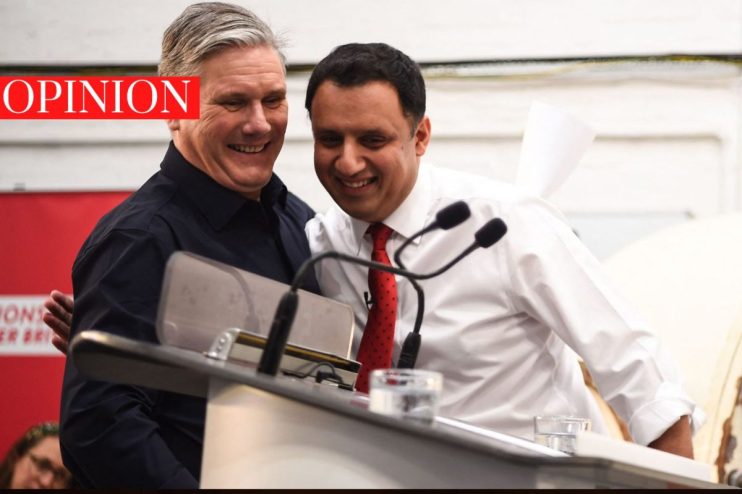
Anas Sarwar, the Scottish Labour Party leader, attacked the tax increases proposed by the SNP.

Scottish Labour rightfully pointed out that taxation shouldn’t be considered a replacement for economic growth. Every politician should take stock of this, writes Paul Ormerod

In a speech last week, the leader of the Scottish Labour Party provided a ray of sunshine. I am not taking bets, by the way, on the number of times this particular sentence has been written.

But Anas Sarwar was making a serious point which is of critical importance not just for Scotland, but for the UK as a whole.

The specific context was an attack on the tax increases of the SNP, both actual and proposed.  But the Scottish Labour leader went much further. Taxation, he said,  “has been used as a substitute for economic growth, and it’s actually choking off opportunities”.

Just over a year ago, the Office for Budget Responsibility published a document entitled “Fiscal risks and sustainability”. They highlighted three major areas where demographic changes will put increasing pressure on the public finances. An ageing population means, they wrote, increasing demand for health, pensions and social care.

Fortunately, the real problems these create won’t kick in to the full until the 2030s. But every year that goes by, the pressures produced by an ageing population grow.

The immediate demands from the electorate are almost insatiable. Repair the schools, ease the burden on students, give the NHS more money, better pay for public sector workers, are only some on the list.

Read more

October Budget could be a ‘tipping point,’ Asda boss warns Burnham

Allan Leighton, former Asda CEO, in a navy jacket and cap inside an Asda store.

But there is not enough money to do everything the electorate wants. In the past fifteen years – from 2007 – the UK economy grew by just 1 per cent a year. In the fifteen years before 2007, it grew at 2.7 per cent a year.

As a broad rule of thumb, each additional 1 per cent on the level of GDP yields an additional £10bn in tax receipts. If the economy had grown at its 1992-2007 average in the past decade and a half, the government would have had some £300bn a year more to either spend or to cut taxes.

This simple figure highlights the fundamental importance of growth. As Anas Sarwar says, taxation is not a substitute for growth. Imagine if taxes were £300bn higher than they are now. Why would anybody bother to make an effort? The economy would grind to a halt.

There is strong evidence that high levels of taxation have an adverse effect on the real driver of economic growth, innovation. Increasing the marginal corporate tax rate has an even bigger impact. An analysis of all the patents filed with both the US and European Patent Offices over a twenty-five year period shows there is a strong negative correlation between marginal tax rates and the fraction of inventors who remain in their native country. The brain drain is real.

Higher public spending, or lower taxes, can of course be paid for by issuing government debt. But the natural experiment carried out by the Truss government a year ago is thought by most to show the severe limits to this particular strategy. Or does it?

The difficulty for any government will of course be to persuade the markets that any extra borrowing, either for spending or tax cuts, will in fact be a stimulus and that growth won’t be used to appease particular interest groups.

At least Labour understands that growth is essential. Taxation is not a substitute.

Read more

The Highland tourist tax: Is Scotland pricing out whisky tourists?

Red deer stag on a heather-covered hillside overlooking a loch and mountains in the Scottish Highlands

Share this article

  • Facebook
  • X
  • LinkedIn
  • WhatsApp
  • Email

Similarly tagged content:

Sections

  • Opinion

Categories

  • Opinion

Trending Articles

  • Iceland boss Richard Walker vows to set up shop on Falkland Islands

  • Britain ‘taxing itself to death,’ Burnham warned

  • £74m for branded condoms? UK must stop spaffing cash on foreign aid

  • Don’t underestimate the free trade agreement Britain just joined

  • As it happened: FTSE 100 inche up as oil holds gains; Healey says UK paying ‘Truss penalty’

More from Morning Wire

  • October Budget could be a ‘tipping point,’ Asda boss warns Burnham

    Retail
    Allan Leighton, former Asda CEO, in a navy jacket and cap inside an Asda store.
  • The Highland tourist tax: Is Scotland pricing out whisky tourists?

    Whisky
    Red deer stag on a heather-covered hillside overlooking a loch and mountains in the Scottish Highlands
  • John Caudwell: I backed Labour, but they haven’t kept their promises

    Opinion
    John Caudwell, bald man in black shirt and glasses, smiling, leaning on a desk with window garden background.
  • SNP slammed for ‘mind-boggling’ food price cap plans

    Retail
    Bald man in glasses and dark suit with a purple tie and Scottish flag pin, looking to the left.
  • KNAV Strengthens UK Practice with Appointment of Reuben Fevrier as Corporate Tax Partner

    Business Wire
  • Labour backbencher adds to criticism of stamp duty on shares

    Politics
    Callum Anderson, a smiling business professional in a navy suit and striped tie against a gray background.
  • Lord O’Neill declines job in Burnham government

    Economics
    Jim ONeill, economist and former Goldman Sachs chairman, sitting on a yellow sofa in front of large windows.
  • Citi chief’s cowed Trump comments reveal corporate America’s tightrope

    Banking
    Jane Fraser, Citi CEO, speaking at a podium with a microphone, wearing glasses and a purple top.
MorningWire

Independent European business, markets and political news for decision-makers.

Morning Briefing

Europe

  • Germany
  • France
  • EU Institutions
  • Europe

Business

  • Markets
  • Business
  • Economy
  • Regulation
  • Competition
  • Public Affairs

Editorial

  • Opinion
  • Editorial Policy
  • Corrections
  • Contact

Company

  • About Morning Wire
  • Privacy Policy
  • Terms of Use
  • Cookie Policy
© 2026 Morning Wire Ltd · Published by Morning Wire Media, Bahnhofstrasse 65, 8001 Zürich, Switzerland
Privacy · Terms · Cookies · Facebook