Post-Brexit Special: Business leaders on the challenges of trading with the EU

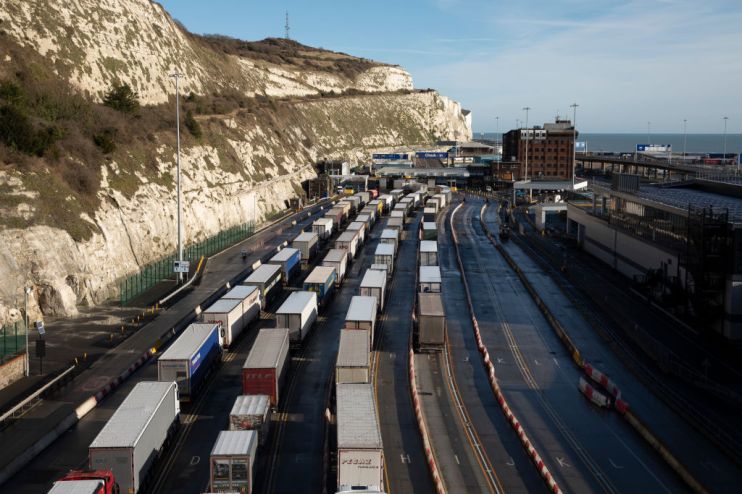
Since the start of the year, a raft of new requirements are making life increasingly difficult for UK businesses that trade with the EU. On the surface, frictionless trade should have continued, but as the UK is no longer part of the EU Single Market and Customs Union, companies have been faced with an increased burden of bureaucracy.
In this 2-part series, Morning Wire sits down with UK-based business leaders, suppliers and entrepreneurs to discuss the UK-EU’s new trading regime.
Despite the government’s pledge that the UK-EU trade deal would result in pain-free trade with the EU, given the agreed zero tariff and zero quota regime, there have been widespread reports of disruption for UK companies that trade with the EU since the Brexit transition period ended.
Smaller to medium businesses seem to have been hit the hardest as they grapple with the new paperwork requirements and additional costs.
Border controls
Since 11pm on 31 December, some goods, like agricultural products, have to undergo checks at UK-EU borders. This has led to supermarket shortages in Northern Ireland, border disruption for Scottish seafood exporters and difficulties for professional musicians trying to travel to the EU.
“Get one thing wrong in the reams of new paperwork and goods can be impounded or fines levied. If you are selling your goods in multiple European countries that is hours more work now needed to make sure they sail through borders,” said Selwyn Stein, managing director of London-based VAT reclamation firm VAT IT.
For example, UK meat exporters warned the government last week that post-Brexit changes at the border caused disruption to meat shipments crossing the channel.
Tonnes of produce worth hundreds of thousands of pounds coming from the UK have been confiscated at EU ports over the past few weeks due to companies not filling out the right paperwork.
The new border checks and additional paperwork have caught many businesses by surprise. This has led to some firms halting trade with the continent, such as luxury food store Fortnum & Mason, who stopped deliveries to Northern Ireland and countries in the European Union, while Debenhams shut its online business in Ireland.
“Businesses have some difficult decisions to make in the coming months, they must decide on where best to send their goods into Europe, through which countries and by which type of transport,” Stein added.
Deliveries
Mark Elward, chief commercial officer at Huboo, a Bristol-based tech-driven fulfilment provider, said the late nature of the Brexit deal gave e-commerce businesses little time to get their head around the many administrative changes needed to go on trading internationally.
Elward told Morning Wire that during the first week post-Brexit, over 1,000 parcels at Huboo were missing the vital new commodity code required for carriers to ship them.
“An issue which can be rectified, but goes to show how easily errors are made,” he said.
Moreover, so-called Economic Operator Registration and Identification (EORI) numbers are required for importing and exporting all goods to and from the EU.
Elward explained that the commodity codes now required post-Brexit are more complex, with the UK using the standard global six-digit format, and not the 8-digit minimum required by the EU.
“Get the code wrong, and the item won’t make it through customs and essentially won’t reach the end-user. A nightmare for an e-commerce business who are shipping to consumers who, due to the ‘Amazon effect’, have high expectations around delivery timings,” he said.
Supply chains
According to recent research from the Small Business Charter, a government body, 43 per cent of SMEs are concerned about supply chain disruption as a result of the new post-Brexit trading conditions.
Abdul Sidike, business manager at on-site support specialist EDIT, recognises these findings. His firm is experiencing an “indirect effect,” Sidike shared with Morning Wire
“A lot of our suppliers are experiencing delays in taking delivery of equipment,” he said. “The cost of a lot of base equipment has increased. Basic models of laptops, desktops, and tablets have increased from 10-25 per cent.”
Even though the delay in collecting tax and the ability to pay it has incrementally helped Sidike’s company’s cashflow, the pandemic does complicate things as suppliers will have to be paid eventually, he stressed.
“With a downturn in business over the last 12 months it will have to be planned carefully. The impact of Covid will be felt for at least two or three years after the government declares that we are OK to return to normal, or a new normal.”
Therefore, Sidike turned to the Small Business Leadership Programme, a government funded programme running through January which provide free training to support small to medium size businesses affected by Covid-19 and post-Brexit trading challenges.
“This programme has allowed me to understand better what I have done and what I am doing to push forward growth,” he said.
Empty lorries
As deliveries are delayed or cancelled altogether, the ongoing uncertainty has resulted in nearly half of lorries that transport goods into the UK returning to the EU empty, according to the Road Haulage Association (RHA).
Moreover, the lack of demand for freight capacity to the EU makes it also more challenging for importers to book lorries who are prepared to travel to the UK as round trips are no longer as lucrative as they were before Brexit.
“Most of the trucks that bring goods in the UK are not British and we have seen a noticeable reducation in hauliers wanting to make the journey,” RHA’s chief executive Richard Burnett said.
“They are also worried about being stuck in port if they don’t have the right customs paperwork,” he added.
Additional costs
Caroline French, who runs shoe retailer WJ French, which has been trading since 1803, said there has been a lot of information to plough through and her team has a hard time trying to decipher what is actually relevant to her business.
“A lot of our suppliers are based in the EU and as we are no longer in the customs union, every import from the EU requires [us] to complete a complex and costly import declaration,” French told Morning Wire
Her firm posts a proportion of its web orders out to Europe and, as a result, WJ French now has to complete a customs form for every item.
“This is obviously more time consuming than it was before,” French sighed.
Many of the retailer’s suppliers have made the business decision to complete that declaration and pay the import VAT due at the port.
“This will understandably mean that some of these costs will be passed onto us and that we will have to buy in bigger one off orders to reduce costs and work generated by every customs declaration,” French explained.
Elward, meanwhile, is convinced that a great many independent businesses will continue to suffer,, unless they are able to access more support.
“In the longer-term the upshot will be more British businesses focused on building their business domestically and postponing plans to expand into Europe,” he concluded.
Tomorrow part 2, which will focus on UK businesses’ access to EU talent.
