Press freedom is under fire in Hong Kong — it’s time for Britain to take a stand

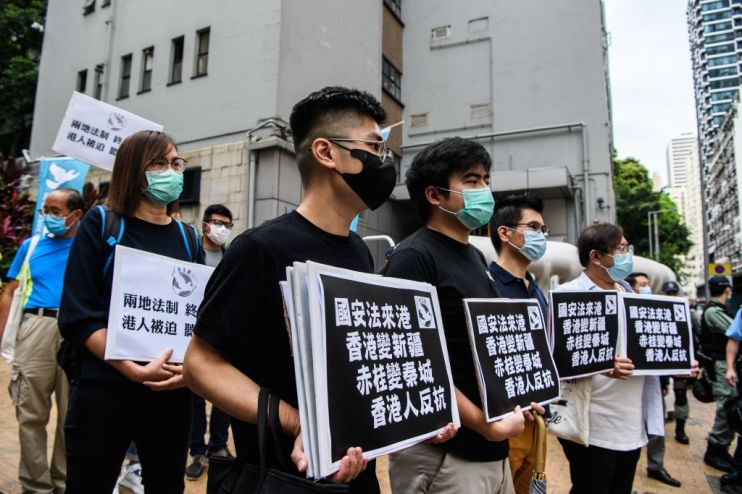
Freedom of expression is a crucial and universal human right, recognised by international organisations around the world, including the United Nations.
And rightly so. It is the job of journalists to shine a light on the authorities that govern us in order to hold them to account for their actions.
A free press is an essential element of any open society in which citizens have a voice and the right to freedom of speech. It is also a practical good. Without the risk of exposure holding official and commercial interests in check, corruption and exploitation can be allowed to flourish.
I should perhaps here, as I would do in the House of Lords, declare an interest: I was a (mostly) a journalist for 20 years, on three continents, including with The Times and The Guardian in London, and with the Bangkok Post, from where I covered the handover of Hong Kong.
In Hong Kong, press freedom is facing a grave threat. In addition to Beijing’s controversial National Security Law which came into force over the summer, new rules are now introducing a government-backed vetting process for the effective registration of journalists.
Only journalists accredited and approved by government officials will be able to continue working in the profession and to attend media briefings.
This new system replaces Hong Kong’s existing accreditation system, backed by the Hong Kong Journalists Association and the Hong Kong Press Photographers Association — the kind of arrangement that exists in Australia and the UK, and most other free societies around the world — and puts the power that was once in the hands of Hong Kong citizens firmly in Beijing’s grip.
This is an even bigger issue in today’s media landscape than it might have been a decade ago. We have seen in recent years how “citizen journalism” — volunteers working for independent websites, student journalists, solo bloggers and vloggers — have become a crucial source of news and information people around the world. Hong Kong is no exception.
While such journalists have been covering street events, pro-democracy protests (still bravely occurring in the territory even under the frightening conditions of the National Security Law) and the actions of police, they could now be subject to criminal offences such as attending an illegal assembly or violating social distancing rules.
This is censorship under the façade of media accreditation. It dampens the rights of journalists to record what’s really happening in Hong Kong.
These journalists are essential. They are often at the front lines of the pro-democracy movement and their ability to report on the reality of the situation on the ground quickly and accurately has proved vital. This new law removes a check (such as it existed) on the behaviour of the police. It even removes even the right to document abuses of power for the world, such as the horrific arrest of a 12-year-old girl recently.
It silences citizens and strips them of their agency, their free speech, and their the power to document their experiences.
This new accreditation system, ultimately, has been introduced to rid the Hong Kong authorities of responsibility. Curtailing the media blinds the world. It grants the Hong Kong authorities the freedom they need to perpetrate ever more severe offences without anyone knowing, or at least without the documentation that can empower action.
If the job of the press is to amplify the voices of the people. This muzzle placed on journalists should be recognised for what it is: an overt attempt to silence and suppress Hong-Kongers. It is therefore an attack on democracy as a whole.
I will be writing to the British government to ask our leaders to speak out on press freedom. Over the summer, the UK showed it is prepared to impose Magnitsky-style sanctions on individuals who are responsible for human rights abuses. The time has surely come to use such sanctions on the senior officials who have orchestrated this law, including Hong Kong Chief Executive Carrie Lam, and to publicly recognise the harms it poses to democracy and freedoms.
Journalists in Hong Kong shine a light on the abuses perpetrated by the authorities. That light is being dimmed. We cannot allow it to be snuffed out.
Main image credit: Getty